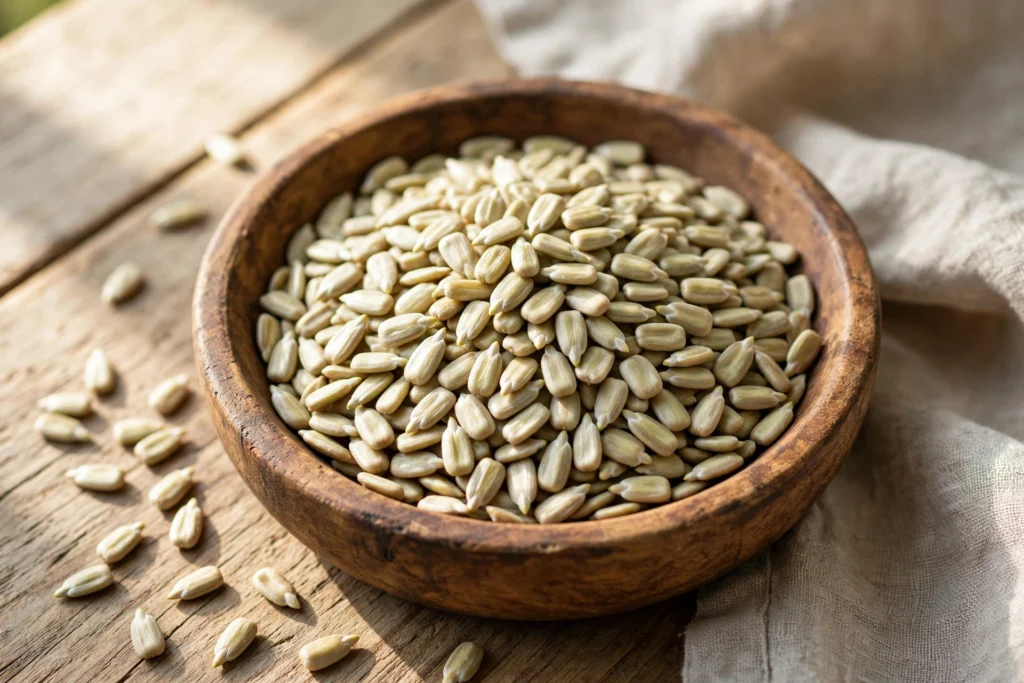

Sunflower seed benefits for health start with vitamin E. A small handful of sunflower seeds gives you more of this antioxidant vitamin than almost any other snack food, and that is only the beginning. These striped little seeds are cheap, widely available, and easy to eat, which makes them one of the most practical healthy snacks around.
Sunflowers are native to North America, where Indigenous peoples grew them for food and oil long before European settlers arrived. Today the seeds are eaten whole, pressed for cooking oil, ground into sunflower seed butter, and sprinkled over salads, breads, and breakfast bowls. Inside each seed sits a useful mix of vitamin E, selenium, magnesium, healthy fats, and plant sterols.
This article covers what sunflower seeds may do for your heart, skin, immune system, and more, how much makes sense to eat, and the cautions worth knowing. The overall picture is a friendly one: sunflower seeds are a simple, affordable food that fits well into a balanced diet.
1. Vitamin E for Cell Protection
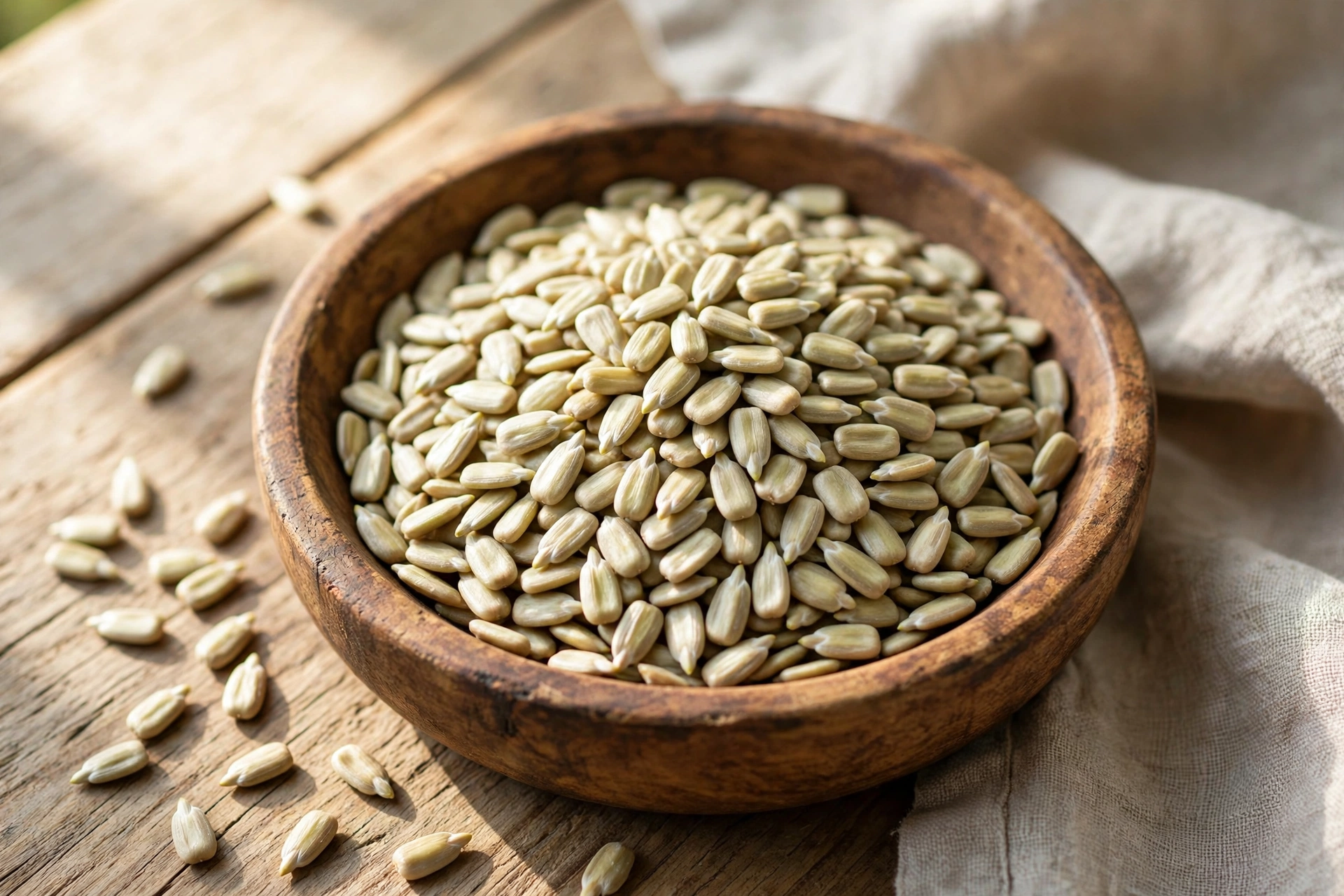
Sunflower seeds are one of the best food sources of vitamin E anywhere. A single ounce, about a quarter cup, provides roughly 7.4 milligrams of vitamin E, which is about half of the daily value for most adults. Vitamin E is a fat-soluble antioxidant that protects cell membranes from damage by free radicals, and it is especially important for skin, eyes, and the immune system.
Many people do not get enough vitamin E from food, partly because the richest sources are oils, nuts, and seeds that some people eat rarely. Sunflower seeds fix that gap easily. Vitamin E also works alongside vitamin C and selenium, and sunflower seeds happen to contain selenium too, so the two antioxidants come in the same package.
Research has linked higher vitamin E intake from food to better immune function in older adults and to healthier skin, though supplements have not shown the same clear benefits and can be risky in high doses. That is a good reason to get vitamin E from food like sunflower seeds rather than from a pill. A small handful a day is enough to make a real difference to your intake.
2. Heart Health and Cholesterol
Most of the fat in sunflower seeds is unsaturated fat, including a good amount of linoleic acid, an omega-6 fatty acid the body needs but cannot make. When unsaturated fats replace saturated fats in the diet, blood cholesterol patterns tend to improve, and sunflower seeds are an easy way to make that swap happen.
Sunflower seeds also contain plant sterols called phytosterols, which can block some cholesterol from being absorbed in the gut. Studies suggest that eating phytosterol-rich foods regularly can lower LDL cholesterol by a modest amount. Sunflower seeds provide about 150 milligrams of phytosterols per ounce, which is a useful contribution toward the roughly two grams a day that research links to cholesterol benefits.
Sunflower seed oil has been studied for heart health as well. Trials that compared sunflower oil with saturated fats found better cholesterol profiles in the sunflower oil groups. The seeds themselves add fiber and magnesium on top of the fats, which makes the whole food a better choice than the oil alone. As with all nuts and seeds, the benefit comes from eating them regularly as part of an overall heart-friendly pattern, not from a single serving.
3. Skin Health and Healing
Vitamin E is often called the skin vitamin for good reason, and sunflower seeds are one of the easiest ways to get it. Vitamin E helps protect skin from sun damage and supports the skin barrier, and low vitamin E intake has been linked to drier, more fragile skin. The healthy fats in sunflower seeds also help the skin hold moisture, since the skin barrier itself is built from fats.
Sunflower oil is used in skin care products for the same reason. Studies on topical sunflower oil have found that it supports the skin barrier and can help with dry skin, and it is even used in some hospital nurseries for infant skin care. Eating the seeds is not the same as applying the oil, but the nutrients overlap, and a diet rich in vitamin E and healthy fats supports skin from the inside.
Zinc, which sunflower seeds provide in small amounts, plays a role in wound healing and in keeping skin clear. People with very low zinc sometimes notice slow healing or skin problems. Sunflower seeds will not fix acne or erase wrinkles, and anyone who promises that is overselling a snack. What they can do is help you cover the nutrients skin needs to repair and protect itself day after day.
4. Immune System Support
Your immune system runs on nutrients, and sunflower seeds supply several of the ones it needs most. Vitamin E helps immune cells communicate and respond to threats, and studies have found that older adults who get enough vitamin E from food tend to have stronger immune responses. Selenium, also found in sunflower seeds, supports the production of immune cells and helps control inflammation.
Zinc adds another layer. Even a mild zinc shortage can weaken immune defenses, and sunflower seeds provide a modest amount of it. The seeds also contain vitamin B6, which helps the body make new immune cells. None of these nutrients works alone, and eating sunflower seeds will not stop you from catching a cold. But a diet that covers them steadily gives your immune system the raw materials it needs, and that is the realistic benefit.
This is one more case where the whole food beats a supplement. A sunflower seed delivers vitamin E with the healthy fats that help your body absorb it, plus selenium, zinc, and magnesium in the same bite. That combination is hard to copy in a pill, and it comes with fiber and protein as a bonus.
5. Magnesium for Muscles, Sleep, and Mood
An ounce of sunflower seeds provides about 90 milligrams of magnesium, roughly a quarter of the daily need for most adults. Magnesium is involved in hundreds of reactions in the body, including muscle relaxation, energy production, and the regulation of sleep. Many people do not get enough magnesium, and the shortfall has been linked to muscle cramps, tiredness, and poorer sleep.
Research on magnesium and sleep is still growing, but several studies have found that people with higher magnesium intake report better sleep quality. Magnesium also helps regulate the stress hormone cortisol and supports the production of serotonin, a brain chemical linked to mood. Sunflower seeds will not cure insomnia or anxiety, and it would be wrong to suggest they could. They can help close a common nutrient gap, though, and that is a sensible step.
For people who exercise, magnesium matters for muscle function, and sweat losses can increase the need for it. A handful of sunflower seeds after a workout provides magnesium, protein, and healthy fats in a snack that needs no preparation. It is a small habit with a real nutritional payoff.
6. Blood Sugar and Steady Energy
Sunflower seeds are low in carbohydrates and high in fat, protein, and fiber, which makes them a steady snack for blood sugar. They do not cause the sharp rise and fall that comes from crackers, biscuits, or sweet snacks, and their fiber slows digestion further. That makes them a good choice for people with type 2 diabetes or anyone who wants to avoid the afternoon energy crash.
Some research has looked at sunflower seeds and blood sugar more directly. A small study found that eating sunflower seeds with bread reduced the blood sugar response to the meal, likely because the fat and fiber slowed down how fast the bread was digested. Chlorogenic acid, a plant compound found in sunflower seeds, has also been studied for its effects on blood sugar, though most of that work is still in early stages.
Pairing sunflower seeds with fruit is a smart snack: the fruit gives you quick energy and vitamins, and the seeds slow the whole thing down so the energy lasts longer. That combination beats either food on its own for staying power, and it is easy to carry in a bag or keep at a desk.
7. Bone Health and Everyday Minerals
Sunflower seeds contribute several minerals that bones need, including magnesium, phosphorus, and copper. Magnesium helps the body use calcium properly, phosphorus is part of bone mineral itself, and copper supports the collagen framework that gives bones their strength. An ounce of seeds provides a useful amount of each, and eating them regularly helps cover these quieter nutrients that do not get much attention.
The seeds also provide iron, with about 1.7 milligrams per ounce, and vitamin B6, which helps the body use iron. Iron carries oxygen in the blood, and low iron is one of the most common deficiencies worldwide, especially among women. Plant iron is absorbed less well than iron from meat, but eating sunflower seeds with vitamin C-rich foods, like a salad with peppers or citrus, improves absorption.
Sunflower seeds are not a bone-health food in the way dairy or leafy greens are, and they should not be your only source of these minerals. They are a useful addition, though, especially for people who eat few animal products. If you enjoy seeds in general, you may also like our guides to Pumpkin Seeds Benefits (Magnesium, Better Sleep, and Prostate Health) and Flax Seeds Benefits (Nutrition, Uses, and Side Effects).
8. Support for Healthy Aging
Vitamin E is one of the nutrients most closely linked to healthy aging, and sunflower seeds are one of the best food sources of it. As we get older, the body’s antioxidant defenses weaken, and oxidative damage builds up in cells, including brain cells, skin cells, and immune cells. Vitamin E helps slow that damage by protecting cell membranes, and studies have linked higher vitamin E intake from food to better immune function and slower cognitive decline in older adults.
Selenium, which sunflower seeds also provide, supports the same defenses. Selenium is part of enzymes that neutralize free radicals, and research has found that older adults with higher selenium levels tend to have better immune responses and fewer infections. The combination of vitamin E and selenium in a single food is part of what makes sunflower seeds a useful snack for aging well, though no single food can slow aging on its own.
Sunflower seeds also provide healthy fats that support the brain, which is about 60 percent fat and needs a steady supply of good fats to maintain its cell membranes. The linoleic acid in sunflower seeds is an essential fat the body cannot make, and it plays a role in keeping skin and brain cells healthy. A small handful of sunflower seeds a day is a simple, affordable habit that supports the body’s defenses as they age, and it is easy to keep doing for years. That consistency is what matters most: the benefit comes from eating these foods regularly over a lifetime, not from a single serving.
How to Eat It
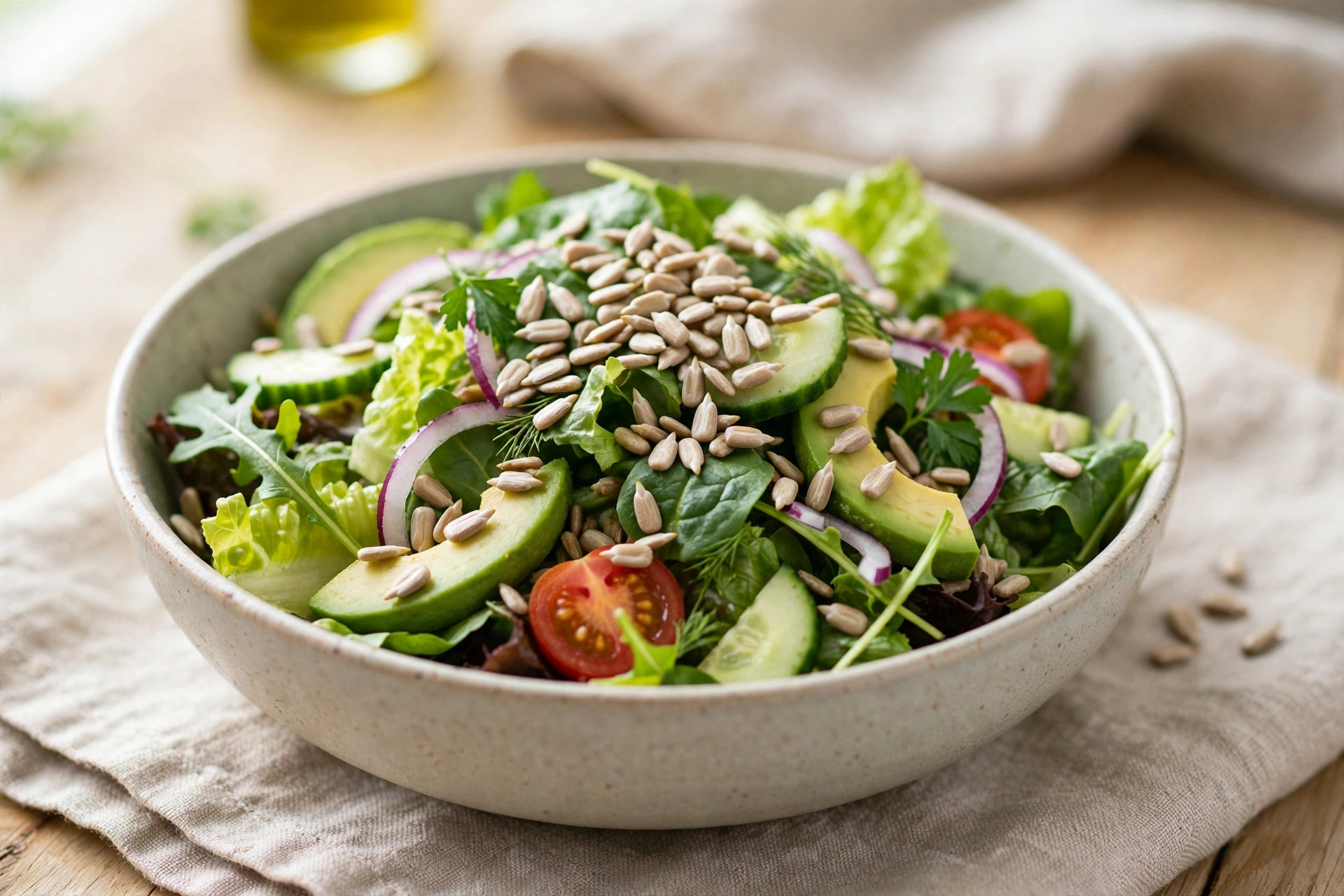
The simplest way to eat sunflower seeds is by the handful, raw or lightly roasted, with the shells removed. A quarter cup, about an ounce, is a good daily serving. You can also sprinkle them on salads, soups, oatmeal, yogurt, and stir fries, where they add crunch and nutrition at the same time.
Sunflower seed butter is a good alternative to peanut butter, especially for people with nut allergies, and it works in sandwiches, smoothies, and baking. Sunflower oil is a neutral cooking oil that handles medium heat well. Store seeds in a sealed container in a cool place or the fridge, since their unsaturated fats can go rancid in warmth and light. Buy unsalted seeds when you can, since salted versions can add a lot of sodium.
Cautions
Sunflower seeds are calorie-dense, with an ounce carrying about 170 calories, so eating them by the large handful can add up quickly. They are also easy to overeat when the shells are already removed, so measuring a portion is a good habit. Salted sunflower seeds can be very high in sodium, which matters for blood pressure, so unsalted is the better everyday choice.
Sunflower seeds contain cadmium, a heavy metal that the sunflower plant absorbs from soil. Levels in normal food amounts are not considered a concern by health authorities, but eating very large amounts every day for years could raise exposure, so variety is a good idea. People with a sunflower seed allergy, which is uncommon but real, should avoid them completely. The seeds also contain a small amount of saturated fat and are high in omega-6 fatty acids, so balance them with omega-3 sources like fish or flaxseed rather than relying on them alone.
FAQ
How many sunflower seeds should I eat a day?
About an ounce a day, roughly a quarter cup of shelled seeds, is a sensible amount for most people. That gives you a good dose of vitamin E, magnesium, and selenium without too many calories. Eating much more every day is not necessary and can quietly add a lot of energy to your diet.
Are sunflower seeds good for skin?
Sunflower seeds are rich in vitamin E and healthy fats, both of which support skin health. Vitamin E protects skin cells from oxidative damage, and the fats help maintain the skin barrier that keeps moisture in. They are a helpful food for skin, though they will not fix skin problems on their own. For another skin-friendly seed, see our guide to Chia Seeds Benefits (Nutrition, Uses, and How Much to Eat Daily).
Do sunflower seeds help lower cholesterol?
Sunflower seeds contain unsaturated fats and plant sterols that can help lower LDL cholesterol when they replace saturated fats in the diet. Studies suggest the effect is modest but real. They work best as part of an overall heart-friendly eating pattern with plenty of vegetables, whole grains, and fish.
Are roasted sunflower seeds as healthy as raw?
Lightly roasted sunflower seeds keep most of their nutrients, though very high heat can reduce some vitamin E. Roasting also improves flavor and makes them easier to digest. The bigger difference is salt: roasted seeds are often heavily salted, so choose unsalted or lightly salted versions when you can.
Can I eat sunflower seeds if I have a nut allergy?
Sunflower seeds are seeds, not tree nuts, so many people with nut allergies can eat them safely, and sunflower seed butter is a popular nut-free alternative. However, cross-contamination can happen in factories, and some people are allergic to sunflower seeds themselves. If you have a nut allergy, check with your doctor and look for products made in nut-free facilities.
Conclusion
Sunflower seeds are a small, cheap, and honest food. They deliver vitamin E, magnesium, selenium, and healthy fats in a snack that needs no cooking and fits in a pocket. They support heart health, skin, immunity, and steady energy, and they do it without any fuss. Keep the portion to about an ounce, choose unsalted, and let them be one part of a varied diet. Sometimes the simplest foods are the ones worth keeping around.
Sources
Wikipedia — Sunflower Seed
Harvard Health Publishing — The benefits of seeds