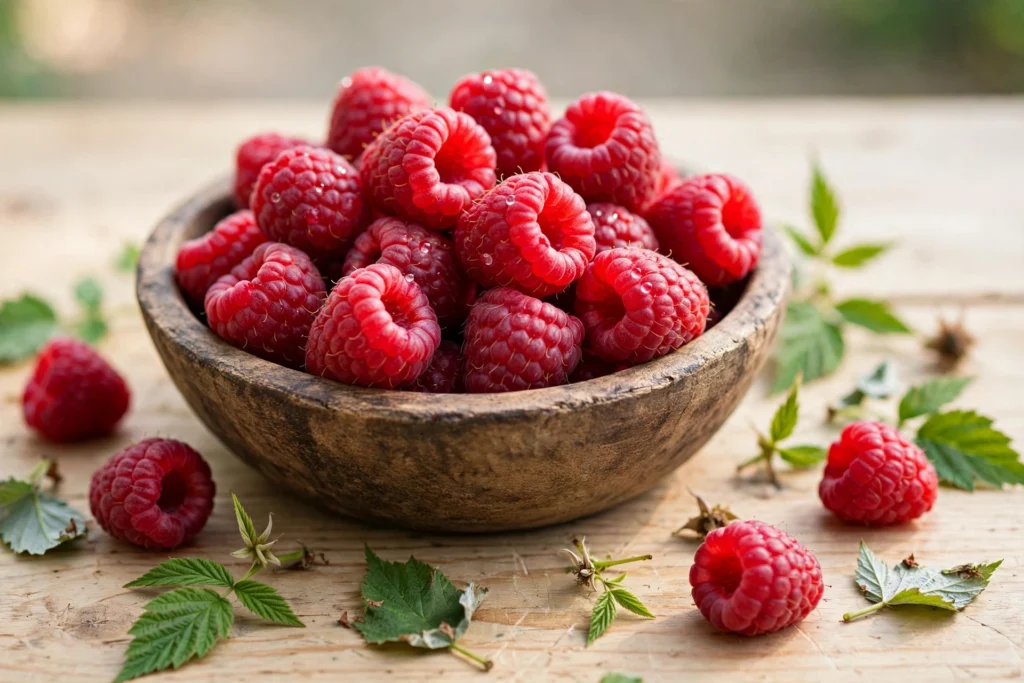

A raspberry looks too delicate to do much. It crushes if you hold it too hard, stains your fingers in seconds, and goes soft in the fridge within a couple of days. But inside that fragile little fruit is one of the best nutrition profiles of any berry you can buy — high in fibre, low in sugar, and packed with vitamin C and plant compounds that researchers keep coming back to.
Raspberries have been eaten in Europe for centuries, and they grow wild across northern Europe, Asia, and North America. The red ones are the most common, but you will also find black, purple, and golden varieties at farmers’ markets. All of them share the same basic strengths: lots of fibre, very little fat, and a deep colour that signals a rich mix of antioxidants.
This article looks at what raspberries may actually do for your health — your gut, your heart, your blood sugar, and your brain — what the science says so far, and how to get the most out of them without overthinking it. The honest version first: raspberries are a genuinely healthy food, but they are not a cure for anything. They work best as part of an everyday diet that already has plenty of plants in it.
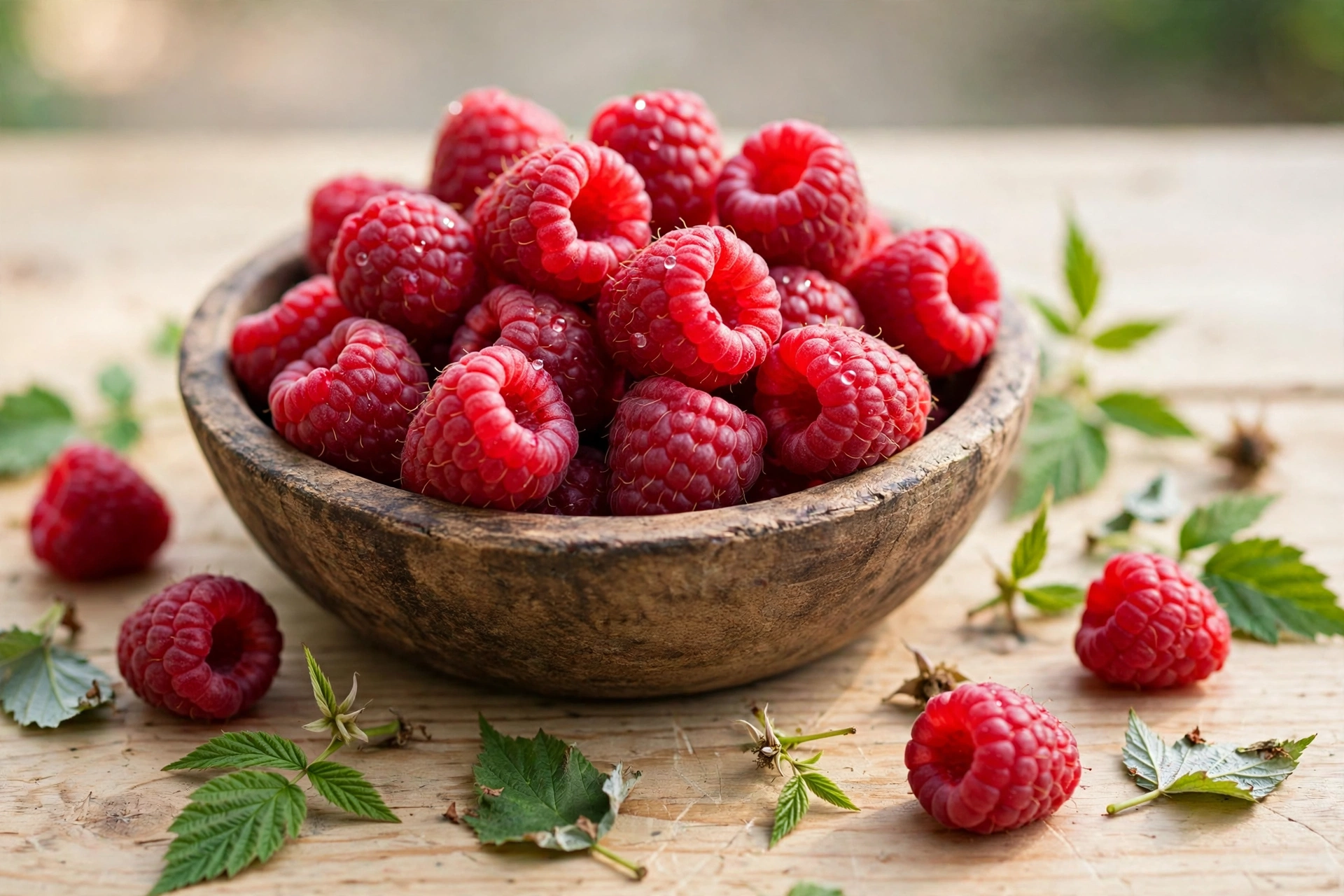
What’s Inside a Cup of Raspberries
A cup of fresh raspberries weighs about 123 grams, roughly a generous handful. Here is what that cup gives you, based on figures from the USDA FoodData Central database:
| Nutrient (per cup, 123 g) | Amount |
|---|---|
| Calories | 64 |
| Fibre | 8 g |
| Natural sugars | 5.4 g |
| Protein | 1.5 g |
| Vitamin C | 32 mg (about 36% of daily needs) |
| Manganese | 0.8 mg |
| Vitamin K | 9.6 mcg |
| Folate | 26 mcg |
| Potassium | 186 mg |
Two numbers stand out. The first is fibre: 8 grams in a single cup, which is more than most other common fruits offer in the same serving. The second is sugar: only 5.4 grams, which is low for something that tastes this sweet. That combination — lots of fibre, little sugar — is the reason raspberries keep showing up in advice about gut health, weight, and blood sugar.
1. A Fibre-Rich Fruit That Keeps You Full
Fibre is the quiet star of the raspberry. At 8 grams per cup, one serving covers close to a third of the daily fibre most adults need. That fibre does two useful things. It slows down how fast food leaves your stomach, so you feel full for longer after eating, and it feeds the friendly bacteria in your gut, which break it down into compounds that support the gut lining.
If you find it hard to eat enough fibre, raspberries are one of the easiest fixes. A cup stirred into morning yoghurt or porridge adds more fibre than a slice of wholemeal bread, and it tastes like a treat rather than a chore. Just build up slowly if your diet is low in fibre right now — a sudden jump can leave you bloated for a day or two while your gut adjusts.
2. Vitamin C for Immune Support
One cup of raspberries gives you about a third of your daily vitamin C. That vitamin helps your immune system work the way it should, supports the skin’s barrier against infection, and helps your body absorb iron from plant foods like beans and leafy greens.
Vitamin C is also used to make collagen, the protein that keeps skin firm and helps small cuts heal. Eating raspberries will not stop you catching a cold, and no single food can do that, but a diet that regularly includes vitamin C-rich foods gives your immune system the raw material it needs. Raspberries are an easy way to top up, especially in summer when they are cheap and plentiful.
3. Antioxidants That Protect Your Cells
The deep red colour of a raspberry comes from anthocyanins, the same family of pigments that colours blueberries and blackberries. Raspberries also contain ellagitannins, which your gut bacteria turn into ellagic acid and related compounds. Both groups act as antioxidants, which means they help neutralise unstable molecules called free radicals that can damage cells over time.
Lab and animal studies on these compounds look promising, and people who eat more anthocyanin-rich foods tend to have better long-term health in large observational studies. The honest caveat is that we still do not know exactly how much of the benefit comes from the berries themselves and how much comes from the fact that berry eaters tend to eat well in general. Either way, raspberries are one of the richest everyday sources of these compounds, and eating them is a simple habit to keep.
4. May Help Keep Blood Sugar Steady
Raspberries have a low glycaemic index, around 25, which means they raise blood sugar slowly compared with most sweet foods. The fibre is doing most of the work here: it slows digestion, so the natural sugars in the fruit reach your bloodstream gradually instead of all at once.
There is also some direct evidence. A small 2019 study published in the journal Obesity found that eating raspberries with a high-carbohydrate meal reduced the rise in blood sugar and insulin afterwards in adults with prediabetes. The study was small, so it is not proof on its own, but it lines up with what we know about fibre and blood sugar. For people watching their glucose, raspberries are one of the safest sweet foods to reach for — fresh or frozen, in a sensible portion, and without added sugar.
5. Good for Your Heart
Heart health is where several of the raspberry’s strengths add up. The fibre helps keep cholesterol in check, the potassium supports healthy blood pressure, and the anthocyanins have been linked in observational research to a lower risk of heart disease. A well-known 2013 study in the journal Circulation, which followed more than 90,000 women, found that those who ate the most anthocyanin-rich foods, including berries, had a lower risk of heart attack than those who ate the least.
None of this makes raspberries a heart medicine. What it does mean is that swapping a sugary snack for a handful of raspberries a few times a week is a small change that points your diet in the right direction. The effect comes from the pattern, not from any single fruit, and raspberries fit that pattern well.
6. May Support Brain Health as You Age
The same flavonoids that give berries their colour have been studied for their effects on the brain. A long-running Harvard study published in the Annals of Neurology in 2012 found that older adults who ate berries more often showed slower rates of memory decline — the equivalent of delaying cognitive ageing by about two and a half years.
Researchers think the flavonoids may help by reducing inflammation and oxidative stress in the brain, and by supporting blood flow. The evidence is still observational, which means it shows a link rather than proving cause and effect, but it is consistent across several large studies. A daily handful of berries is a low-effort habit, and raspberries are among the most flavonoid-rich options you can pick.
7. Gentle on Digestion and Great for Gut Health
Because raspberries are mostly water and fibre, they are kind to the digestive system. The fibre adds bulk to stools and helps keep things moving, which can ease constipation, while the water content helps the fibre do its job without drying things out.
There is a second, quieter benefit. Some of the polyphenols in raspberries are not absorbed in the small intestine, so they travel on to the colon, where gut bacteria ferment them. That process appears to encourage the growth of beneficial bacteria. The science here is young, but it fits a clear pattern: diets rich in varied plant fibre tend to support a more diverse gut microbiome, and raspberries are a tasty way to add to that variety.

How to Eat Raspberries
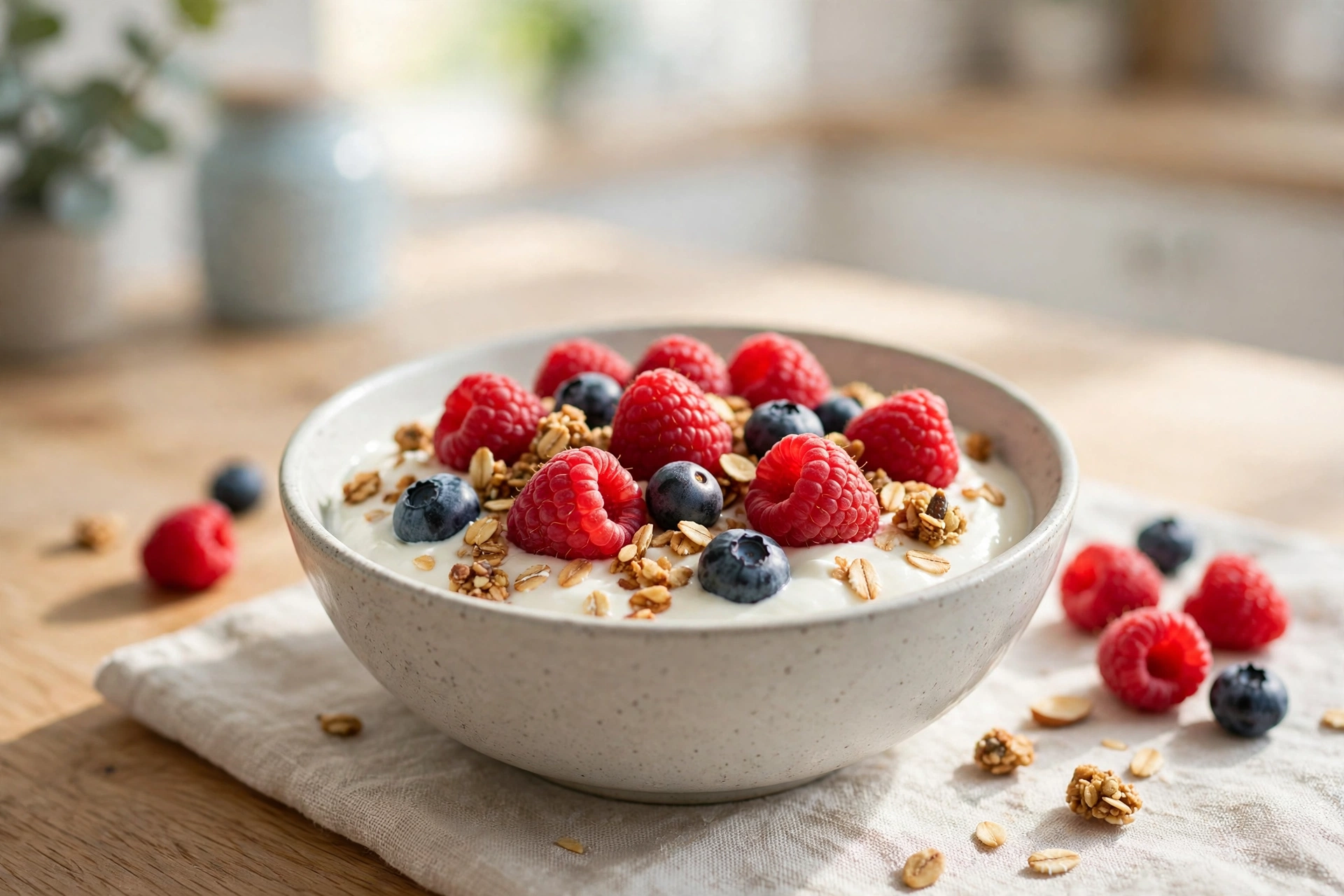
The simplest way is still the best: a fresh handful, straight from the punnet, rinsed and eaten as they are. But raspberries are flexible, and they work in more places than most people use them. Try them stirred into yoghurt or porridge, blended into smoothies, scattered over salads with feta and walnuts, or baked into muffins and crumbles where their tartness balances the sweetness.
Frozen raspberries deserve a mention of their own. They are picked and frozen at peak ripeness, so they keep almost all of their nutrients, and they cost far less than fresh berries out of season. They are perfect for smoothies, sauces, and baking, and they make a good topping for warm porridge as they soften. Just check the bag: you want plain frozen raspberries with nothing added, not a sweetened berry mix.
For something a little different, try a simple raspberry sauce. Warm a cup of raspberries in a small pan with a spoonful of water for a few minutes until they collapse, then push the mixture through a sieve if you want it smooth. It keeps in the fridge for a few days and is lovely over yoghurt, pancakes, or ice cream — with no added sugar needed if the berries are ripe.
How to Pick and Store Them
Good raspberries look plump, dry, and evenly coloured, with no soft or leaking berries in the punnet. Always check the bottom of the punnet before you buy — mould spreads fast in raspberries, and one soft berry can spoil the rest within a day.
At home, keep them in the fridge and eat them within one or two days. Do not wash them until you are ready to eat, because moisture speeds up mould. If you have more than you can eat, freeze them in a single layer on a tray, then tip them into a bag once they are solid. They will keep for months and work well in cooking straight from frozen.
Cautions
Raspberries are safe for most people, but a few things are worth knowing. A true raspberry allergy is uncommon, yet it does happen, usually in people who are also sensitive to other fruits in the rose family, such as strawberries, peaches, or apples. If you have a known fruit allergy, be careful the first time you try them.
Wash fresh raspberries well before eating. Their soft, bumpy surface can hold soil and pesticide residue, and a gentle rinse under cold water is enough. Frozen berries sold ready to eat are usually washed before freezing, but check the packet.
Be wary of raspberry ketone supplements. These are sold for weight loss, but the claims come from test-tube and animal studies using doses far higher than you could get from food. There is no good evidence they help people lose weight, and supplements are not regulated the same way food is. Eat the fruit instead — that is where the real benefit is.
If you take blood-thinning medicine such as warfarin, the vitamin K in raspberries is modest, so a normal portion is not a concern. Still, if you suddenly start eating large amounts of any vitamin K-rich food every day, it is worth mentioning to your doctor, since steady vitamin K intake matters more than the amount on any single day.
FAQ
How many raspberries should I eat a day?
A cup a day, about 125 grams or a generous handful, is a sensible portion and fits easily into the five-a-day target for fruit and vegetables. You can eat more without any problem — raspberries are low in calories — but variety matters too, so mix them with other fruits rather than eating only raspberries.
Are raspberries good for weight loss?
They can help. At 64 calories a cup with 8 grams of fibre, raspberries are one of the most filling foods for their calorie count, which makes it easier to stay satisfied without overeating. They work as part of an overall diet with plenty of whole foods and regular movement — on their own, no food causes weight loss.
Are frozen raspberries as healthy as fresh ones?
Yes, in most cases. Frozen raspberries are picked ripe and frozen quickly, which locks in their vitamins and antioxidants. Some studies have found frozen berries keep their nutrients as well as, or better than, fresh berries that have spent days in transit. Just buy plain frozen raspberries with no added sugar or syrup.
Can diabetics eat raspberries?
Raspberries are one of the better fruit choices for people with diabetes. Their glycaemic index is low, around 25, and their high fibre slows the rise in blood sugar after eating. A cup with a meal or as a snack is a reasonable portion, but anyone managing diabetes should check portion sizes with their own clinician, since individual needs vary.
Are raspberries better than blueberries?
Both are excellent, and neither is clearly better overall. Raspberries win on fibre — about 8 grams a cup against roughly 4 in blueberries — while blueberries have a wider mix of anthocyanins. The practical answer is to eat both when you can, along with other berries such as strawberries and cherries, since variety gives you a broader range of plant compounds.
Conclusion
Raspberries earn their place among the healthiest fruits you can buy. They are rich in fibre and vitamin C, low in sugar and calories, and full of the plant compounds that research links to heart, brain, and gut health. They are also easy to enjoy — fresh by the handful, frozen in smoothies, or stirred into breakfast.
The claims around them are sometimes bigger than the evidence, especially for supplements and quick fixes. But the fruit itself needs no exaggeration. Add a cup of raspberries to your day a few times a week, keep the rest of your diet varied and plant-rich, and you are getting real nutrition from a food that happens to taste wonderful too. For another berry with its own strengths, see our guide to goji berry benefits for health.
Sources
- USDA FoodData Central — Raspberries, raw: fdc.nal.usda.gov
- NHS — 5 A Day: what counts?: nhs.uk
- Devore EE, Kang JH, Breteler MM, Grodstein F. Dietary intakes of berries and flavonoids in relation to cognitive decline. Annals of Neurology, 2012.
- Cassidy A, et al. High anthocyanin intake is associated with a reduced risk of myocardial infarction in young and middle-aged women. Circulation, 2013.
- Xiao D, et al. Red raspberries and insulin resistance: a randomized controlled trial in adults with prediabetes. Obesity, 2019.
- Wikipedia — Raspberry: en.wikipedia.org/wiki/Raspberry