
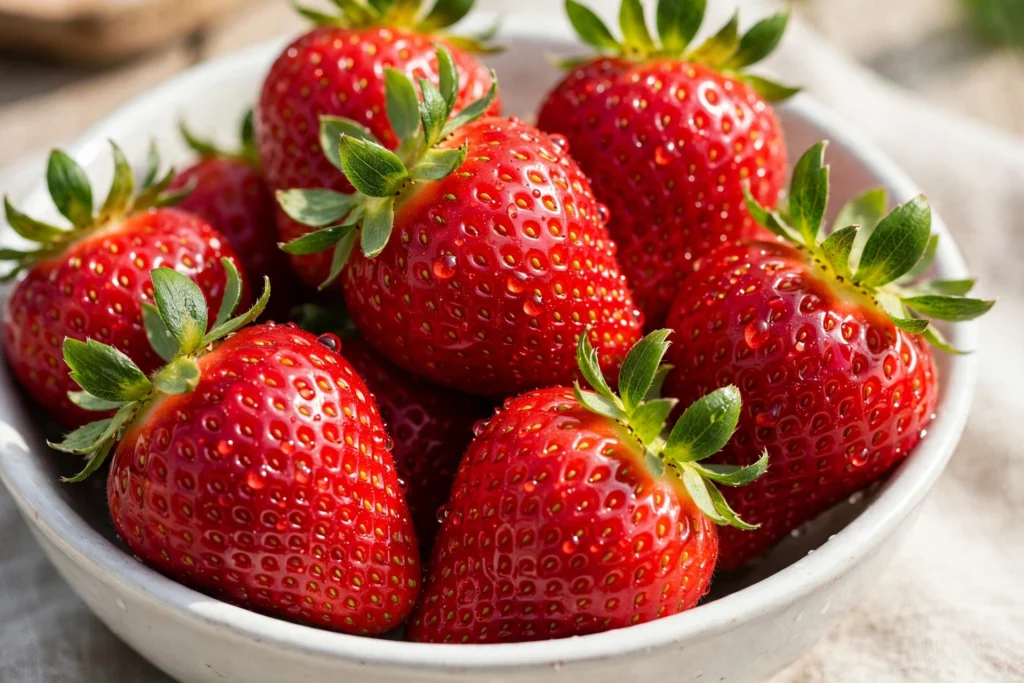

Strawberry benefits for health are hard to resist, because strawberries are one of the few healthy foods that taste like a treat. Bright red, sweet, and fragrant, they are also one of the lowest-sugar fruits you can eat, with only about 7 grams of sugar per cup and 50 calories.
A cup of strawberries, about 150 grams or eight large berries, gives you more vitamin C than an orange, around 90 mg, which covers the full daily need for most adults. They also give you fibre, manganese, folate, and anthocyanins, the pigments that make them red and that researchers link to heart and brain health.
In this guide, we will look at the main strawberry benefits for health in plain language, with honest numbers and no miracle claims. You will learn what strawberries can do for your skin, heart, brain, and blood sugar, how to eat them well, and who should take a little care.
1. Vitamin C for Immunity and Skin
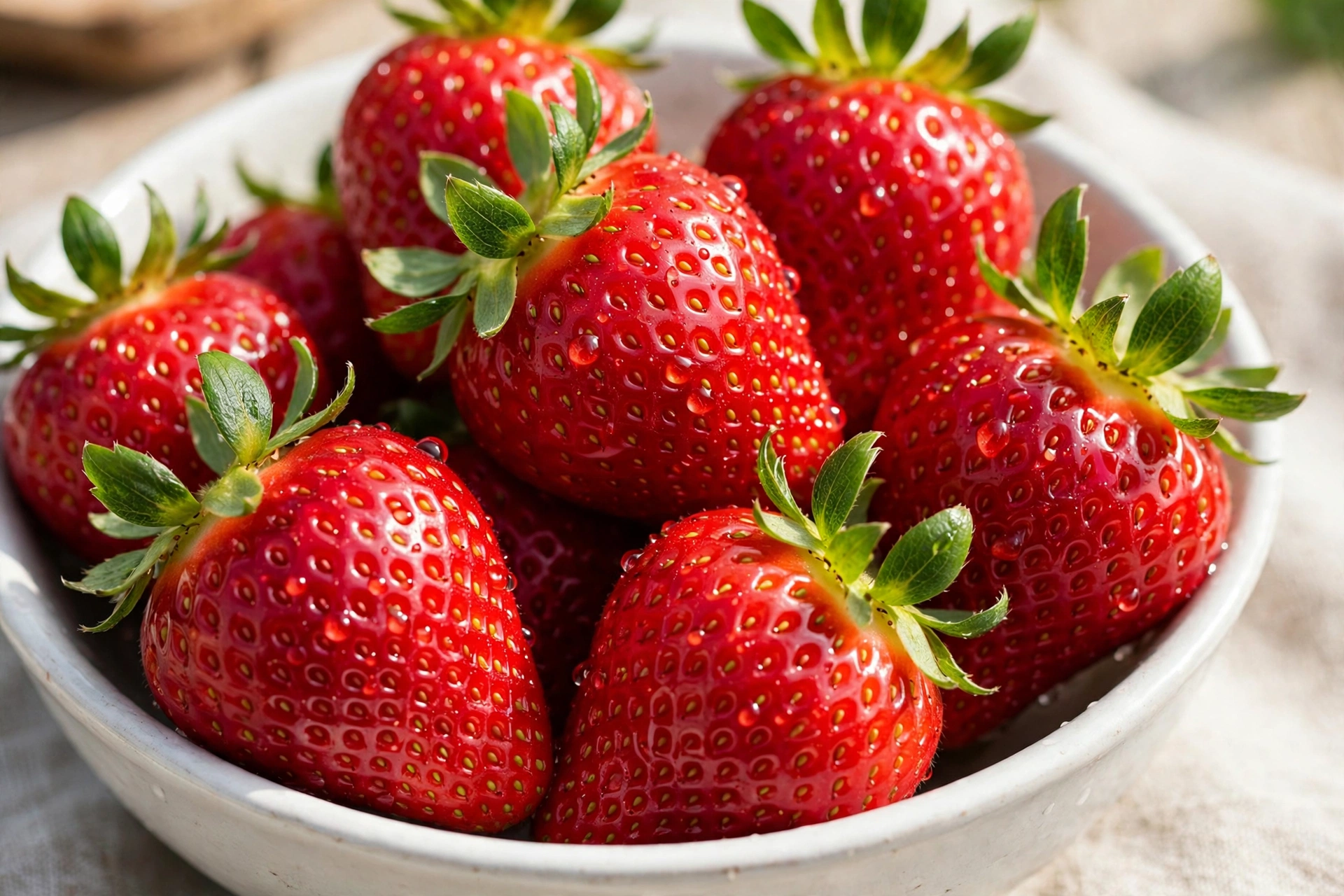
Strawberries are one of the richest sources of vitamin C among common fruits. A single cup gives you about 90 mg, which is more than the daily recommended amount for most adults. Vitamin C supports the immune system by helping white blood cells work properly, and it also protects those cells from damage while they fight germs.
Vitamin C is just as important for your skin, because your body needs it to make collagen, the protein that keeps skin firm and smooth. Without enough vitamin C, collagen production slows and skin can look dull. Eating strawberries regularly gives your skin a steady supply of this vitamin through food, which your body uses more efficiently than a cream applied on the surface.
Studies suggest that regular vitamin C intake may shorten colds and ease symptoms a little, though it does not prevent colds outright. That is a modest, honest claim, and it matches the research. A bowl of strawberries is not a shield against illness, but it is a delicious way to keep your immune system well stocked.
There is a practical bonus too: vitamin C helps your body absorb iron from plant foods like lentils, beans, and spinach. Eating strawberries with or after a plant-based meal can help your body take in more iron from that meal. It is a small trick that turns a sweet dessert into a smarter nutritional choice.
2. Heart Health
Strawberries have some of the best heart research of any fruit. Their anthocyanins, the red pigments in the berry, are linked in large population studies to healthier blood pressure and a lower risk of heart attacks. One well-known study that followed more than 90,000 women for 18 years found that those who ate berries three or more times a week had a significantly lower risk of heart attack than those who rarely ate them.
Strawberries also give you potassium, which helps balance sodium and supports healthy blood pressure, and fibre, which helps lower LDL cholesterol. A cup of strawberries gives you about 3 grams of fibre and 220 mg of potassium, both useful contributions to a heart-friendly day.
The antioxidants in strawberries may also help protect LDL cholesterol from oxidation, a process that makes cholesterol more likely to damage artery walls. This is early research, mostly from small trials, but it points in a consistent direction: berries support the heart in more than one way.
There is another heart angle that gets less attention: strawberries may help blood vessels stay flexible. The anthocyanins in berries are linked to better endothelial function, which is the medical term for how well the inner lining of blood vessels works. When that lining works well, blood flows more easily and blood pressure stays steadier. Small trials have found improvements in this measure after people ate strawberries daily for a few weeks, though larger studies are still needed.
It is worth being honest that strawberries are not a heart medicine. They work as part of a pattern that includes vegetables, whole grains, healthy fats, movement, and not smoking. But as part of that pattern, a daily bowl of strawberries is one of the tastiest choices you can make.
3. Brain Health and Memory
The same anthocyanins that help the heart may also help the brain. These pigments can cross into brain tissue, where they act as antioxidants and may support the connections between brain cells. A long-running study of older adults found that people who ate berries regularly showed slower rates of memory decline than those who ate them rarely, with a difference equivalent to about two and a half years of slower ageing.
Strawberries also contain fisetin, a flavonoid that has drawn research interest for its effects on brain cells. Early animal studies suggest fisetin may support memory and protect brain cells from age-related damage, but human evidence is still thin. It is a promising area, not a proven benefit, and it deserves honest labelling.
What is clear is that diets rich in colourful fruit and vegetables are linked to better brain health over decades. Strawberries are an easy way to add colour and variety to that diet, and their low sugar makes them a smarter sweet snack than most alternatives.
For students, older adults, and anyone who wants to keep their mind sharp, a daily serving of berries is a low-effort habit with real upside. Just do not expect a single bowl to sharpen your memory overnight, because brain health is built over years, not days.
4. Blood Sugar Control
Strawberries have a low glycaemic index, around 25, which means their sugars enter the blood slowly. That makes them one of the best fruits for people watching their blood sugar. A cup of strawberries has only about 7 grams of sugar, far less than a banana or a mango, and the fibre in the berries slows things down further.
Some research suggests that eating strawberries with a carbohydrate-rich meal may blunt the blood sugar spike from that meal. In small trials, people who ate strawberries with white bread had lower blood sugar and insulin responses than those who ate the bread alone. The effect is modest, but it is a useful trick for anyone managing blood sugar.
This low-sugar profile is also why strawberries work well in weight management. You can eat a generous bowl for only 50 calories, and the fibre and water keep you full. For people who crave something sweet after dinner, strawberries with a little yogurt are a far better choice than cake or ice cream.
People with diabetes can usually enjoy strawberries freely, in normal portions, but as always, individual blood sugar responses vary. Check your own levels and talk to your doctor about what fits your plan.
Strawberries also score well on satiety, which is the feeling of fullness after eating. Because they are mostly water and fibre, you can eat a large bowl and still take in very few calories, which helps you stay full without overeating. That is why dietitians often suggest berries as a first choice when someone wants a sweet snack that will not derail their blood sugar or their weight.
5. Skin Glow and Anti-Ageing Support
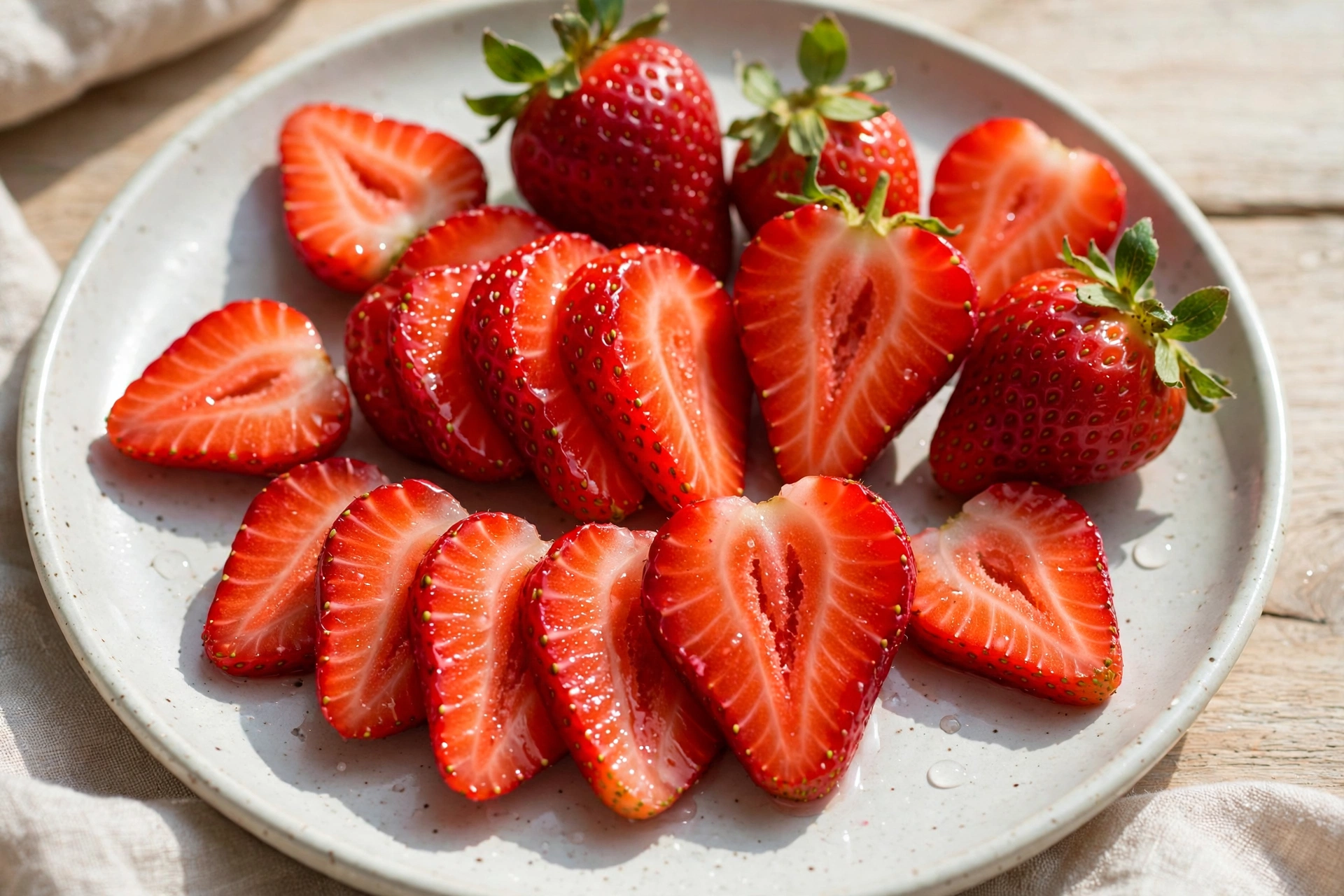
Strawberries bring vitamin C, anthocyanins, and ellagic acid together, and all three are linked to skin health. Vitamin C builds collagen, anthocyanins fight the free-radical damage that ages skin, and ellagic acid has been studied for its ability to protect skin from UV damage. None of this replaces sunscreen, but it supports skin from the inside in a way no cream can.
The water content of strawberries, about 91 percent, helps with hydration too. Hydrated skin looks plumper and more even, and eating water-rich fruit is one of the simplest ways to support that. Many people notice their skin looks fresher when they eat more fruit and drink enough water through the day.
Observational studies link diets rich in vitamin C with fewer wrinkles and less dryness as people age. Strawberries are one of the most concentrated food sources of vitamin C, so they are a strong choice for anyone who wants to support their skin through food.
Strawberry pulp is popular in homemade face masks, and while a mask is mostly a fun ritual, eating the berries does far more for your skin than putting them on it. The nutrients reach your skin through your blood, where they support collagen and repair all over your body.
6. Digestion and Gut Health
A cup of strawberries gives you about 3 grams of fibre, which is a useful amount for a low-calorie fruit. That fibre adds bulk, keeps digestion regular, and feeds the friendly bacteria in your gut. People who eat fibre-rich fruit regularly tend to report fewer bouts of constipation, and the research supports that.
Strawberries also contain polyphenols that may support a healthy gut microbiome. Early studies suggest these compounds can encourage the growth of beneficial bacteria, though the work is still young. A varied diet with plenty of different plant foods is the best way to keep gut bacteria diverse, and strawberries add one more colour to that mix.
Strawberries are gentle on most stomachs, but they do contain a small amount of natural fruit acids, so people with acid reflux sometimes find them irritating, especially on an empty stomach. Eating them with yogurt or oatmeal usually solves the problem, and the combination is delicious anyway.
One practical note: strawberries are one of the fruits most likely to carry pesticide residue, so wash them well under running water before eating. Soaking them for a few minutes in water with a splash of vinegar, then rinsing, is a simple way to clean them thoroughly.
7. Bone and Overall Nutrition
Strawberries give you manganese, a mineral your body uses to build bones and process nutrients. A cup of strawberries provides about 30 percent of your daily manganese, which is a surprisingly large contribution from a single fruit. Manganese also helps activate enzymes that protect cells from damage.
They also provide folate, vitamin K, and potassium in smaller amounts, all of which play roles in bone health, blood clotting, and blood pressure. No single fruit covers everything, but strawberries add a little of many things, and that breadth is part of their value.
For older adults, strawberries are a smart choice because they are soft, easy to chew, low in sugar, and rich in the nutrients that support bones and brains. A bowl of strawberries with yogurt makes a light, nutritious breakfast or snack that is easy to prepare and easy to enjoy.
Children love strawberries too, and they are one of the best first fruits to offer, since they are sweet, colourful, and packed with vitamin C. Just cut them in half for toddlers, since whole strawberries can be a choking risk for very young children.
How to Eat It
The best way to eat strawberries is fresh, washed, and eaten whole, with the green tops removed. Choose berries that are fully red, fragrant, and firm, with no soft spots or mould. Strawberries do not ripen much after picking, so buy them red and eat them within two to three days for the best flavour.
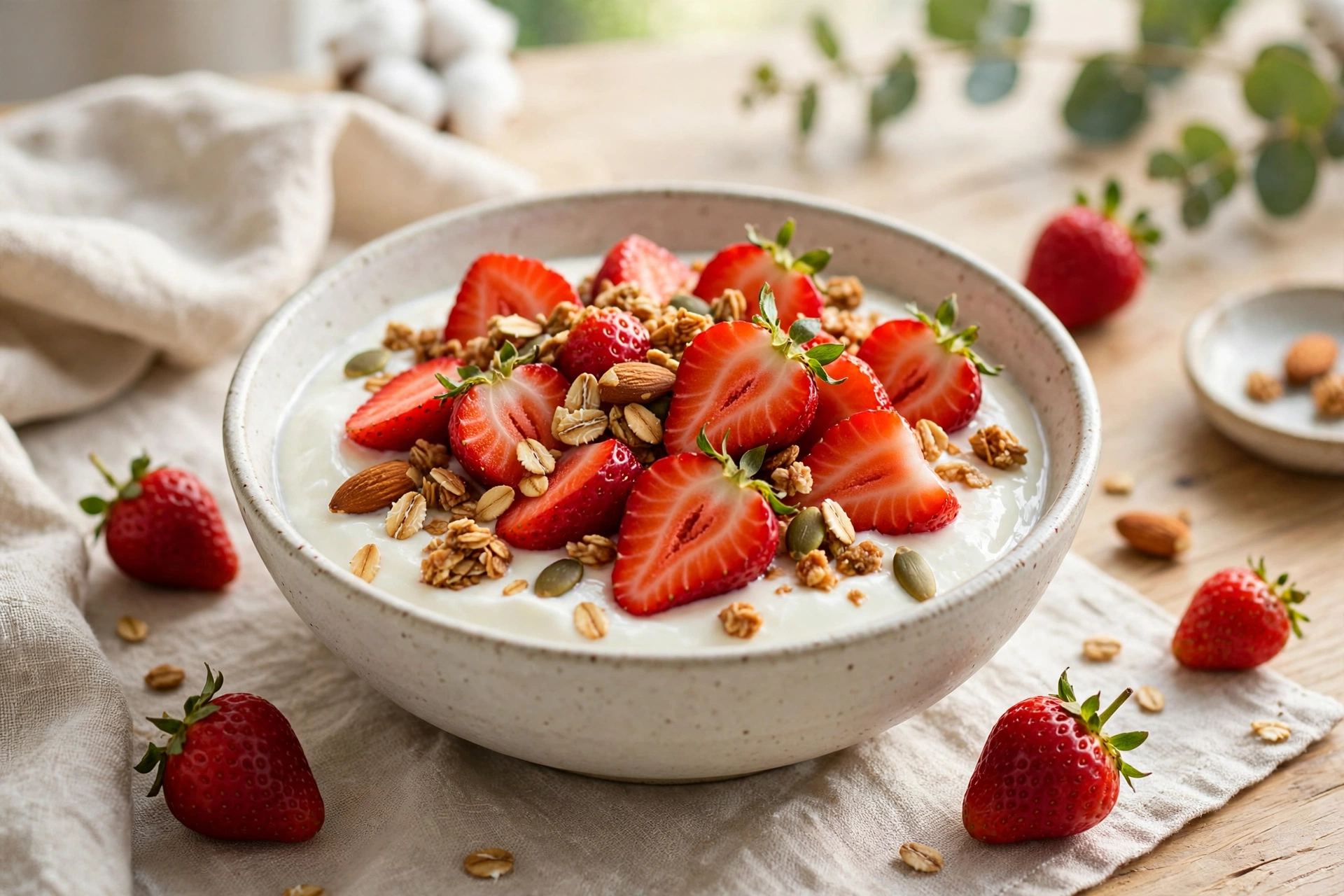
Strawberries are wonderful in smoothies, salads, and desserts. Try them sliced over Oats Benefits for Health (Cholesterol, Weight, and Steady Energy) in the morning, tossed into a green salad with spinach and walnuts, or blended with Yogurt Benefits for Health (Gut Health, Protein, and Strong Bones) for a quick, protein-rich snack. They also pair beautifully with a drizzle of Honey Benefits for Health (Uses, Nutrition, and Cautions) when you want a light dessert.
Store strawberries in the fridge unwashed in a breathable container, and wash them only before eating so they stay dry and fresh longer. If you have too many, freeze them on a tray first, then bag them, and they will keep for months for smoothies and baking. Avoid sugary strawberry syrups and jams, which lose the fibre and add a lot of sugar.
When you shop, look for berries with a deep, even red colour and a sweet smell. Strawberries picked fully ripe taste far better than pale, under-ripe ones, and local berries in season are usually the sweetest and the cheapest. If you buy a large punnet, eat the ripest berries first and save the firmer ones for a day or two later.
Cautions
Strawberries are safe for most people, but allergies are not rare. Strawberry allergy can cause itching, swelling, or stomach upset, and it is more common in children. If you notice symptoms after eating strawberries, stop eating them and talk to your doctor, especially if breathing is affected.
People who take blood-thinning medicine should know that strawberries contain small amounts of vitamin K, but normal food portions are not a concern. The bigger issue is eating very large amounts of strawberry supplements or extracts, which is a different thing from eating the fruit. Stick to food, and you will be fine.
Because strawberries are often sprayed, wash them well before eating. And if you have acid reflux, try eating strawberries with other foods rather than alone on an empty stomach. A handful after a meal is usually comfortable even for sensitive stomachs.
FAQ
How many strawberries can I eat in a day?
About one to two cups a day is a great amount for most adults. That is roughly 8 to 16 berries, giving you plenty of vitamin C and fibre for only 50 to 100 calories. There is no strict upper limit, but variety across different fruits is healthier than eating only one kind.
Are strawberries good for weight loss?
Yes, they are one of the best fruits for weight loss. A cup has only 50 calories and 7 grams of sugar, with 3 grams of fibre that keeps you full. They satisfy a sweet craving without the calories of cake, biscuits, or ice cream.
Can people with diabetes eat strawberries?
Yes, strawberries are one of the safest fruits for people with diabetes because of their low sugar and low glycaemic index. A cup or two a day is usually fine, but everyone should check their own blood sugar and follow their doctor’s advice.
Are frozen strawberries as healthy as fresh ones?
Almost. Frozen strawberries keep most of their vitamin C, fibre, and anthocyanins, because they are frozen soon after picking. They are a great choice out of season, especially for smoothies, and they are often cheaper than fresh berries in winter.
Do strawberries help with skin?
They can help. Strawberries are very rich in vitamin C, which your body needs to make collagen, and their antioxidants help protect skin from damage. Eating them regularly supports skin health over time, though they do not replace sunscreen or skin care.
Conclusion
Strawberries are one of the easiest healthy foods to love. They are sweet, low in sugar, packed with vitamin C, and full of compounds that support your heart, brain, skin, and blood sugar. A cup a day is a small habit with a long list of quiet benefits.
Buy them fresh in season, wash them well, and eat them plain or with yogurt and oats. That is all it takes to turn a favourite fruit into a daily health habit that actually sticks.
Sources
Strawberry — Wikipedia
Strawberries — Harvard T.H. Chan School of Public Health



Pingback: Raspberries Benefits for Health