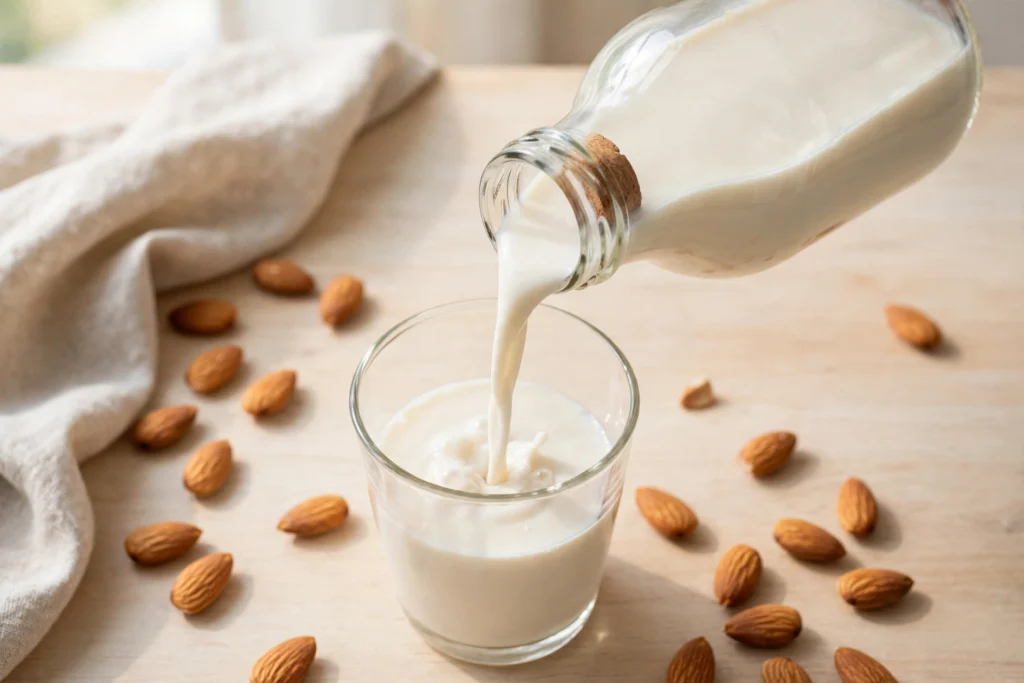

Almond milk benefits for health start with what it is not: it is not milk, and it is not a glass of almonds. It is a light, creamy drink made by soaking almonds, blending them with water, and straining out the pulp. The result is a pale, nutty drink with far fewer calories than dairy milk, no lactose, no cholesterol, and — in most shop-bought cartons — added calcium and vitamins that make it a practical daily choice for millions of people.
A cup of unsweetened almond milk has about 30 to 40 calories, 1 gram of protein, 2.5 grams of fat, and 1 gram of carbohydrate. Compare that with whole dairy milk at about 150 calories and 8 grams of protein per cup, and the trade-off is clear: almond milk is lighter and easier on the waistline, but it brings far less protein. Which one is better depends entirely on what you need from the drink.
This article covers what almond milk may do for your bones, skin, weight, and heart, how it compares with dairy milk, how to choose a good carton, and the cautions — especially for children and anyone relying on it for protein. It is a useful drink with real strengths and real limits, and knowing both is what makes it work for you.
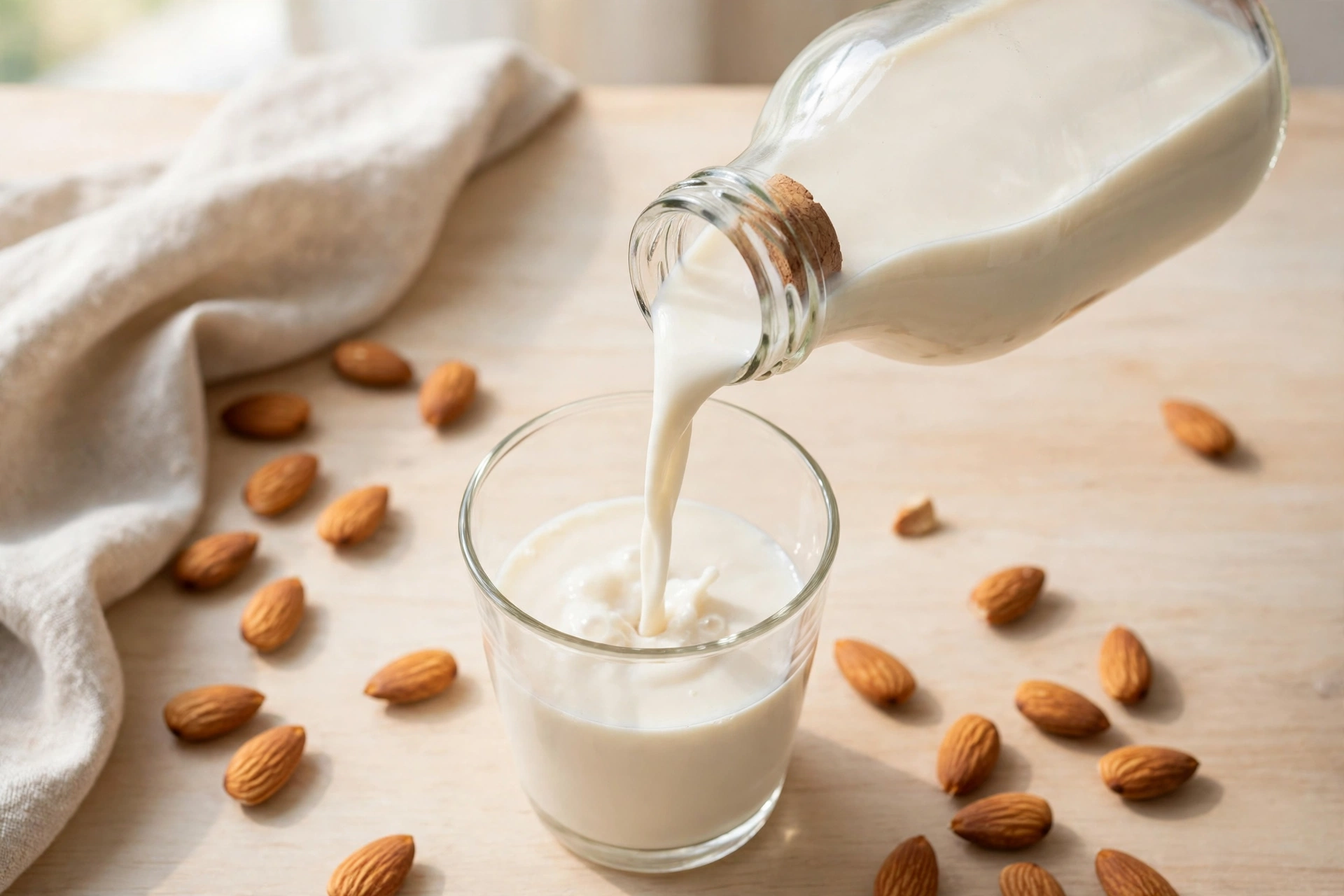
1. Very Low in Calories
The most obvious benefit of almond milk is how light it is. At 30 to 40 calories a cup, unsweetened almond milk has roughly a quarter of the calories of whole dairy milk and about half the calories of skim milk. That makes it an easy swap for anyone watching their weight: the same bowl of cereal, the same smoothie, the same cup of coffee, with 100 fewer calories and no change in routine.
Over a year, that swap adds up. One cup a day saves around 36,000 calories — roughly five kilograms of body weight — without any extra effort or willpower. It works because it is a replacement, not a restriction: you still get your morning cereal and your coffee, just with a lighter base. The key is choosing unsweetened almond milk, because sweetened versions can have 60 to 90 calories and 7 to 16 grams of added sugar per cup, which wipes out most of the advantage.
Low calorie does not mean low value, though. Almond milk’s lightness is a strength when your diet already provides protein from other foods — eggs, yogurt, lentils, fish — and you want a drink that adds flavour without adding much energy. It is a poor choice when the drink itself needs to carry the protein, which is why it is not recommended as a main drink for young children.
2. Supports Bone Health When Fortified
Natural almond milk contains almost no calcium, which is why almost every shop-bought carton is fortified. A fortified cup typically provides 300 to 450 milligrams of calcium — about the same as dairy milk, and sometimes more — plus vitamin D, which helps your body absorb that calcium. Together, they support normal bone health as part of a diet that includes enough calcium, vitamin D, and weight-bearing exercise.
The form of calcium matters a little: almond milk is usually fortified with calcium carbonate, which is well absorbed, but it can settle at the bottom of the carton. Shake the carton well before pouring, or you will leave much of the calcium behind. Check the label for at least 300 milligrams of calcium and some vitamin D per cup, and avoid cartons that list calcium far below that — they will not do your bones many favours.
For a food-based comparison, yogurt is one of the best natural sources of calcium and protein together. Our article on Yogurt Benefits for Health (Gut Health, Protein, and Strong Bones) explains how dairy yogurt supports bones in a different way, and many people use both — yogurt for protein and probiotics, almond milk for a light drink.
3. Naturally Free of Lactose and Cholesterol
Almond milk contains no lactose, the sugar in dairy milk that many adults cannot digest, and no cholesterol, since cholesterol only comes from animal foods. That makes it a comfortable choice for people with lactose intolerance, who often get bloating, gas, and stomach cramps from dairy milk, and for anyone following a vegan diet or cutting back on animal foods.
About two-thirds of the world’s adults have some degree of lactose intolerance, and for them almond milk is not a trend — it is a practical solution that lets them enjoy cereal, coffee, and smoothies without discomfort. It is also naturally low in saturated fat, with most of its small fat content coming from monounsaturated fat, the same type found in olive oil and linked with better heart health.
One caution: almond milk is not suitable for people with a tree nut allergy, and it should never be given to infants as a replacement for breast milk or formula. It simply does not have the protein, fat, or calories a baby needs to grow, and using it that way can cause serious nutritional problems. For adults and older children with a varied diet, it is a safe and useful option.
4. May Support Heart Health
Almond milk’s heart profile is gentle: low in saturated fat, free of cholesterol, and low in calories. Unsweetened almond milk has about 0.5 grams of saturated fat per cup, compared with about 5 grams in whole dairy milk. Replacing a high-saturated-fat drink with a low one is a small step, but heart health is built from exactly these small steps repeated daily.
Some brands also add vitamin E, and almonds themselves are rich in it — a nutrient linked with protecting cells from oxidative damage. A cup of fortified almond milk typically provides about half your daily vitamin E, which is a meaningful contribution. Vitamin E is not a heart medicine, but a diet rich in it, from nuts, seeds, and plant oils, is linked with better heart outcomes over time.
For a richer source of the same healthy fats, whole almonds are hard to beat. Our guide to Almond Benefits for Health (How Many to Eat a Day) explains what the whole nut offers that the milk does not — especially fibre and protein — and why eating a small handful of almonds alongside your almond milk gives you the best of both.
5. Gentle on the Skin
Almond milk’s vitamin E content is the main reason it shows up in skin conversations. Vitamin E helps protect skin cells from sun damage and oxidative stress, and it supports the skin barrier that keeps moisture in. A cup of fortified almond milk provides a useful share of your daily vitamin E, and if your diet already includes nuts, seeds, and plant oils, you are covering the bases well.
Some people also use almond milk in skin care directly — as a base for face masks or a gentle cleanser — though the evidence for topical use is mostly traditional rather than scientific. Drinking it is the simpler route: the vitamin E reaches your skin through the blood, and the effect builds over weeks alongside the rest of your diet. It will not clear acne or erase wrinkles, and no single food will, but as part of a skin-friendly diet with enough water, vegetables, and healthy fats, it contributes.
There is also a comfort factor: almond milk is light and easy to digest, and some people find that switching from dairy milk reduces breakouts, though the evidence here is mixed and individual. If you suspect dairy affects your skin, try almond milk for a month and see how you feel — personal experiments like this are more useful than general claims.
6. A Light, Versatile Base for Everyday Drinks
Almond milk works in almost every place dairy milk works: cereal, coffee, smoothies, oatmeal, baking, and sauces. Its mild, slightly nutty flavour suits sweet dishes especially well, and it froths reasonably for lattes, though not as richly as dairy milk. It is thinner than whole milk, so in recipes that need richness — like a creamy soup — you may want to add a spoonful of nut butter or a little coconut cream.
The versatility is part of its appeal. One carton covers breakfast, coffee, and cooking, and it keeps in the fridge for a week or more after opening. For people who drink milk mainly as an ingredient rather than as a food in its own right, almond milk does the job with far fewer calories and no lactose. And for smoothies, it is an ideal base: light enough not to overpower the fruit, creamy enough to feel satisfying.
Oats with milk is a classic breakfast, and almond milk makes a lighter version of it. Our article on Oats with Milk Benefits (A Simple, Powerful Breakfast for Busy Mornings) covers the original combination, and swapping in almond milk keeps the comfort while cutting the calories — just add a spoonful of nuts or seeds to replace the protein you lose.
7. Good for Blood Sugar When Unsweetened
Unsweetened almond milk has almost no sugar — about 1 gram per cup, compared with 12 grams in dairy milk — and a very low glycaemic impact. That makes it a friendly choice for people watching their blood sugar, including people with diabetes or prediabetes. A smoothie made with almond milk, berries, and protein powder will raise blood sugar far less than the same smoothie made with sweetened milk or fruit juice.
The warning, again, is the sweetened version. Flavoured almond milk — vanilla, chocolate, or “original” sweetened — can contain 7 to 16 grams of added sugar per cup, which is most of the way back to a soft drink. Always read the label and choose the carton that says “unsweetened” clearly on the front. If you want sweetness, add it yourself — a little honey or a few drops of vanilla extract — so you control the amount.
How to Enjoy It
Choose unsweetened, fortified almond milk as your default. Check the label for at least 300 milligrams of calcium, some vitamin D, and vitamin E per cup, and a short ingredient list — almonds, water, calcium, vitamins, and a little salt is ideal. Avoid cartons with carrageenan if that bothers you, though current evidence suggests the food-grade form is safe, and avoid sweetened or flavoured versions for daily use.
Easy ways to enjoy it:
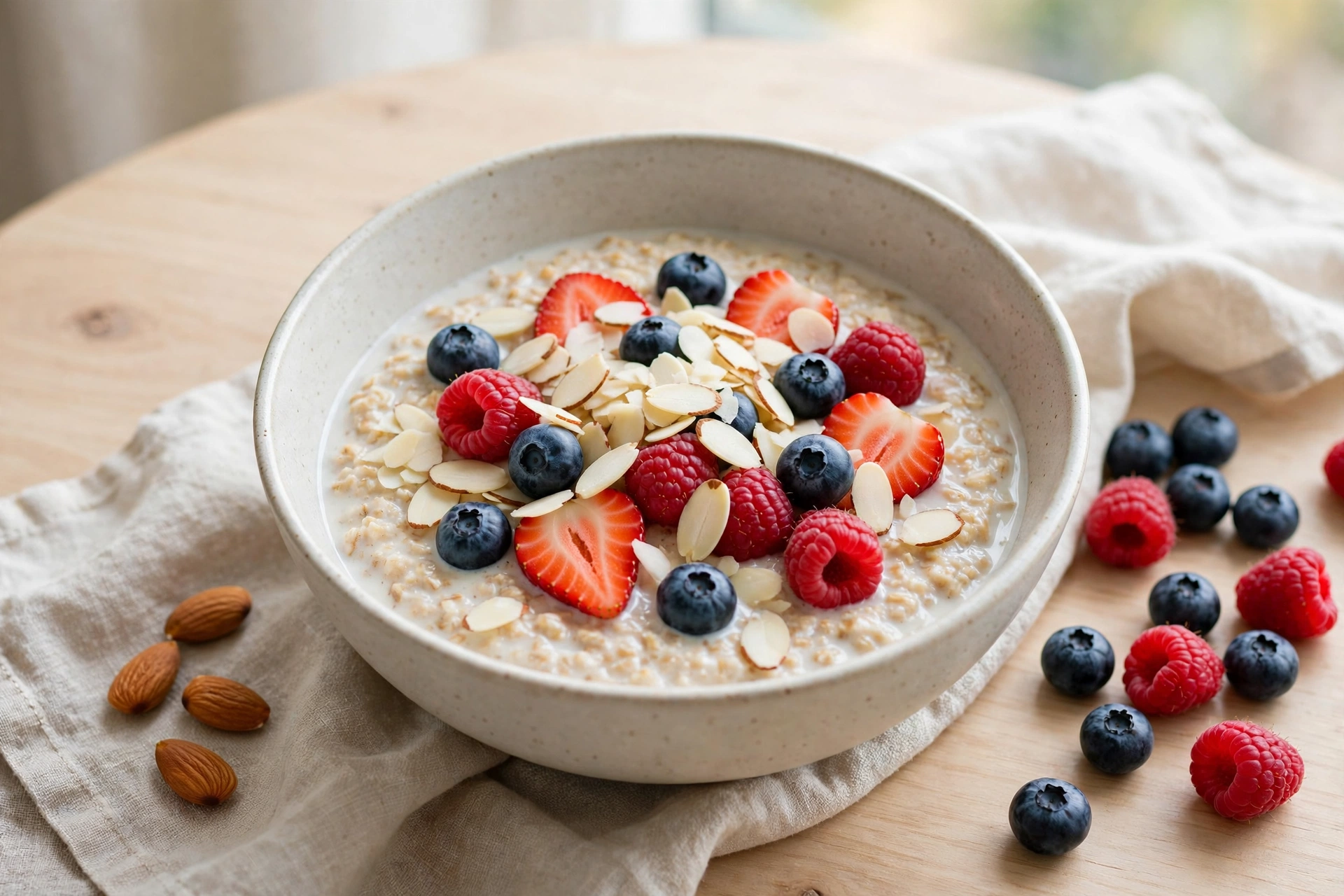
- Breakfast: pour it over cereal or oatmeal, or blend it into a smoothie with banana and berries.
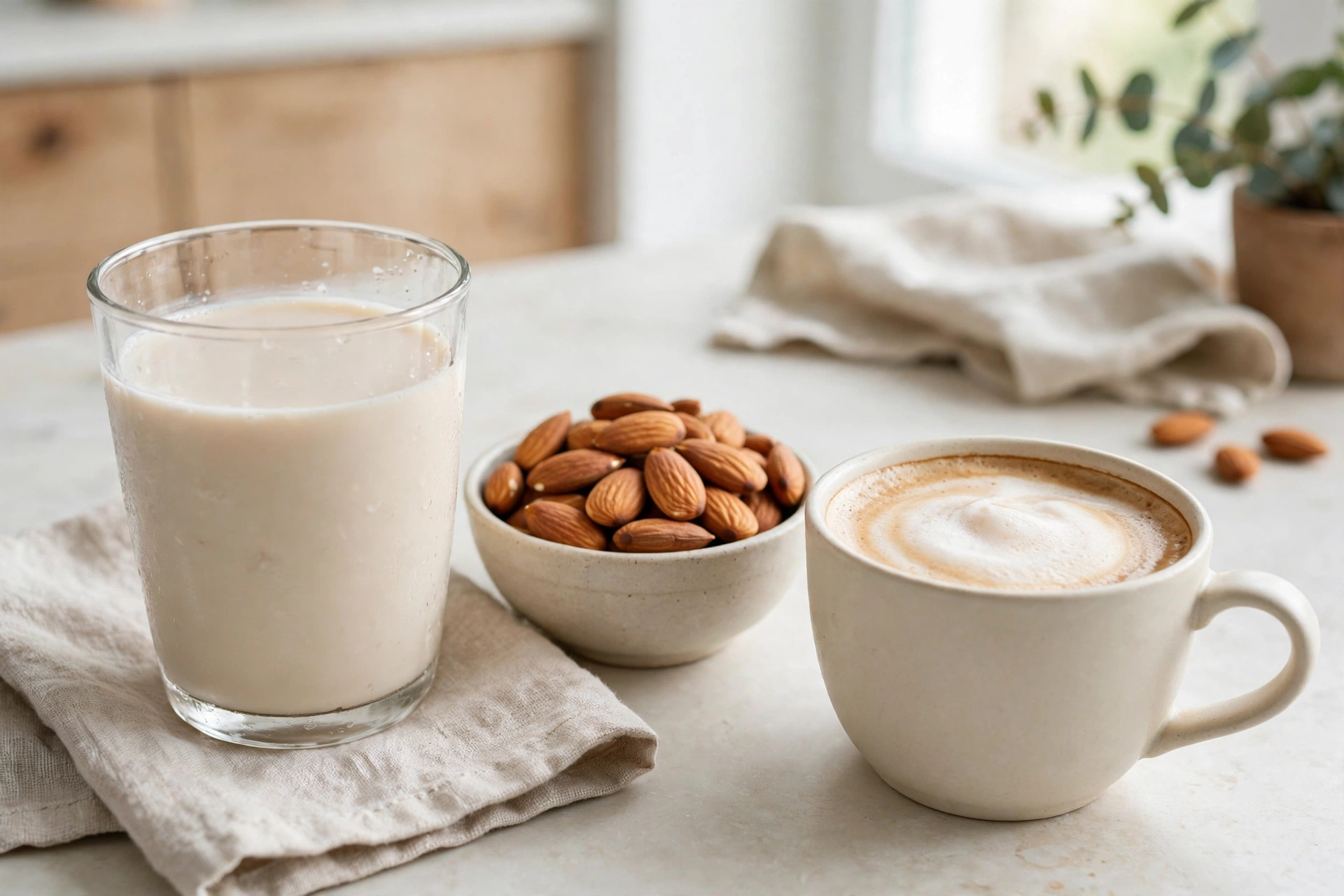
- Coffee and tea: use it as a light milk in coffee, chai, or matcha — it adds creaminess without heaviness.
- Baking: replace dairy milk one-for-one in pancakes, muffins, and cakes; the nutty flavour suits sweet bakes.
- Soups and sauces: stir it into a creamy soup or a pasta sauce at the end of cooking, off the heat, so it does not split.
- Overnight oats: soak oats in almond milk overnight with chia seeds and fruit for a ready-made breakfast.
- Golden milk: warm almond milk with turmeric, cinnamon, and a little honey for a soothing evening drink.
Shake the carton well before every pour, store it in the fridge, and use it within seven to ten days of opening. You can also make almond milk at home by soaking a cup of almonds overnight, blending with four cups of water, and straining through a cloth — fresh, simple, and free of additives, though it will not be fortified with calcium unless you add it.
Things to Watch
The biggest limit of almond milk is protein. At about 1 gram per cup, it provides almost none, compared with 8 grams in dairy milk and 7 to 9 grams in soy milk. If you rely on milk as a protein source — for children, older adults, or anyone with a small appetite — almond milk is a poor choice unless you add protein elsewhere. Soy milk is the closest plant-based match for protein, and it is usually the better pick when protein matters most.
Children under five should not use almond milk as their main drink, since they need the fat, protein, and calories of whole dairy milk or a suitable alternative for growth. Older children and adults with a varied diet can use it freely. People with a tree nut allergy must avoid it entirely, and anyone with kidney disease should check the potassium and phosphorus content, which varies by brand.
Finally, watch the additives. Some brands add a lot of sugar, flavourings, and thickeners, and a few use very little almond — sometimes as little as 2 percent. A good carton lists almonds as a real ingredient, not an afterthought, and keeps the sugar at zero. This article is general information, not medical advice.
FAQ
Is almond milk healthier than dairy milk?
It depends on what you need. Almond milk is lower in calories, saturated fat, and sugar, and it is free of lactose and cholesterol, which suits many people. Dairy milk is much richer in protein, and it provides calcium and B vitamins naturally. For weight and lactose, almond milk wins; for protein and natural nutrition, dairy milk wins. Both can be part of a healthy diet.
How much almond milk can I drink per day?
Most healthy adults can drink one to three cups a day without any problem, as long as the rest of the diet provides enough protein. There is no strict limit, but remember it is a light drink, not a meal — if it replaces dairy milk entirely, make sure you get protein and calcium from other foods, or choose a fortified carton.
Does almond milk help you lose weight?
It can help indirectly. At 30 to 40 calories a cup, unsweetened almond milk saves about 100 calories per cup compared with whole dairy milk, and those savings add up over months. It does not burn fat on its own, and sweetened almond milk will not help at all — the benefit comes from the swap, not from the drink itself.
Can I cook with almond milk?
Yes, it works well in most recipes — oatmeal, smoothies, baking, pancakes, and sauces. It is thinner than dairy milk, so creamy dishes may need a little extra thickener, and it can split if boiled hard, so add it at the end of cooking and keep the heat gentle. For coffee, barista-style almond milk froths better than the standard kind.
Is homemade almond milk better than shop-bought?
Homemade almond milk is fresher, has no additives, and usually contains more almonds — often 10 to 15 percent instead of 2 percent. But it is not fortified, so it has almost no calcium or vitamin D unless you add a supplement. Shop-bought fortified almond milk is the better choice for bone health, while homemade wins on purity and taste. Many people use both.
Conclusion
Almond milk is a light, gentle drink that does a few things very well: it cuts calories, avoids lactose and cholesterol, supports bones when fortified, and adds vitamin E for your skin. Its limits are just as clear — very little protein, and not a suitable main drink for young children. Choose unsweetened and fortified, shake the carton well, and get your protein from other foods. Used that way, almond milk is a practical, tasty part of a modern diet, and a good example of how a simple swap can make everyday eating a little lighter.
Sources
Almond milk — Wikipedia
Milk — Harvard T.H. Chan School of Public Health, The Nutrition Source