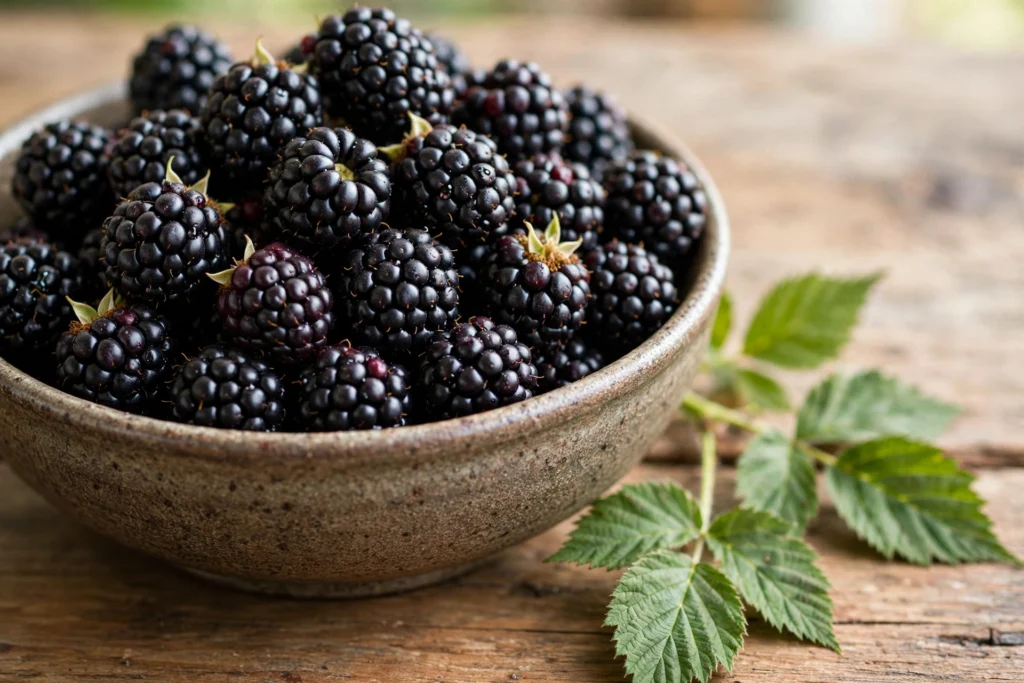

Blackberries look small and simple, but they carry a surprising amount of good stuff inside them. Dark, juicy, and a little tart, they are one of those fruits that feel like a treat while quietly doing a lot of work for your body. If you have ever picked a ripe blackberry straight off a bush on a warm afternoon, you know the flavour is hard to forget.
This article walks through what blackberries actually offer, what the science says so far, and the easy ways to eat more of them. The claims here stay close to the evidence, and where research is still early, that is said plainly.
What Are Blackberries?
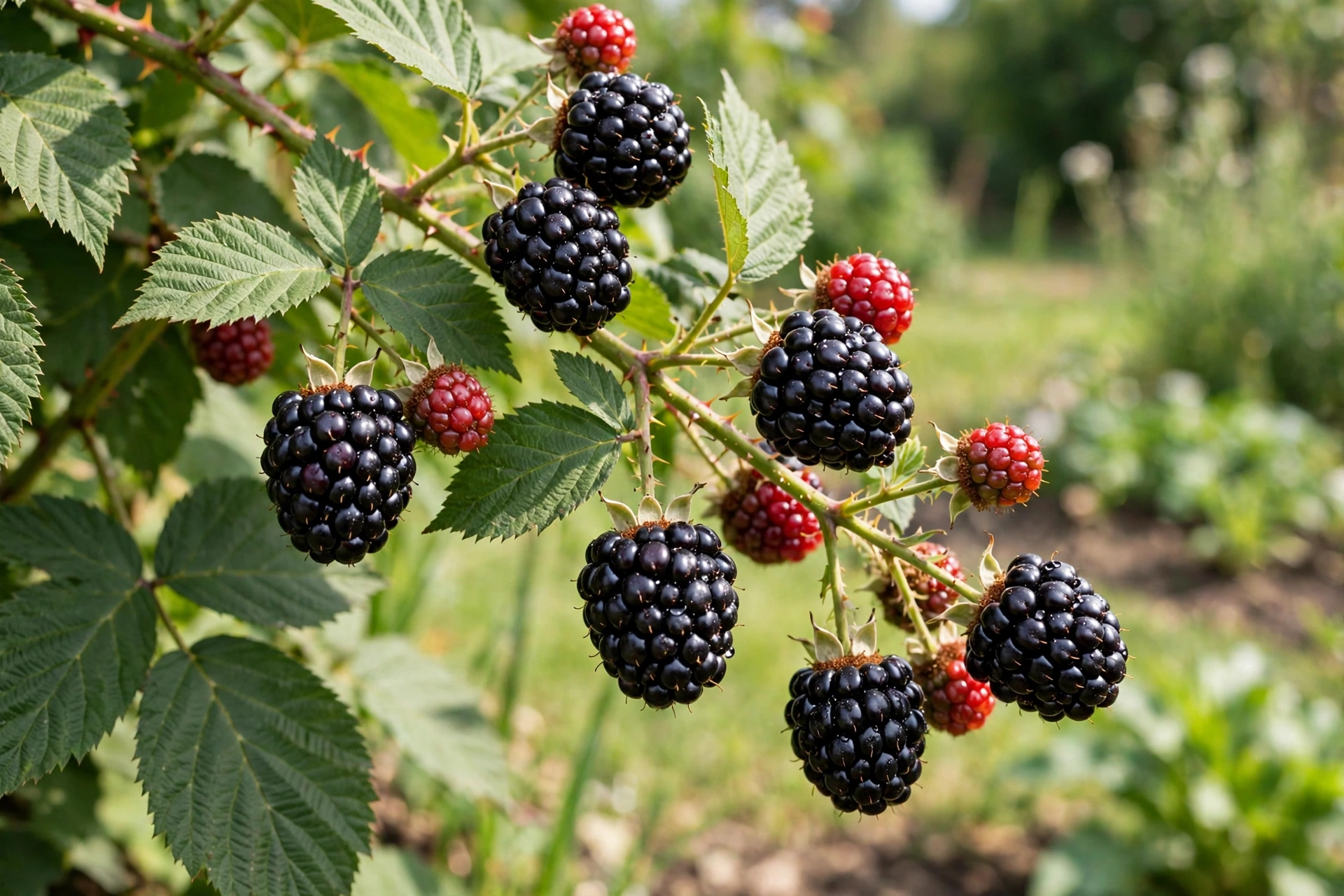
Blackberries grow on thorny shrubs called brambles, and they have been eaten for thousands of years across Europe, North America, and parts of Asia. The fruit is not a single berry at all. Each blackberry is made up of dozens of tiny drupelets clustered around a core, which is why it has that soft, slightly bumpy shape.
Wild blackberries ripen through late summer, while farmed varieties are bred to be larger, sweeter, and easier to pick. Both kinds share the same dark colour, which comes from anthocyanins — the same family of plant compounds that colours blueberries and dark cherries. That colour is more than decoration. It is one of the main reasons nutrition researchers pay attention to this fruit.
Blackberries Nutrition
A cup of raw blackberries (about 144 grams) gives you roughly 62 calories, which is light for the amount of nutrition packed in. Here is what that cup contains, based on figures from the USDA FoodData Central database:
| Nutrient | Amount per cup (144 g) |
|---|---|
| Calories | 62 |
| Fibre | 8 g |
| Vitamin C | 30 mg |
| Vitamin K | 29 mcg |
| Vitamin E | 1.7 mg |
| Manganese | 0.9 mg |
| Folate | 36 mcg |
| Potassium | 233 mg |
| Magnesium | 29 mg |
| Copper | 0.2 mg |
The number that stands out most is fibre. Eight grams in one cup covers close to a third of the daily fibre target for many adults, and blackberries are one of the most fibre-rich fruits you can eat. Vitamin C comes in strong too, at about a third of the daily value, and manganese covers nearly half of it.
Blackberries also contain smaller amounts of calcium, iron, zinc, and B vitamins. None of these alone is huge, but together they add up to a fruit that punches well above its weight.
1. They Are Rich in Antioxidants
The deep purple-black colour of blackberries comes from anthocyanins, a type of flavonoid that acts as an antioxidant in the body. Antioxidants help protect cells from damage caused by free radicals, unstable molecules that build up from normal metabolism, pollution, and sun exposure.
Blackberries rank near the top of common fruits for antioxidant content. Lab tests that measure total antioxidant capacity often place them above strawberries and apples, and close to wild blueberries. That does not mean they are a magic shield against disease, but it does mean they are a strong choice if you want more protective plant compounds in your diet.
Anthocyanins are also the compounds behind much of the research into berries and long-term health. Studies in animals and small human trials have linked diets rich in anthocyanins with better blood vessel function and lower markers of inflammation, though larger human trials are still needed before firm claims can be made.
2. They Support Digestion and Gut Health
With 8 grams of fibre per cup, blackberries are one of the best fruits for keeping digestion moving. Fibre adds bulk to stool, helps prevent constipation, and feeds the good bacteria living in your gut. Those bacteria break fibre down into short-chain fatty acids, which help keep the gut lining healthy.
Most people eat far less fibre than they should, so a fruit that delivers a third of the daily target in one serving is genuinely useful. It is also the kind of fibre that works gently — a mix of soluble and insoluble types — which tends to suit most stomachs when eaten as part of a normal diet.
If your diet is low in fibre right now, add blackberries a little at a time rather than eating a huge bowl on day one. A sudden jump in fibre can cause bloating, while a slow increase lets your gut adjust.
3. They May Help Your Heart
Heart health is one of the most studied areas for berries, and blackberries show real promise. Anthocyanins have been linked in observational studies to better blood vessel function and healthier blood pressure readings. A large study published in the journal Circulation followed tens of thousands of people and found that those who ate anthocyanin-rich foods most often had a lower risk of heart attacks, though the study shows a link rather than proof of cause and effect.
Blackberries also help the heart in a quieter way: their fibre can help the body manage cholesterol, and their potassium supports normal blood pressure. One cup gives you around 233 mg of potassium, which adds up when the rest of your diet includes other potassium-rich foods like bananas, beans, and leafy greens.
4. They Support Brain Health as You Age
Your brain uses a lot of oxygen, which makes it sensitive to the kind of cell damage that antioxidants help guard against. Anthocyanins are unusual because research suggests they can cross the blood-brain barrier, the filter that keeps many substances out of the brain.
Animal studies have found that diets rich in berries can slow age-related decline in memory and learning, and small human studies have linked regular berry eating with better short-term memory scores in older adults. A long-running Nurses’ Health Study found that women who ate blueberries and strawberries most often showed slower rates of cognitive decline, and researchers believe the same anthocyanin effect applies to blackberries.
5. They Are Good for Your Skin
Vitamin C plays a direct role in making collagen, the protein that keeps skin firm and helps it heal. A cup of blackberries gives you about 30 mg of vitamin C, which is a solid share of what you need each day. Without enough vitamin C, collagen production slows, and skin can look dull and heal more slowly.
The antioxidants in blackberries add a second layer. They help defend skin cells against damage from UV light and pollution, which are two of the biggest drivers of early ageing. Eating berries will not replace sunscreen, but it supports the skin from the inside while sunscreen protects it from the outside.
6. They Give Your Immune System a Boost
Vitamin C is probably the nutrient most people link to immunity, and blackberries are a good source of it. The vitamin helps white blood cells work properly and supports the skin barrier that keeps germs out. One cup covers roughly a third of the daily vitamin C target for adults.
Blackberries also bring vitamin A in small amounts, plus manganese, which helps enzymes involved in immune defence. It is the combination, rather than any one nutrient, that makes whole fruit a better choice than a single supplement. Food gives you the nutrients in forms your body handles well, along with fibre and water that a pill does not.
Eating blackberries during cold season will not guarantee you stay well, but a diet that includes them regularly is a sensible way to keep your immune system supplied.
7. They Are a Smart Choice for Blood Sugar
Blackberries are sweet, but they are low in sugar compared with many fruits — about 7 grams per cup — and their high fibre slows down how fast that sugar reaches your bloodstream. That makes them a friendlier option for people watching their blood sugar than fruit juice or dried fruit, where the sugar is concentrated and the fibre is mostly gone.
Some lab and animal studies have also suggested that anthocyanins may help the body respond better to insulin, the hormone that moves sugar out of the blood. Human evidence is still limited, so this should be read as interesting early science rather than a treatment claim.
If you have diabetes, blackberries are generally a good fruit choice, but portion size still matters, and it is worth checking with your doctor or dietitian about how they fit your own meal plan.
8. They Support Strong Bones
Bone health needs more than calcium, and blackberries contribute several of the supporting nutrients. Vitamin K, at about 29 mcg per cup, helps the body use calcium properly and supports the proteins that build bone. Manganese plays a role in forming bone tissue, and magnesium helps keep bones dense.
A single food will not carry your bone health on its own. Bones need calcium from dairy or fortified foods, vitamin D from sunlight or supplements, and weight-bearing movement. Blackberries simply add useful pieces to that picture, and they do it in a food most people enjoy eating.
How to Eat Blackberries
The simplest way is also the best: eat them fresh, washed, and on their own. After that, they are easy to work into meals you already make:
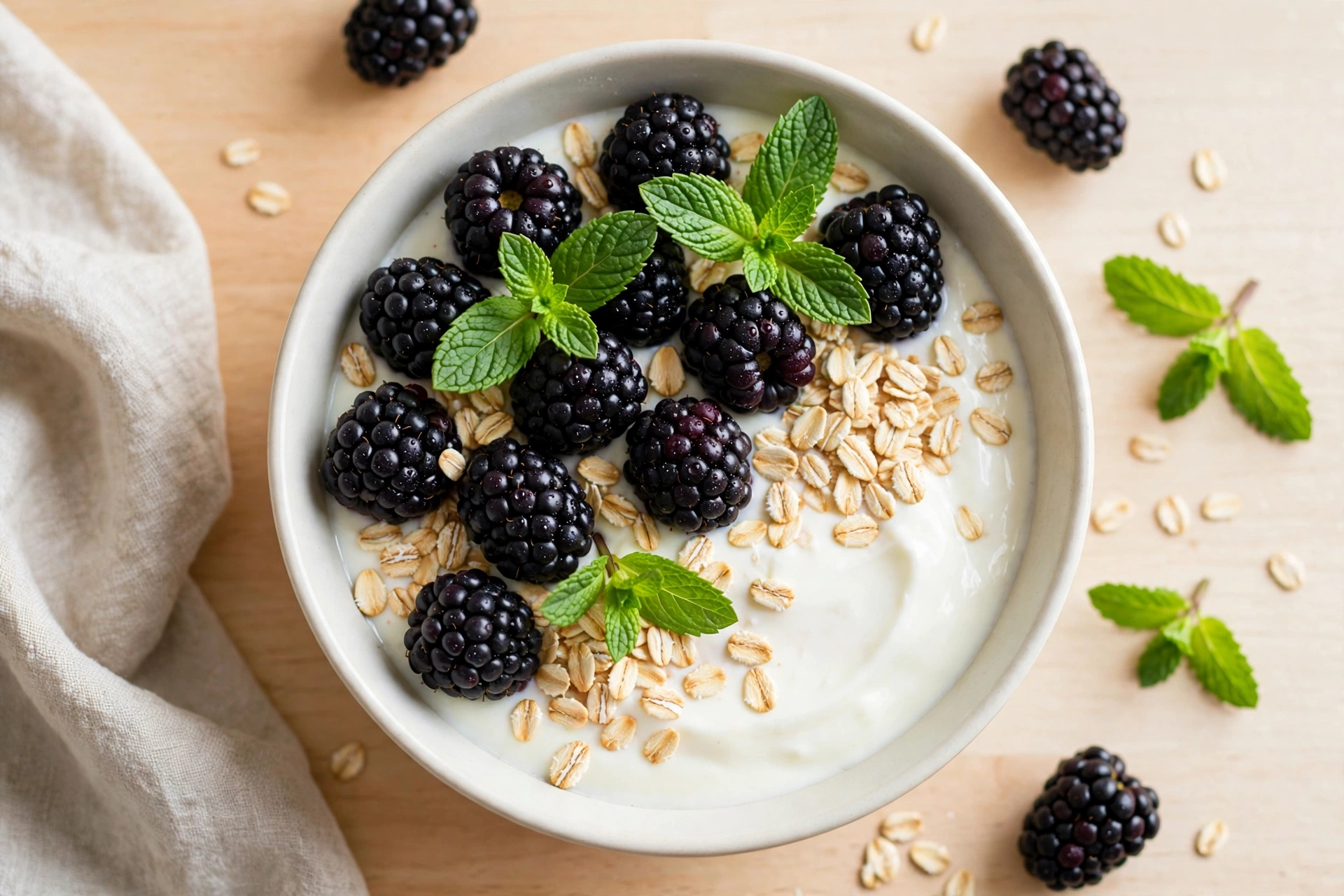
- Stir them into porridge or yogurt for breakfast
- Blend them into smoothies with banana and milk or a dairy-free alternative
- Scatter them over pancakes, waffles, or French toast
- Fold them into muffin or crumble recipes
- Toss a handful into a green salad with walnuts and feta
- Freeze them and eat them like tiny sorbet bites on a hot day
Frozen blackberries are just as useful as fresh ones for cooking and smoothies, and they are often cheaper when the fruit is out of season. Buy them frozen if fresh ones look soft or mouldy — a few squashed berries in a punnet can spoil the rest fast.
For more berry ideas, have a look at our guide to Raspberries Benefits for Health — raspberries share many of the same strengths and pair well with blackberries in the same bowl.
Who Should Be Careful
Blackberries are safe for most people, but a few things are worth knowing. They contain natural salicylates, compounds related to aspirin, so people who are sensitive to aspirin sometimes react to berries as well. If you have ever had a reaction to berries or aspirin, talk to your doctor before eating large amounts.
The seeds are small and hard, and they can bother people with digestive conditions such as diverticulitis, though current medical advice is more relaxed about seeds than it used to be. If you have a gut condition, check with your clinician.
Blackberries vs Raspberries
Blackberries and raspberries are close cousins, and both are excellent choices. Blackberries tend to win on fibre and vitamin K, while raspberries edge ahead on vitamin C and are a little lower in calories per cup. Blackberries taste deeper and a touch more tart, while raspberries are brighter and softer.
There is no need to pick a winner. If you enjoy both, eat both — variety is one of the simplest ways to get a wider mix of plant compounds. Our Goji Berry Benefits for Health article covers another berry with a very different profile, and it is worth a read if you like comparing dried and fresh berries.
Blackberries vs Other Berries
If you are choosing between berries, each one brings something slightly different. Blueberries are famous for anthocyanins too, and they are softer and sweeter. Strawberries give you more vitamin C per cup but less fibre. Goji berries, usually eaten dried, are far more concentrated in sugar and calories, so a small handful goes a long way.
For another fruit that pairs well with blackberries in smoothies and salads, see our Dragon Fruit Benefits for Health guide — its mild flavour lets the blackberry taste shine through.
Frequently Asked Questions
Are blackberries good for you every day?
Yes, for most people a daily serving of blackberries is a healthy habit. One cup gives you fibre, vitamin C, and anthocyanins for about 62 calories, and there is no downside to eating them regularly as part of a varied diet. Just wash them well and vary your fruit intake so you get a wide mix of nutrients.
Can blackberries help you lose weight?
They can help, in the sense that they are low in calories and high in fibre, so a cup of blackberries fills you up for very few calories. That makes them a good swap for higher-calorie snacks like biscuits or crisps. Weight loss still comes down to your overall diet and activity, not any single food.
Are frozen blackberries as healthy as fresh?
Mostly, yes. Freezing preserves vitamin C and anthocyanins well, and frozen berries are picked at peak ripeness. They lose a little texture when thawed, so they suit smoothies, porridge, and baking better than eating plain. Nutritionally, they are a close match to fresh berries.
Do blackberries raise blood sugar?
Blackberries are low in sugar and high in fibre, so they raise blood sugar slowly compared with fruit juice, dried fruit, or sweet snacks. One cup contains about 7 grams of natural sugar. People with diabetes can usually enjoy them, but portion size matters and it is worth checking with a doctor or dietitian.
Are blackberries safe during pregnancy?
Blackberries are generally safe in pregnancy when washed well, and their folate and vitamin C are useful nutrients at that time. Wash fresh berries carefully to remove soil and microbes, and avoid unwashed wild-picked berries. If you have any concerns, ask your doctor or midwife.
The Bottom Line
Blackberries are a small fruit with a strong case for a regular place in your diet. They give you fibre, vitamin C, vitamin K, and a rich dose of anthocyanins for very few calories, and the research behind them — for heart, brain, gut, and skin health — keeps moving in a positive direction.
They are not a cure for anything, and no single food can carry your health on its own. But as part of a varied diet full of whole foods, blackberries are one of the easiest wins you can add. A handful in your breakfast, a cup in a smoothie, or a bowl eaten straight from the punnet — it all counts.
Sources
- USDA FoodData Central — Blackberries, raw: nutrient values per 100 g and per cup.
- Cassidy A, et al. “High anthocyanin intake is associated with a reduced risk of myocardial infarction in young and middle-aged women.” Circulation, 2013.
- Nurses’ Health Study — Berry intake and cognitive decline in older women.
- Cleveland Clinic — Health Essentials: Are blackberries good for you?
- National Institutes of Health — Dietary fibre and gut health overview.