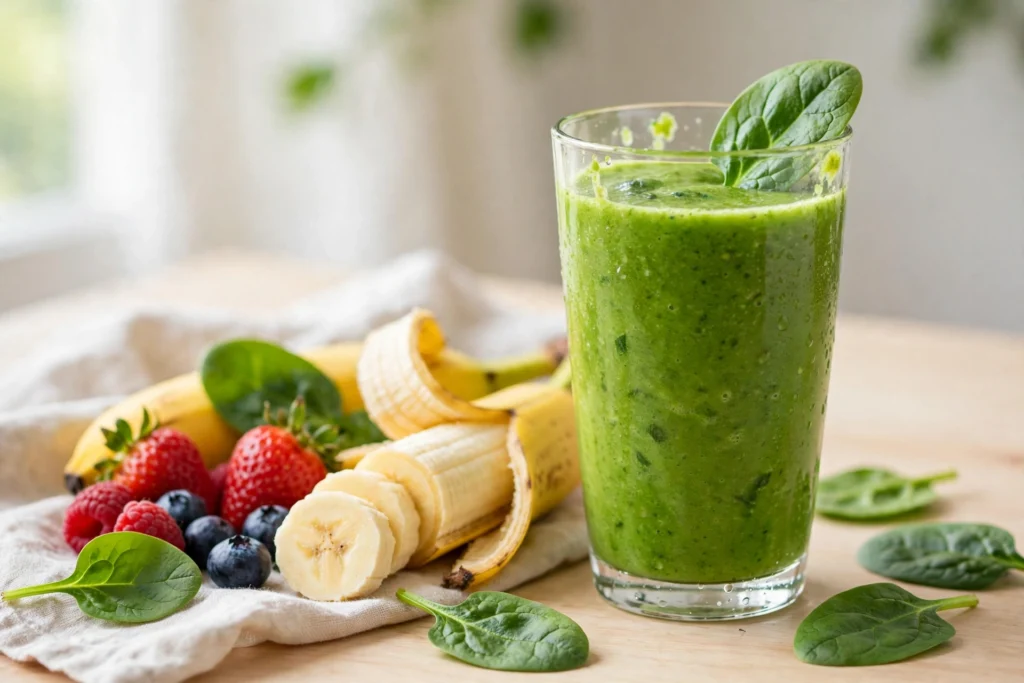

Green smoothie benefits for health are the reason this drink went from a niche health-food habit to a mainstream breakfast in less than a decade. A green smoothie is simply leafy greens — spinach, kale, or chard — blended with fruit, liquid, and a few extras like seeds or yogurt, until it turns into a thick, bright green drink. It looks unusual the first time you see it. It tastes far better than it looks, and it is one of the easiest ways to eat more vegetables without sitting down to a salad.
The appeal is practical. Most adults do not eat enough vegetables, and a single smoothie can hold two handfuls of greens, a banana, a handful of berries, and a spoonful of seeds — foods that would take a whole plate to eat separately. A typical green smoothie has 150 to 250 calories, 4 to 8 grams of fibre, and a useful spread of vitamins A, C, and K, folate, potassium, and magnesium, depending on what goes into it.
This article covers what a green smoothie may do for your energy, skin, digestion, and weight, how to build one that is actually balanced, and the mistakes — too much fruit, too little protein, too much sugar — that turn a healthy drink into a dessert. The drink itself is simple; building it well is the skill.
1. An Easy Way to Eat More Greens
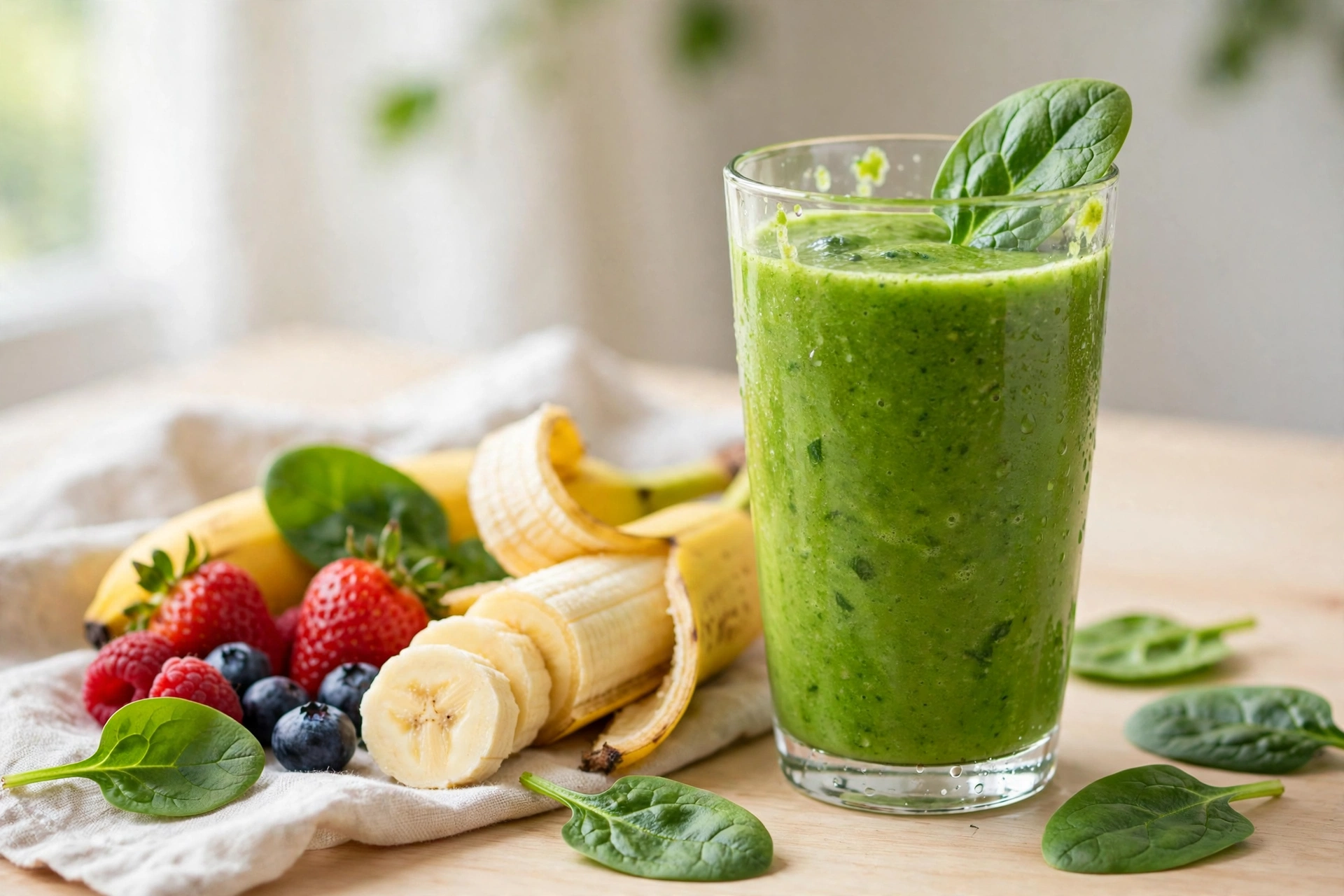
The single biggest benefit of a green smoothie is the simplest one: it helps you eat more leafy greens. Health authorities suggest at least five portions of fruit and vegetables a day, and most people manage three or four. A smoothie with two big handfuls of spinach adds a full portion before you have even left the house, and it does it in a form that is quick to drink and easy to digest.
Blending does not destroy the nutrition in greens the way some people fear. It breaks down the cell walls, which can actually make some nutrients — like the carotenoids in spinach — easier for your body to absorb. You keep the fibre, unlike juicing, which throws it away, and you keep the water content, which helps with hydration. The result is a drink that delivers the nutrition of a salad in a form many people find far easier to finish.
Spinach is the best green to start with: mild, sweet, and almost invisible in flavour once blended with fruit. Our article on Spinach Benefits for Health (Nutrition, Uses, and Cautions) explains what this leafy green offers — iron, folate, vitamin K, and lutein — and why it is the workhorse of the green smoothie world.
2. Steady Energy Without a Crash
A well-built green smoothie gives you steady energy for hours. The combination of complex carbohydrates from fruit, fibre from greens and seeds, and protein and fat from yogurt, nuts, or nut butter slows digestion, so glucose enters your blood gradually instead of all at once. That means no sharp spike, no crash an hour later, and no desperate search for a biscuit at 11 a.m.
Compare that with a typical sweet breakfast — a pastry and a sugary coffee — which spikes blood sugar fast and leaves you hungry and foggy by mid-morning. A green smoothie with a banana, spinach, oats, and peanut butter can keep you full until lunch, and the B vitamins and iron in the greens support normal energy production in your cells. It is not a stimulant; it is fuel that lasts.
The key is balance. A smoothie made only of fruit and juice will spike your blood sugar just like a soft drink, because there is no protein or fat to slow it down. Always include a protein source — Greek yogurt, protein powder, or nut butter — and a fat source, like chia seeds or avocado, to keep the energy steady.
3. May Support Healthy Skin
Skin health is one of the most visible benefits people report from regular green smoothies, and the nutrition supports the claim. Leafy greens provide vitamin A, which supports normal skin cell turnover, and vitamin C, which your body needs to make collagen — the protein that keeps skin firm and elastic. Berries add anthocyanins, which help protect skin cells from sun and pollution damage.
Hydration plays a role too. A smoothie is mostly water, and well-hydrated skin looks plumper and fresher than dehydrated skin. Many people who switch from a sugary breakfast drink to a green smoothie notice their skin looks clearer within a few weeks, though the change is probably a mix of better hydration, more vitamins, and less sugar — all of which help the skin at once.
Avocado is a particularly skin-friendly smoothie ingredient, adding creamy texture plus monounsaturated fat and vitamin E. Our guide to Avocado Benefits for Health (Healthy Fats, Fibre, and More) explains why this fruit is such a good partner for greens, and half an avocado in a smoothie makes it rich, filling, and genuinely good for your skin.
4. Supports Digestion and Gut Comfort
A green smoothie is a fibre delivery system. The greens, fruit, and seeds together can provide 6 to 10 grams of fibre per glass — a solid share of the 25 to 38 grams most adults should aim for each day. Fibre adds bulk, supports regular bowel movements, and feeds the friendly bacteria in your gut, which produce compounds that support the gut lining and the immune system.
Because the ingredients are blended, the fibre is already broken down into smaller pieces, which makes it easier to digest than a big raw salad for people with sensitive stomachs. Many people who find raw vegetables uncomfortable can drink a smoothie without any trouble. That said, if you jump from a low-fibre diet to a large daily smoothie, you may feel gassy for a few days — start with a smaller glass, increase gradually, and drink enough water alongside it.
Adding yogurt or kefir brings probiotics into the mix, and the combination of fibre plus probiotics is one of the best-supported patterns for gut health. Our article on Yogurt Benefits for Health (Gut Health, Protein, and Strong Bones) covers why yogurt is such a useful smoothie base — protein, calcium, and live cultures in one spoonful.
5. May Help With Weight Management
Green smoothies can help with weight management, but only when they are built correctly. A smoothie made with greens, a small amount of fruit, protein, and healthy fat is filling for relatively few calories — about 200 per large glass — and it replaces a breakfast that might have been 400 or 500 calories of pastry, cereal, and juice. That swap, repeated daily, creates a real calorie deficit without any feeling of deprivation.
The danger is the opposite: a smoothie loaded with banana, mango, honey, peanut butter, and full-fat milk can easily reach 600 or 700 calories, which is a meal and a half in a glass — and because it is a drink, it may not feel as filling as solid food. Liquid calories are easy to underestimate, so measure your ingredients, especially the calorie-dense ones like nut butter, avocado, and honey. One tablespoon of peanut butter is plenty; three is a meal.
Portion awareness is the whole game. Use a fixed recipe, weigh the fruit for the first week until you know what a portion looks like, and keep the glass to about 350 to 400 millilitres. A smoothie should leave you satisfied, not stuffed, and hungry again in three to four hours.
6. A Concentrated Dose of Vitamins and Minerals
A single green smoothie can cover a surprising share of your daily micronutrient needs. Two handfuls of spinach provide most of your daily vitamin K, a good share of vitamin A and folate, and useful amounts of magnesium and potassium. Add a banana for potassium and vitamin B6, berries for vitamin C, and seeds for zinc and iron, and you have a drink that covers more nutrition than many people get from a whole day of meals.
That density is especially useful for people who struggle to eat enough vegetables — busy parents, students, older adults with small appetites, or anyone who simply does not like salad. A smoothie is not a replacement for eating vegetables in their whole form, since chewing and variety matter, but it is a genuine safety net that catches a lot of nutrition in one glass.
Bananas are a classic smoothie fruit for good reason — potassium, quick energy, and a creamy texture that hides the greens. A banana brings more than sweetness to the glass, and a slightly under-ripe banana, with more resistant starch, is a smart choice for blood sugar.
7. Supports Hydration
A green smoothie is about 80 to 85 percent water, from the liquid base plus the water inside the fruit and greens. That makes it a genuinely hydrating drink, and many people who struggle to drink enough plain water find a smoothie far easier to finish. Good hydration supports energy, concentration, digestion, and skin — and it is one of the simplest health habits there is.
Use water, coconut water, or unsweetened almond milk as the base rather than fruit juice, which adds sugar without fibre. Coconut water adds potassium and a light sweetness that suits tropical smoothies well. A squeeze of lemon adds brightness and vitamin C without any sugar at all.
How to Enjoy It
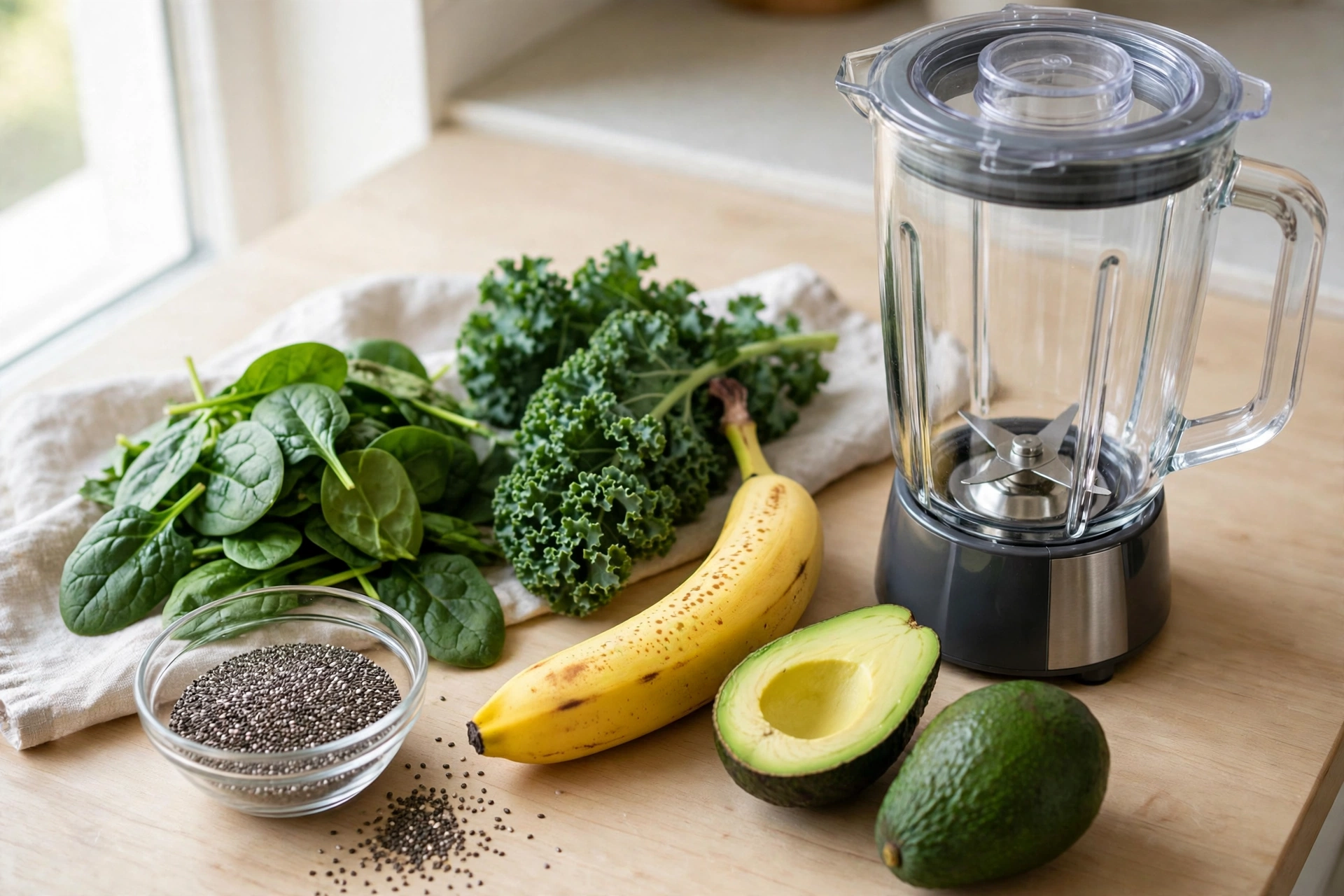
Build your smoothie in layers: greens first, then fruit, then protein and fat, then liquid. A good template is two handfuls of greens, one cup of fruit, one protein source, one tablespoon of seeds or nut butter, and one cup of liquid. Blend the greens and liquid first until smooth, then add the rest and blend again — this gives a silkier texture than throwing everything in at once.
Three balanced recipes to start with:
- Classic green: spinach, banana, half an avocado, a spoonful of Greek yogurt, and water with a squeeze of lemon.
- Berry green: kale, frozen blueberries, banana, chia seeds, and unsweetened almond milk.
- Tropical green: spinach, mango, pineapple, coconut water, and a spoonful of peanut butter.
Drink it fresh, within an hour of blending, for the best taste and nutrition. You can store it in a sealed jar in the fridge for up to 24 hours, but it will darken and lose some flavour — a squeeze of lemon on top slows the browning. Use frozen fruit for a thick, cold texture without ice, which waters the smoothie down. To save time on busy mornings, prepare freezer bags in advance: fill each bag with a portion of greens, fruit, and seeds, seal it, and freeze it. In the morning, tip one bag into the blender, add your liquid and protein, and blend — a full smoothie in under two minutes, with no measuring and no washing of extra bowls.
Things to Watch
The biggest mistake with green smoothies is too much fruit and too little balance. A smoothie with three bananas, a mango, honey, and orange juice can contain 50 to 60 grams of sugar — as much as a large soft drink — and it will spike your blood sugar just the same. Keep fruit to about one cup, choose lower-sugar fruits like berries and green apple, and always add protein and fat.
Oxalates are a second concern for some people. Spinach and kale are high in oxalates, which can contribute to kidney stones in people prone to them. If you have a history of calcium oxalate stones, rotate your greens — use romaine, cucumber, or celery some days — and talk to your doctor about how much spinach is safe for you daily. Cooking the greens first reduces oxalates, though it changes the smoothie.
Finally, do not replace all your meals with smoothies. Chewing matters for digestion and satiety, and a diet of only liquids can leave you hungry and undernourished. One smoothie a day as a breakfast or snack is a great habit; three a day as your only food is not. The same goes for detox claims — your liver and kidneys already handle detoxification, and no smoothie speeds that up. A green smoothie supports your health because it adds real food to your day, not because it flushes anything out. This article is general information, not medical advice.
FAQ
Can I drink a green smoothie every day?
Yes, most healthy adults can drink one green smoothie a day as part of a varied diet. Rotate your greens and fruits across the week for variety, keep the fruit portion to about a cup, and always include protein and fat. If you have kidney stones or take blood-thinning medicine, check with your doctor first because of the oxalates and vitamin K in leafy greens.
Is a green smoothie better than eating a salad?
They are different rather than better. A smoothie is easier to drink, quicker to finish, and can hold more greens in one go, while a salad gives you chewing, variety, and a slower meal that feels more satisfying. Both are healthy, and the best choice is the one you actually do. Many people do both — a smoothie for breakfast and a salad for lunch.
Do green smoothies help you lose weight?
They can help if they replace a higher-calorie breakfast and are built with plenty of greens, moderate fruit, and protein. A 200-calorie smoothie that keeps you full until lunch is a useful tool. A 600-calorie smoothie loaded with fruit, honey, and nut butter will not help at all. The recipe and the portion decide the result, not the colour.
What is the best green for a smoothie?
Spinach is the best green to start with — mild, sweet, and almost tasteless once blended, with excellent nutrition. Kale is more nutritious in some measures but stronger in flavour and tougher in texture, so blend it longer and pair it with sweet fruit. Romaine, chard, and cucumber are good milder options for rotation.
Should I add protein powder to my smoothie?
It depends on your day. If your smoothie is a meal replacement or a post-workout drink, protein powder or Greek yogurt makes it far more filling and supports muscle recovery. If it is a snack alongside a protein-rich meal, you may not need it. A scoop of plain protein powder, a few spoonfuls of Greek yogurt, or a tablespoon of nut butter all work well.
Conclusion
A green smoothie is one of the simplest healthy habits you can build: two handfuls of greens, a cup of fruit, some protein and fat, and a cup of liquid, blended into a drink that covers a remarkable amount of nutrition in one glass. It supports steady energy, skin, digestion, and weight — as long as you keep the fruit in check and the protein in. Build it balanced, drink it fresh, rotate your ingredients, and let this bright green glass do the quiet work of getting more vegetables into a busy day. Try it for a week, keep the recipe you like best, and make it part of your morning — that is how a new habit actually sticks.
Sources
Smoothie — Wikipedia
Vegetables and Fruits — Harvard T.H. Chan School of Public Health, The Nutrition Source