


Cherry benefits for health are special because cherries do something few other fruits can claim: they may help you sleep better. Tart cherries, in particular, are one of the few foods that naturally contain melatonin, the hormone that tells your body it is time to sleep.
A cup of sweet cherries, about 150 grams or 20 cherries, gives you around 90 calories, 3 grams of fibre, and about 10 mg of vitamin C, plus potassium, copper, and a rich mix of anthocyanins, the deep red pigments that researchers link to heart, brain, and joint health.
In this guide, we will look at the main cherry benefits for health in plain language, with honest numbers and no miracle claims. You will learn what cherries can do for your sleep, muscles, joints, and heart, how to eat them, and who should take a little care.
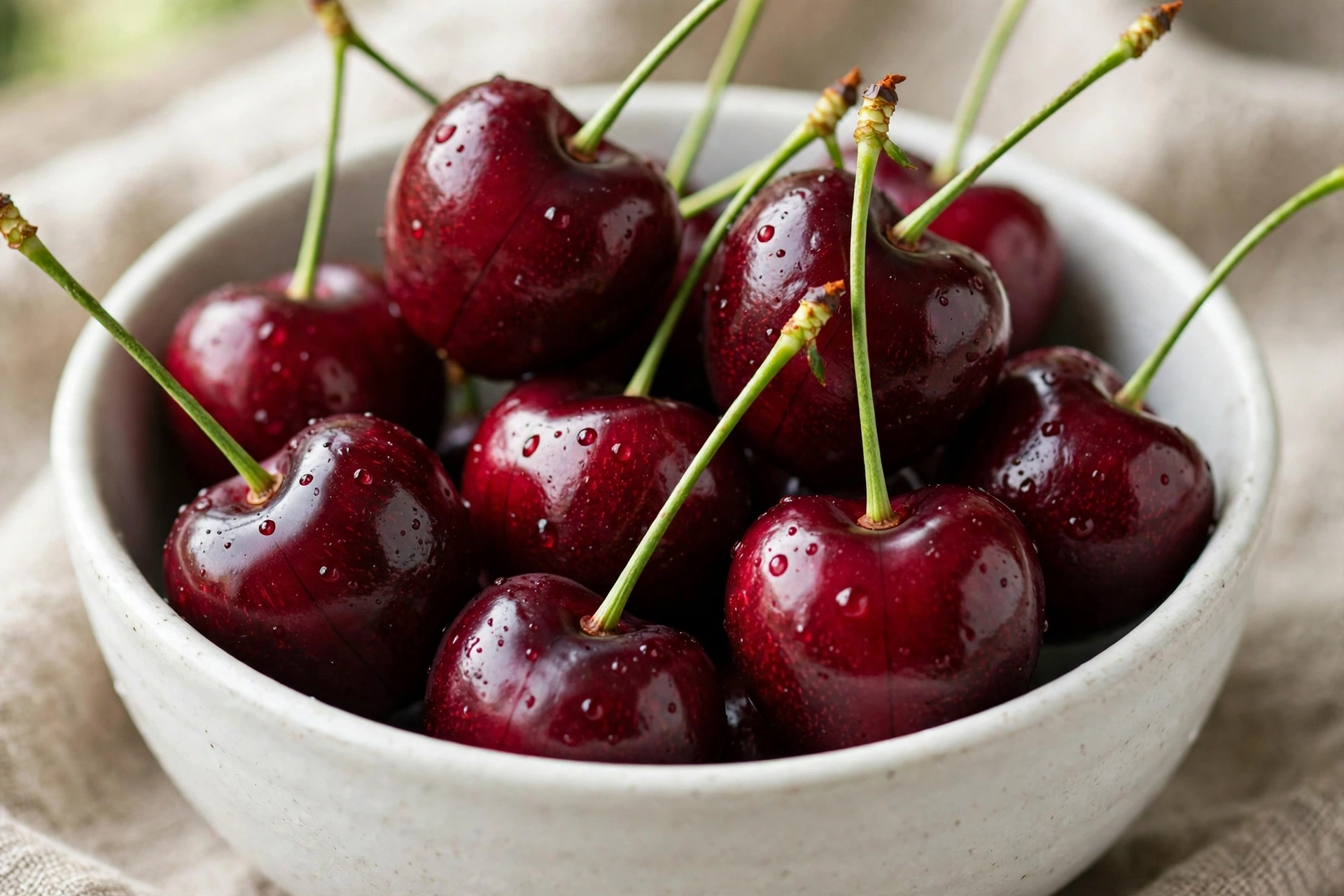
1. Better Sleep
Tart cherries are one of the only foods that naturally contain melatonin, the hormone your brain makes to signal sleep. A small study of older adults with insomnia found that drinking tart cherry juice twice a day for two weeks increased sleep time by about 85 minutes a night, which is a large effect for a food. The study was small, so the result needs confirming, but it has drawn a lot of interest from sleep researchers.
Cherries also contain tryptophan, an amino acid your body uses to make serotonin and then melatonin. This gives cherries a second route to supporting sleep, and it is one reason sleep experts sometimes suggest tart cherry juice as a gentle, food-based option for people who struggle to fall asleep.
Sweet cherries contain less melatonin than tart cherries, but they still provide tryptophan and magnesium, a mineral that supports relaxation. A handful of sweet cherries in the evening is a pleasant, low-effort snack that may help you wind down, though it will not replace good sleep habits like a regular bedtime and less screen time at night.
It is important to be honest: cherries are not a cure for insomnia. They may help some people sleep a little better, especially older adults, but if you have serious sleep problems, talk to your doctor. Think of cherries as a supportive food, not a sleeping pill.
2. Muscle Recovery After Exercise
Cherries have become popular with athletes, and the reason is their anthocyanins, which may help reduce muscle soreness after hard exercise. Several small studies found that people who drank tart cherry juice before and after intense exercise reported less muscle pain and recovered strength faster than those who drank a placebo.
The effect seems to come from the anti-inflammatory action of anthocyanins, which may help calm the small muscle damage that causes soreness after a tough workout. The studies are small and short, so the evidence is encouraging rather than proven, but the results have been consistent enough that many sports nutritionists now mention cherries as a recovery food.
Tart cherry juice is the form used in most studies, usually about 240 ml twice a day for several days around a hard training session or a race. Fresh cherries likely give a similar benefit, though they have not been studied as closely as the juice. Eating a bowl of cherries after a workout is a tasty, natural way to get the same compounds.
For everyday exercisers, cherries are a smart post-workout snack. They give you water, natural sugars to refill energy, potassium, and anthocyanins, all in a fruit that is easy to eat. Pair them with a protein food like yogurt to cover recovery from both sides.
3. Joint Health and Gout
Cherries are one of the most studied foods for gout, a painful form of arthritis caused by a build-up of uric acid. Research suggests that eating cherries may help lower uric acid levels, and a large study of gout patients found that eating cherries over two days was linked to a 35 percent lower risk of a gout attack, with the benefit rising to 75 percent when cherries were combined with standard gout medicine.
The effect is linked to the anthocyanins in cherries, which may help the body process uric acid more efficiently and may reduce the inflammation that makes gout attacks so painful. This is observational research, so it cannot prove cause and effect, but the results are strong enough that many doctors mention cherries to gout patients.
For other joint problems, including osteoarthritis, the evidence is thinner. Some small studies suggest cherry juice may ease joint pain and stiffness, but the results are mixed. The honest summary is that cherries show real promise for gout, and they may help other joints too, but they are not a replacement for medicine your doctor has prescribed.
If you have gout, eating a cup of cherries a day or drinking tart cherry juice is a low-risk habit worth trying, and it fits easily into a diet that already limits alcohol, red meat, and sugary drinks, which are the main triggers for gout attacks.
4. Heart Health
Cherries support heart health through their anthocyanins, potassium, and fibre. Anthocyanins are linked in population studies to healthier blood pressure and a lower risk of heart disease, and they may help protect blood vessels from damage. A cup of cherries gives you about 270 mg of potassium, which helps the body balance sodium and supports healthy blood pressure.
The fibre in cherries, about 3 grams per cup, helps lower LDL cholesterol by reducing how much cholesterol the gut absorbs. The effect is modest, but across a diet full of fibre-rich foods, it adds up. Cherries also contain quercetin, a flavonoid studied for its effects on blood vessel health.
Some small trials have found that drinking tart cherry juice daily for a few weeks lowered blood pressure and improved cholesterol markers in adults. The studies are small and short, so the results need confirming, but they point in a consistent direction.
As with other fruits, cherries are not a heart medicine. They work as part of an overall pattern that includes vegetables, whole grains, healthy fats, movement, and not smoking. But as part of that pattern, a daily bowl of cherries is a delicious choice.
There is one more heart angle worth mentioning: cherries may help reduce C-reactive protein, a marker of inflammation in the blood that doctors watch as a sign of heart risk. A few small trials found lower levels of this marker after people drank tart cherry juice for several weeks, though the studies were small and the results need confirming in larger trials.
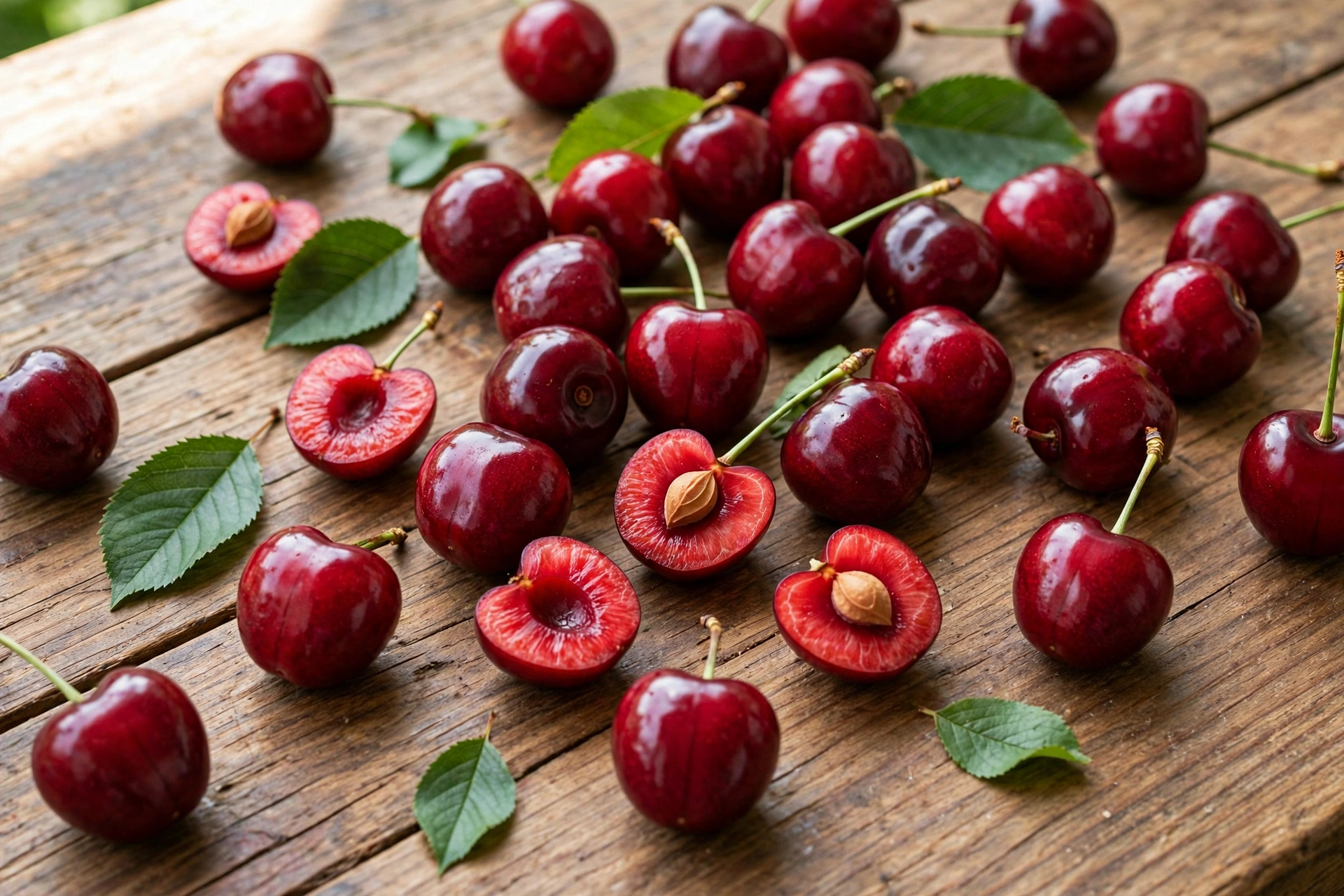
5. Brain Health and Memory
The anthocyanins in cherries may also help the brain. These pigments can cross into brain tissue, where they act as antioxidants and may support the connections between brain cells. A study of older adults found that drinking tart cherry juice daily for 12 weeks improved memory and attention compared with a placebo, though the study was small and the results need confirming.
Cherries also contain tryptophan and serotonin-related compounds, which support mood as well as sleep. A diet rich in colourful fruit is linked to better brain health over decades, and cherries add a deep red colour that few other fruits can match.
The anti-inflammatory action of cherries may matter for the brain too. Chronic, low-level inflammation is linked to faster cognitive decline, and foods that help calm inflammation, including cherries, berries, and leafy greens, are a sensible part of a brain-friendly diet.
For now, the honest summary is that cherries are a smart snack for your brain, the early science is encouraging, and there is no downside to including them in a varied diet. Just do not expect them to sharpen your memory overnight, because brain health is built over years.
6. Skin Health
Cherries bring vitamin C and anthocyanins together for your skin. Vitamin C helps your body build collagen, the protein that keeps skin firm and smooth, while anthocyanins help protect skin cells from damage caused by sunlight and pollution. Eating cherries will not replace sunscreen, but it supports skin from the inside.
Cherries are also about 82 percent water, so they help with hydration, and hydrated skin looks plumper and healthier. Many people notice their skin looks fresher when they eat more water-rich fruit and drink enough water through the day.
The deep red colour of cherries is a sign of their antioxidant load. Darker cherries generally carry more anthocyanins, so a deep red or almost black cherry is usually the richest choice. The same rule applies to most dark fruit: colour is a clue to nutrition.
Cherry extract appears in some skin care products, but eating the fruit is the simpler route, and it gives you the fibre and water that no cream can offer. A bowl of cherries a day is a pleasant way to support your skin through food.
The copper in cherries also plays a role in skin health, since your body uses copper to make collagen and elastin, the proteins that keep skin firm and flexible. A cup of cherries gives you about 10 percent of your daily copper, which is a useful contribution alongside the vitamin C and anthocyanins. Together, these nutrients give skin steady, quiet support from the inside.
7. Blood Sugar and Weight Support
Cherries have a low glycaemic index, around 22, which means their sugars enter the blood slowly. That makes them one of the better fruits for people watching their blood sugar. A cup of sweet cherries has about 19 grams of natural sugar, but the fibre slows it down, so the rise is gentler than from a biscuit or a sweetened drink.
For weight management, cherries are satisfying for their calories. A cup has about 90 calories, and because they are mostly water and fibre, you can eat a generous handful and still feel full. The natural sweetness also helps satisfy a craving for something sweet without reaching for cake or chocolate.
Some research suggests that cherry anthocyanins may help the body use insulin more efficiently, which is the hormone that moves sugar from blood into cells. This work is early, mostly in animals, so it is a promising area rather than a proven benefit.
People with diabetes can eat cherries in normal portions, but the dried and canned versions are a different story. Dried cherries often have added sugar, and canned cherries in syrup are very sweet, so fresh or frozen cherries are the best choice for blood sugar.
How to Eat It
The simplest way to eat cherries is fresh, washed, and eaten by the handful. Choose firm, shiny cherries with green stems and no soft spots, and store them in the fridge unwashed, where they keep for up to a week. Wash them just before eating so they stay fresh longer.
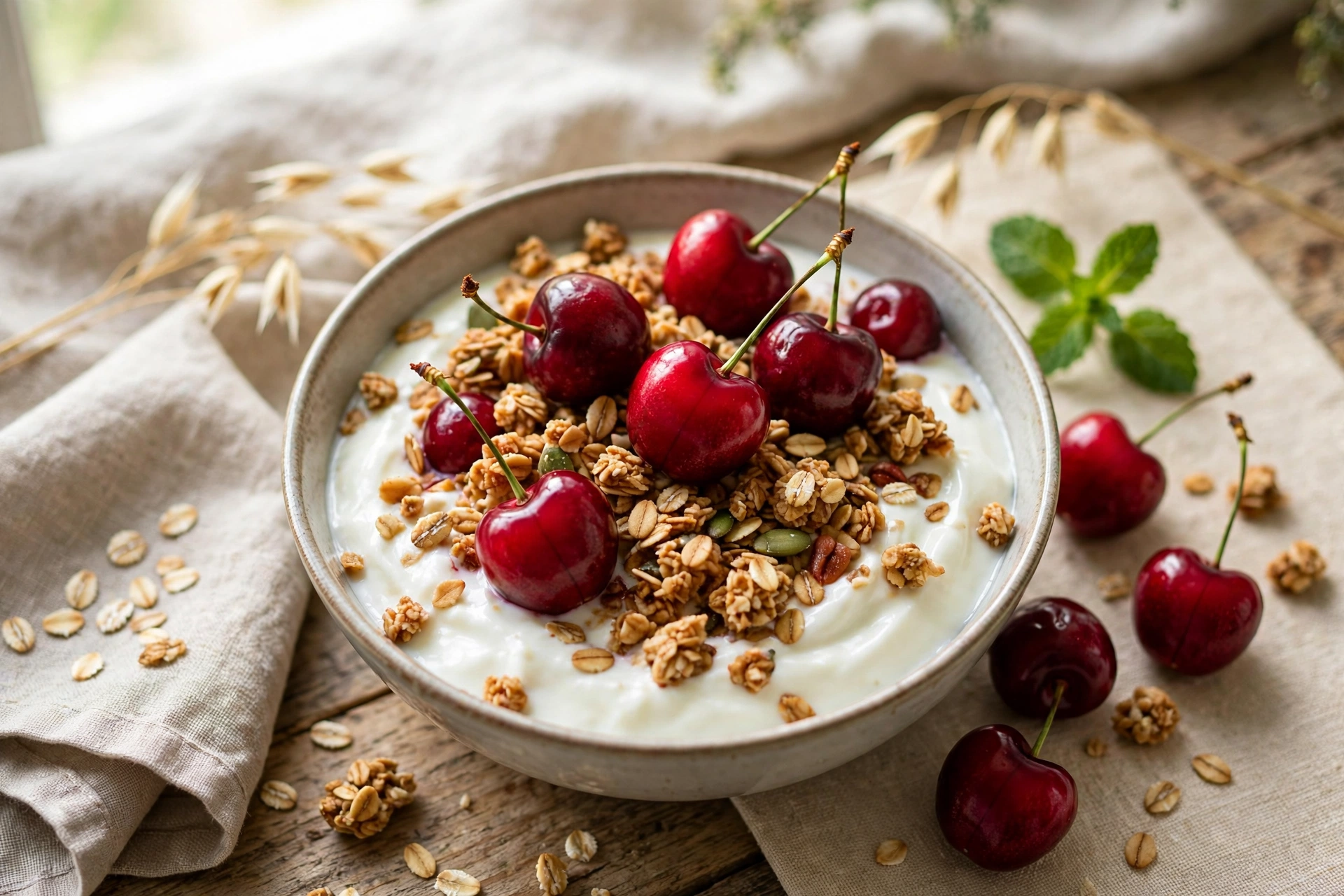
Cherries are wonderful in smoothies, salads, and desserts. Try them in a smoothie with Yogurt Benefits for Health (Gut Health, Protein, and Strong Bones), or add them to a bowl of Oats Benefits for Health (Cholesterol, Weight, and Steady Energy) for a sweet, filling breakfast. Tart cherries work well in sauces for chicken or pork, and they make a lovely compote with a little Honey Benefits for Health (Uses, Nutrition, and Cautions) over yogurt.
Frozen cherries are a great option out of season, and they keep most of their nutrition because they are frozen soon after picking. Use them in smoothies, baking, or as a cold snack straight from the freezer. Avoid canned cherries in syrup, which lose fibre and add a lot of sugar, and check the label on dried cherries, which often have added sugar too.
For sleep support, the form that matters most is tart cherry juice, and the studies used about 240 ml twice a day, morning and evening, for at least two weeks. If you try this, choose a juice with no added sugar and check the label for the actual cherry content, since some drinks are mostly water and sweetener with very little cherry. Fresh tart cherries, when you can find them, are the best option of all.
Cautions
Cherries are safe for most people, but there are a few things to watch. The pits contain a compound that can release cyanide if crushed and eaten in large amounts, so never chew cherry pits, and keep them away from small children. Swallowing a whole pit by accident is usually harmless, since it passes through undigested, but chewing several pits is a different matter.
Some people are allergic to cherries, and the allergy is often linked to birch pollen allergy, a condition called oral allergy syndrome. If your mouth or lips itch after eating cherries, especially raw ones, talk to your doctor. Cooking cherries often reduces this reaction, but check with a professional first.
Tart cherry juice can interact with blood-thinning medicine, because cherries contain compounds that may affect blood clotting. If you take blood thinners, talk to your doctor before drinking large amounts of cherry juice. And people with diabetes should stick to fresh or frozen cherries, not the sweetened dried or canned kinds.
FAQ
Do cherries really help you sleep?
They may help a little. Tart cherries naturally contain melatonin, and a small study found that tart cherry juice increased sleep time by about 85 minutes in older adults with insomnia. The evidence is early, but cherries are a gentle, food-based option worth trying.
Are tart cherries better than sweet cherries?
For sleep and muscle recovery, tart cherries have the edge, because they contain more melatonin and anthocyanins. For everyday eating, sweet cherries are delicious and still very healthy. The best choice is the one you enjoy eating regularly.
Can cherries help with gout?
Research suggests they can. A large study found that eating cherries was linked to a 35 percent lower risk of gout attacks, and the benefit rose when cherries were combined with standard gout medicine. Cherries are a low-risk habit worth trying if you have gout.
How many cherries should I eat a day?
About one cup, or 20 cherries, is a good daily amount for most adults. That gives you fibre, potassium, and anthocyanins for about 90 calories. You can eat more on some days, but a cup is a sensible everyday portion.
Is tart cherry juice as healthy as fresh cherries?
It depends. Tart cherry juice gives you melatonin and anthocyanins, but it has almost no fibre and can be high in sugar. Fresh or frozen cherries are the better everyday choice, while juice is useful around intense exercise or for sleep support.
Conclusion
Cherries are a small fruit with a big personality. They may help you sleep better, recover faster after exercise, and ease gout, while also supporting your heart, brain, skin, and blood sugar. A cup a day is a small habit with a long list of quiet benefits.
Eat them fresh in season, keep frozen ones for the rest of the year, and enjoy tart cherry juice when you need extra support for sleep or recovery. That is all it takes to make cherries a regular, delicious part of a healthy diet.
Sources
Cherry — Wikipedia
Cherries — Harvard T.H. Chan School of Public Health


Pingback: Raspberries Benefits for Health