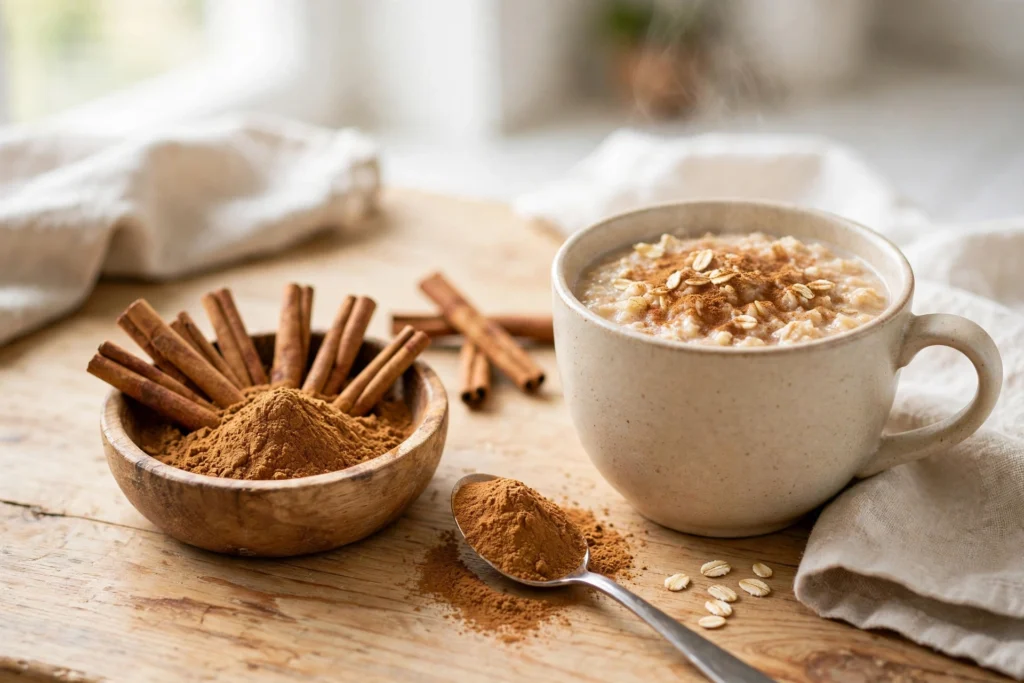

Cinnamon benefits for health go back thousands of years. Ancient Egyptians used it in embalming, Roman writers praised it as a precious spice, and traders once carried it across oceans at prices higher than silver. Today it sits in almost every kitchen cupboard, and most of us sprinkle it on oatmeal or toast without thinking twice. That humble brown powder, though, carries a surprising amount of science behind it.
Cinnamon comes from the inner bark of trees in the Cinnamomum family. The bark is peeled, dried, and rolled into quills, then ground into powder. Its warm smell and sweet-spicy taste come from a compound called cinnamaldehyde, which also drives many of its studied effects. A single teaspoon has about six calories, a gram of fibre, and small amounts of manganese, calcium, and iron — modest nutrition on its own, but the active compounds are what researchers keep coming back to.
This article covers what cinnamon may help with — blood sugar, heart health, brain function, and more — how much is safe, which type to buy, and the one caution that matters more than any benefit. As always, nothing here is a cure, and the spice works best as a small daily habit inside a balanced diet.
1. May Help Steady Blood Sugar
Blood sugar is the most studied of all cinnamon benefits. Several trials have found that cinnamon can lower fasting blood sugar and improve insulin sensitivity in people with type 2 diabetes or prediabetes. A 2013 review of ten trials found that doses of 120 milligrams to 6 grams a day were linked with lower fasting blood sugar, total cholesterol, and triglycerides. The effect is modest — usually a drop of a few points, not a dramatic reset — but for a spice you can add to breakfast, that is a meaningful result.
Scientists think cinnamon works in a few ways at once. It may slow down the enzymes that break carbohydrates into sugar, so glucose enters the blood more gradually. It may also help cells respond better to insulin, the hormone that moves sugar out of the blood and into cells. And cinnamaldehyde itself has shown blood-sugar-lowering effects in animal studies. None of this replaces diabetes medicine, and if you take insulin or blood sugar drugs, you should talk to your doctor before taking cinnamon in supplement amounts — but a teaspoon in your oatmeal is a food, not a drug, and it is a sensible choice for most people.
The practical move is simple: add cinnamon to foods you already eat. Stir it into porridge, yogurt, coffee, or a smoothie, and you get the flavour plus a small blood sugar benefit without changing anything else about your day. Sweet foods taste sweeter with cinnamon too, which means you can often use less sugar and still enjoy the same dish.
2. Rich in Antioxidants
Cinnamon is one of the most antioxidant-rich spices you can buy. In laboratory tests comparing 26 common spices, cinnamon ranked near the top, ahead of garlic and oregano, for total antioxidant power. Its polyphenols — the same family of plant compounds found in berries, dark chocolate, and green tea — help neutralise free radicals, the unstable molecules that damage cells over time and are linked with ageing and chronic disease.
What does that mean in real life? A diet rich in antioxidant foods is linked with lower rates of heart disease and slower age-related decline, and spices are one of the easiest ways to raise your intake without eating more food. A teaspoon of cinnamon in your morning oats adds antioxidant power for almost no calories, which is a trade almost everyone can make. It will not cancel out a poor diet, but it nudges the balance in the right direction.
For a comparison with another everyday antioxidant source, our article on Green Tea Benefits (What a Daily Cup Can Really Do for You) looks at a drink that brings a different set of polyphenols to the same goal — and cinnamon and green tea happen to pair beautifully in a spiced cup.
3. May Support Heart Health
Heart health is where cinnamon’s blood sugar and antioxidant effects come together. Studies have linked cinnamon intake with lower total cholesterol, lower LDL cholesterol, and lower triglycerides, especially in people with type 2 diabetes. One review found that cinnamon lowered total cholesterol by an average of about 16 milligrams per decilitre and triglycerides by about 23 — small changes, but real ones.
Cinnamon may also help blood pressure. A few small trials found modest drops in systolic blood pressure with regular cinnamon intake, possibly because cinnamaldehyde helps blood vessels relax. The evidence is still early and the trials are small, so no doctor would prescribe cinnamon for blood pressure — but as part of a heart-friendly diet rich in vegetables, whole grains, and healthy fats, it fits the pattern.
The honest framing matters: cinnamon is a helper, not a hero. The foods that protect your heart most are the ones on your plate every day — oats, fish, nuts, and leafy greens. Cinnamon is the seasoning that makes those foods taste better and adds a little extra protection on top. Our guide to Oats Benefits for Health (Cholesterol, Weight, and Steady Energy) covers one of those core foods, and cinnamon-sprinkled oatmeal is one of the simplest heart-friendly breakfasts there is.
4. May Help Protect Brain Function
The brain benefits of cinnamon are still mostly from animal and laboratory studies, but they are promising enough to mention. Two compounds in cinnamon — cinnamaldehyde and epicatechin — have been shown in lab tests to slow the build-up of tau protein, one of the hallmarks of Alzheimer’s disease. Other studies found that cinnamon extract protected brain cells from oxidative stress and improved memory in mice.
Human evidence is thin so far. One small study found that chewing cinnamon gum improved attention and memory in the short term, and researchers are now looking at whether regular cinnamon intake affects cognitive decline over years. The smell of cinnamon alone has been linked with better alertness in some experiments, which is why it shows up in so many focus and study blends.
None of this means cinnamon prevents dementia. What it does mean is that a spice already in your kitchen has compounds that scientists find interesting enough to study seriously, and adding it to your food costs you nothing. If future research confirms the brain effects, the people who have been sprinkling cinnamon on their breakfast for years will already be ahead.
5. Has Natural Antimicrobial Properties
Cinnamon has been used as a food preservative for centuries, and modern lab work explains why: cinnamaldehyde can slow the growth of several common bacteria, including Salmonella and Listeria, and it has antifungal effects against Candida in test-tube studies. That is one reason cinnamon shows up in so many traditional meat dishes and preserved foods across Asia and the Middle East.
In the mouth, cinnamon’s antimicrobial action may help with bad breath and oral bacteria. Cinnamon-flavoured mouthwashes and chewing gums are popular for exactly this reason, and a few small studies found cinnamon oil reduced oral bacteria in the short term. Again, it is a helper, not a treatment — it will not cure gum disease or replace brushing — but it is a pleasant, natural addition to oral care.
In the kitchen, the same property means cinnamon-spiced dishes keep a little longer and taste fresher. It is not a substitute for refrigeration or proper food safety, but it is one more reason traditional cooks reached for it long before anyone knew what a bacterium was.
6. May Ease Digestion and Bloating
Warm, spicy foods often feel comforting to the stomach, and cinnamon is no exception. Traditional medicine systems from Ayurveda to Chinese herbal practice have used cinnamon for digestive complaints for centuries — gas, bloating, nausea, and sluggish digestion after heavy meals. The spice may help by stimulating digestive juices and by relaxing the smooth muscle of the gut, which can ease cramping.
Modern research on this is limited, but the mechanism is plausible and the practice is low-risk in food amounts. A cup of cinnamon tea after a heavy meal — hot water, a cinnamon stick, and a squeeze of lemon — is a gentle, warming drink that many people find settles their stomach. Ginger works in a similar way, and the two spices are often combined; our article on Ginger Benefits for Health (Digestion, Nausea, and Immunity) covers that partner spice in detail.
If bloating is a regular problem for you, cinnamon alone will not fix it — the cause is usually diet, eating speed, or an underlying gut issue worth checking. But as a small, tasty habit after meals, it is a reasonable part of the picture.
7. A Sweet Taste Without the Sugar
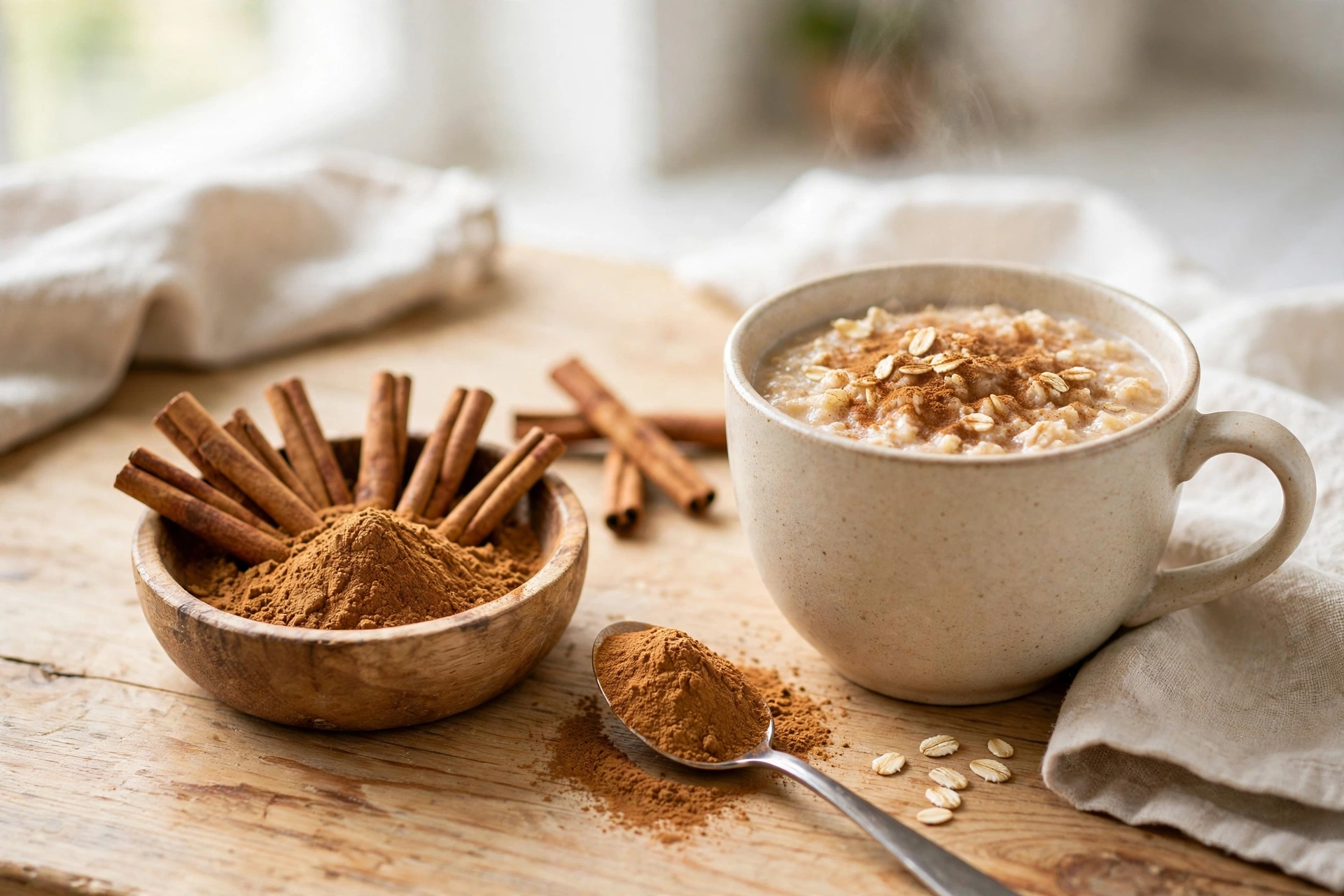
One of the most practical cinnamon benefits has nothing to do with medicine: it makes food taste sweet. The warm, sweet aroma of cinnamon tricks your senses into perceiving sweetness, which means you can cut the sugar in a recipe and still enjoy it. A bowl of oatmeal with cinnamon and sliced banana needs no added sugar at all. The same goes for coffee, yogurt, and baked apples.
This matters because added sugar is one of the biggest drivers of weight gain, blood sugar spikes, and tooth decay. Every spoonful of sugar you replace with a pinch of cinnamon is a small win that adds up over months and years. It is also why cinnamon is a favourite among people managing diabetes — it adds pleasure to food without adding glucose.
Try it in places you would not expect: cinnamon in chilli, in tomato sauce, in roasted sweet potatoes, or on buttered toast instead of jam. The spice is far more versatile than its dessert reputation suggests, and once you start using it in savoury food, plain versions start to taste flat.

How to Use It
A teaspoon a day is a good target for most people — enough to get the studied benefits, far below the safety limits. Stir ground cinnamon into oatmeal, yogurt, smoothies, or coffee. Drop a cinnamon stick into hot water for tea, or into a pot of rice, lentils, or stew while it cooks. Use it in baking, in curries, and in spice rubs for meat.
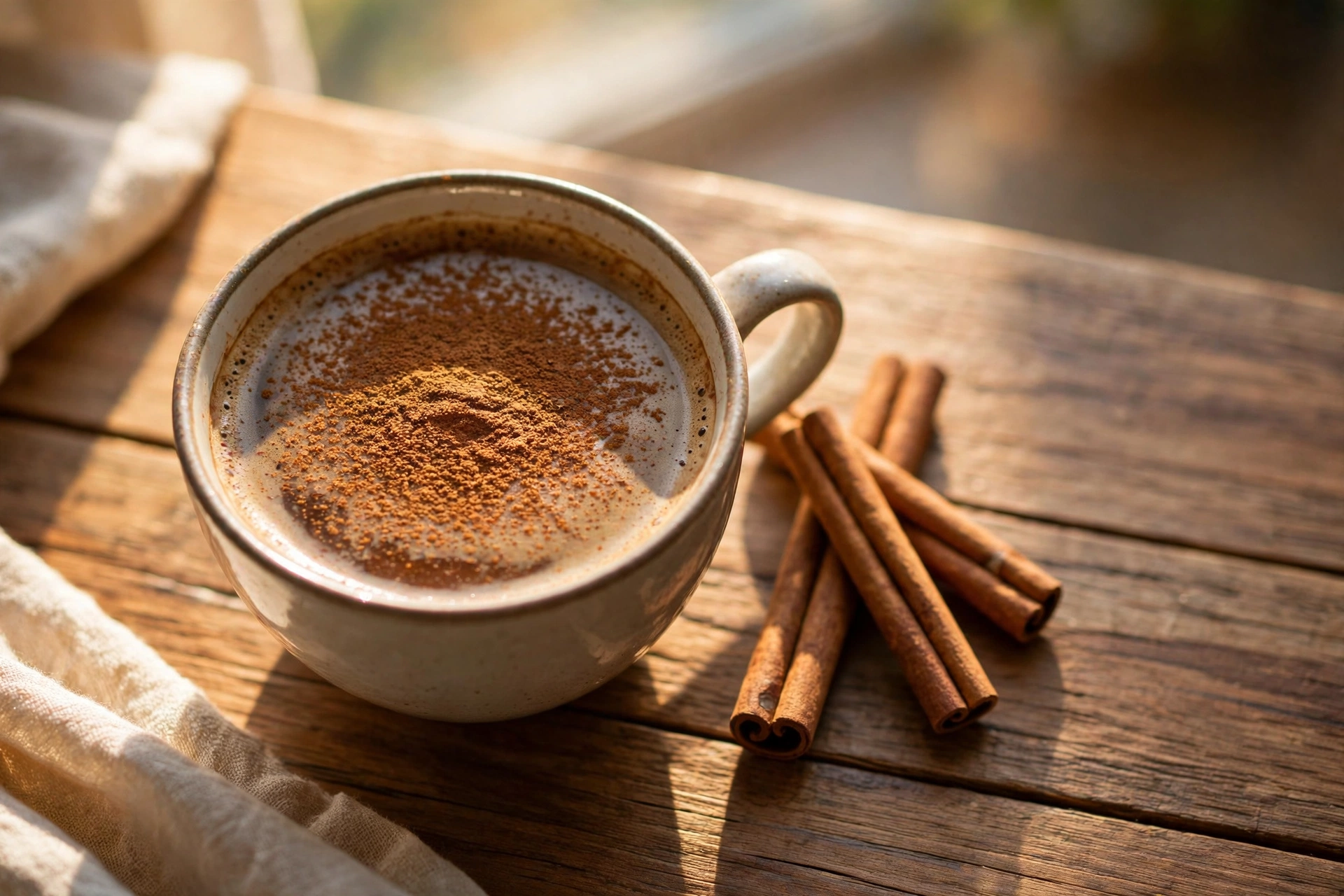
Buy Ceylon cinnamon, often called “true cinnamon”, when you can. It comes from Sri Lanka, has a delicate, sweet flavour, and contains very little coumarin — the compound that causes the main safety concern. Cassia cinnamon, the common supermarket kind, is stronger and cheaper but much higher in coumarin. If you use cinnamon daily, Ceylon is worth the extra cost. You can tell them apart by looking at the quills: Ceylon quills are thin, papery, and roll up like a cigar with many layers, while Cassia quills are thick, hard, and hollow.
Store ground cinnamon in a sealed jar away from heat and light, and replace it every six to twelve months — old cinnamon loses its smell and much of its flavour. Whole sticks keep for two to three years. A quick freshness test: rub a pinch between your fingers. If the smell is weak, it is time for a new jar. You can also grind your own from sticks in a spice grinder just before cooking, which keeps the aroma at its strongest and makes a noticeable difference in simple dishes like stewed apples or rice pudding.
Cautions
The main caution with cinnamon is coumarin. Cassia cinnamon contains far more coumarin than Ceylon, and coumarin can damage the liver in high doses over time. The European Food Safety Authority sets a safe daily limit of about 0.1 milligrams of coumarin per kilogram of body weight — roughly 7 milligrams for a 70-kilogram adult. A single teaspoon of Cassia cinnamon can contain 7 to 18 milligrams, so a heavy daily habit with Cassia can exceed the limit. This is why daily users should choose Ceylon, which has only trace amounts.
Large amounts of cinnamon powder can also irritate the mouth and throat, and inhaling the dry powder is dangerous — the “cinnamon challenge” that circulated online years ago caused choking and breathing problems, and it should never be tried. Cinnamon supplements in capsule form can interact with diabetes medicine, blood thinners, and liver medicine, so talk to your doctor before taking them. Food amounts are a different story: a teaspoon in your breakfast is safe for almost everyone.
Some people are allergic to cinnamon or develop mouth sores from cinnamon-flavoured products. If you notice tingling, swelling, or sores after eating cinnamon, stop and check with your doctor. Pregnant women should stick to normal food amounts and avoid cinnamon supplements. This article is general information, not medical advice.
FAQ
How much cinnamon should I eat per day?
About half a teaspoon to one teaspoon of ground cinnamon a day is a sensible amount for most people. Studies showing blood sugar benefits used roughly this range. If you use Cassia cinnamon, stay at the lower end because of coumarin, and consider switching to Ceylon if you use it every day.
Is Ceylon cinnamon really better than Cassia?
For daily use, yes. Ceylon has a sweeter, more delicate flavour and almost no coumarin, while Cassia is stronger, cheaper, and much higher in coumarin. Cassia is fine for occasional baking, but if cinnamon is a daily habit, Ceylon is the safer choice and worth the higher price.
Can cinnamon lower blood sugar?
Studies suggest it can help modestly — lowering fasting blood sugar and improving insulin sensitivity in people with type 2 diabetes or prediabetes. The effect is small and it does not replace medicine, diet, or exercise. If you take diabetes drugs, tell your doctor before using cinnamon supplements, since the combination could push blood sugar too low.
Does cinnamon help with weight loss?
There is no strong evidence that cinnamon causes weight loss on its own. It may help indirectly by making food taste sweet without sugar, by steadying blood sugar, and by adding flavour to low-calorie foods you might otherwise find boring. Those are real advantages, but they work through your overall diet, not through the spice alone.
Can I put cinnamon in my coffee?
Yes, and it is one of the easiest ways to use it. A quarter to half a teaspoon stirred into coffee adds warmth and sweetness with no calories, and many people find they need less sugar. It pairs well with milk, oat milk, and honey, and it turns an ordinary cup into something that feels like a treat.
Conclusion
Cinnamon is a small spice with an outsized story. It may help steady blood sugar, add antioxidants to your diet, support heart and brain health, and make food taste sweet without sugar — all for about six calories a teaspoon. The key is choosing the right type: Ceylon for daily use, Cassia for the occasional bake, and never more than a teaspoon or two a day. Used that way, cinnamon is one of the easiest healthy habits you can keep, and one of the tastiest too.
Sources
Cinnamon — Wikipedia
Cinnamon and health — Harvard Health Publishing