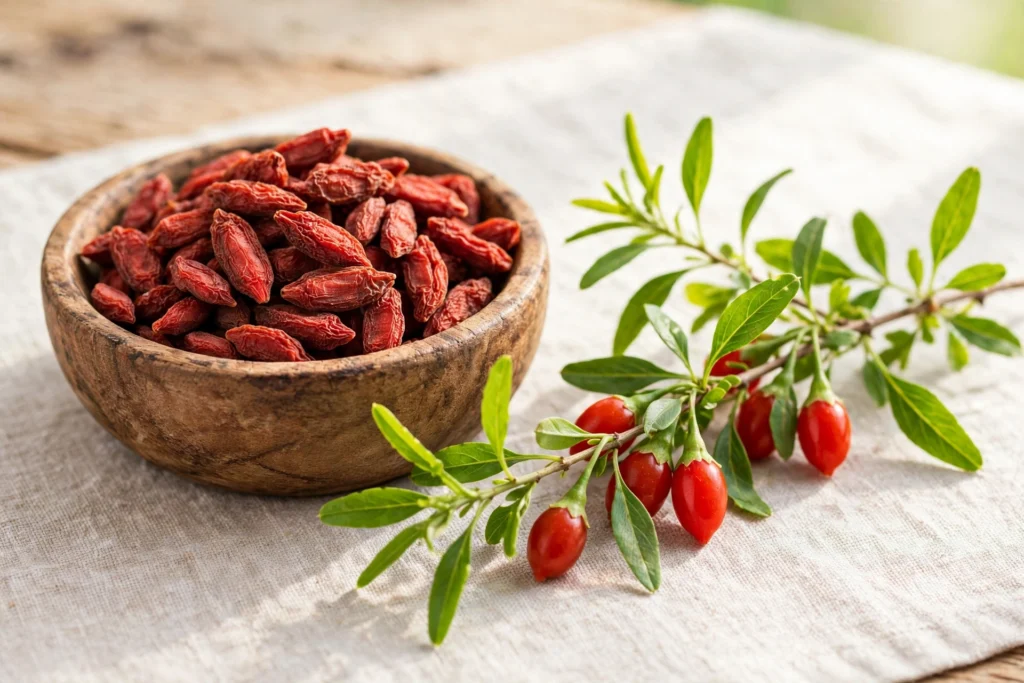

Goji berry benefits for health have made this small red fruit famous far beyond its home in Asia. Goji berries — also called wolfberries — have been eaten in China for more than 2,000 years, where traditional medicine prized them for long life, bright eyes, and steady energy. In the last twenty years they have become a global superfood, showing up in trail mixes, smoothies, teas, and snack bars from London to Los Angeles.
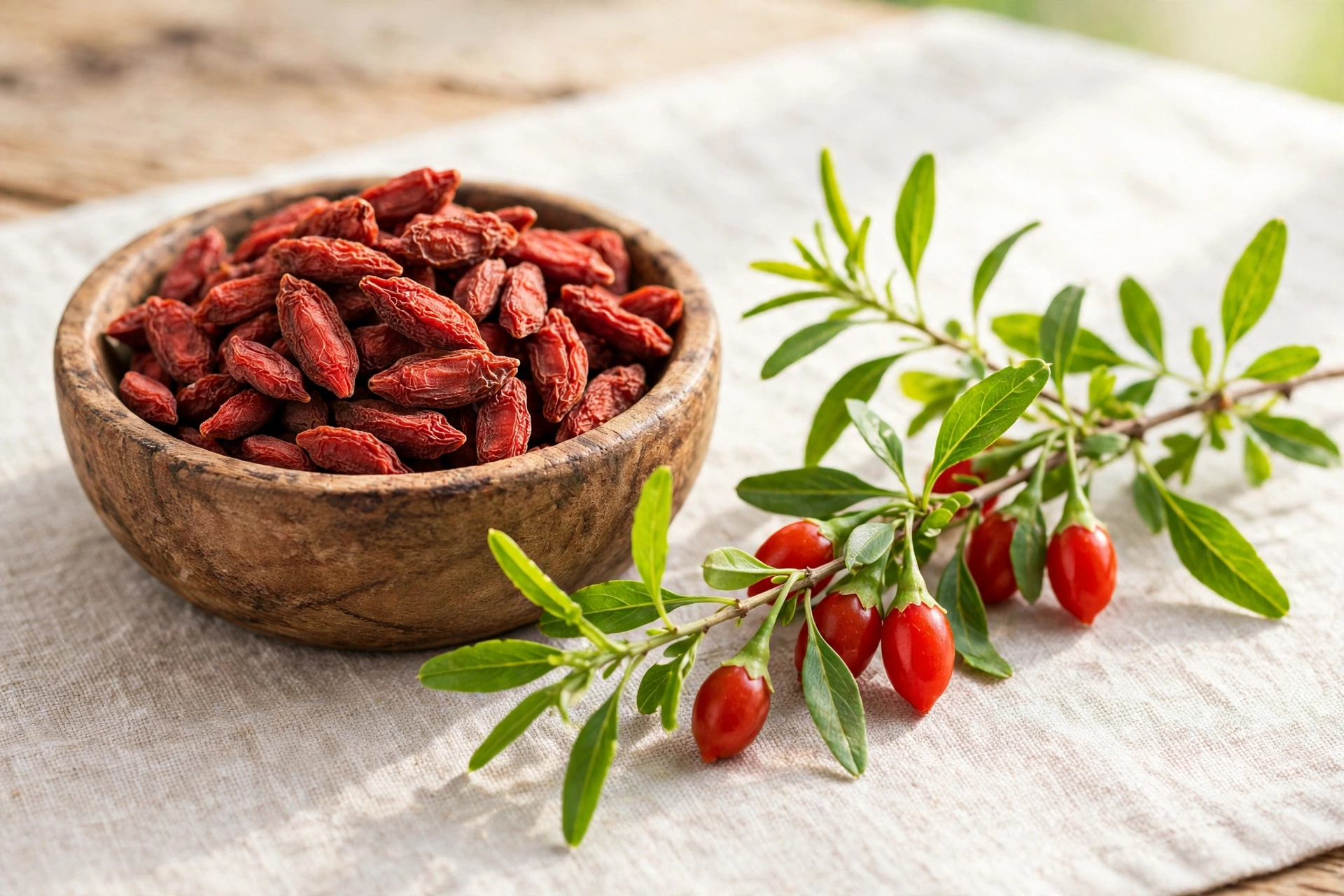
A goji berry is about the size of a raisin, bright red-orange, and chewy when dried — which is how it is usually sold. Fresh berries are soft and fragile, so most of the world eats them dried, and the dried version keeps well for months. A small handful, about 28 grams or two tablespoons, has around 100 calories, 4 grams of protein, 3 grams of fibre, and a remarkable spread of vitamins and minerals, including vitamin A, vitamin C, iron, and zinc.
This article looks at what goji berries may actually do for immunity, eyes, energy, and skin, what the science says so far, how to eat them, and the cautions that matter — especially if you take blood-thinning medicine. The berries are nutritious and genuinely interesting, but they are not magic, and the honest version of their story is worth telling.
1. Packed With Vitamin A for Eye Health
Goji berries are one of the richest food sources of zeaxanthin, a carotenoid that builds up in the retina of your eye and helps protect it from blue light and oxidative damage. A single ounce of dried goji berries can provide several times your daily vitamin A needs, mostly in the form of zeaxanthin and beta-carotene, which your body converts to vitamin A as needed.
Zeaxanthin and its partner lutein form the macular pigment — a yellow layer in the centre of the retina that acts like built-in sunglasses, filtering harmful light and sharpening vision. Studies have linked higher intakes of these carotenoids with a lower risk of age-related macular degeneration, the leading cause of vision loss in older adults. One small trial found that older adults who ate goji berries daily for 90 days had higher zeaxanthin levels in their blood and better macular pigment density.
The effect is slow and cumulative, not instant. Eating goji berries will not fix your eyesight in a week, but as a regular source of zeaxanthin, they are one of the best foods you can choose. Carrots are the classic eye food, and our article on Carrot Benefits for Health (Eyes, Skin, and Immunity) explains how beta-carotene works alongside the carotenoids in goji berries to support the same goal.
2. May Support the Immune System
Immunity is the benefit goji berries are most famous for in traditional Chinese medicine, and modern research gives it some support. Goji berries are rich in vitamin C — a 28-gram serving provides about 15 percent of your daily needs — plus zinc and iron, all of which play roles in normal immune function. They also contain unique polysaccharides, long-chain sugars called Lycium barbarum polysaccharides, which have been studied for their effects on immune cells.
In laboratory and animal studies, these polysaccharides appear to stimulate the activity of immune cells like macrophages and natural killer cells, and to support the production of antibodies. Human studies are smaller: one trial found that healthy adults who drank goji juice daily for 30 days reported fewer cold symptoms and better overall feelings of wellbeing than a placebo group, though the study was small and funded by a juice company, so it should be read with that in mind.
The fair summary is that goji berries bring a useful mix of immune-supporting nutrients, and they fit well in a diet that already includes vegetables, fruit, and enough sleep. They will not stop you catching a cold on their own, but a handful a day is a reasonable part of an immune-friendly routine — especially in winter, when fresh fruit is less varied.
3. A Source of Antioxidants That Fight Cell Damage
Goji berries score very high on antioxidant tests. Their deep red-orange colour comes from carotenoids, and they also contain vitamin C, vitamin E, and a range of polyphenols. Together, these compounds help neutralise free radicals — the unstable molecules produced by sunlight, pollution, stress, and normal metabolism that can damage cells over time.
One measure of antioxidant power, the ORAC score, puts dried goji berries well above blueberries and raspberries per gram, though ORAC scores are a lab measure and do not translate directly into health outcomes. What matters more is the pattern: people who eat a lot of antioxidant-rich foods have lower rates of heart disease and slower age-related decline, and goji berries are an easy way to add variety to that pattern.
Blueberries are another famous antioxidant fruit, and they pair beautifully with goji berries in a morning bowl. Our article on Benefits of Eating Blueberries (Tiny Berries, Big Nutrition) covers what those small berries offer, and mixing the two gives you a wider range of plant compounds than either one alone.
4. May Help With Steady Energy
Goji berries have a reputation as an energy food, and there is a plausible reason: they provide complex carbohydrates, a little protein, and iron, which your body needs to carry oxygen in the blood. Low iron is one of the most common causes of tiredness, especially in women, and a handful of goji berries provides about 10 percent of your daily iron needs.
Small human studies have reported that people taking goji berry juice or extract felt more energetic, slept better, and had better focus than placebo groups, though these studies were small and short. The polysaccharides in goji berries have also been linked with better exercise performance in animal studies, possibly by helping muscles use energy more efficiently. The evidence is early, but the direction is consistent: people who eat them regularly tend to report feeling a bit more energetic.
It is worth keeping the dose in perspective. A small handful in your oatmeal or trail mix is a sensible energy snack — the natural sugars are balanced by fibre, so you get a gentle lift rather than a spike and crash. A whole bag eaten at once is a lot of sugar and calories, and that will do the opposite of what you want.
5. May Support Healthy Skin
Skin is where goji berries’ antioxidant mix may show most visibly. Beta-carotene and zeaxanthin help protect skin cells from sun damage, and vitamin C is essential for making collagen, the protein that keeps skin firm and elastic. Goji berries also contain a compound called betaine, which may help the skin hold moisture.
Some small studies have looked at goji berry extract in skin creams, and a few found improvements in hydration and smoothness. Eating the berries is a slower route to the same goal: the nutrients reach the skin through the blood, and the effect builds over weeks. It is not a substitute for sunscreen — no food is — but it is a reasonable part of a skin-friendly diet alongside vegetables, healthy fats, and plenty of water.
For a fruit with a similar skin-supporting profile, pomegranate is a strong comparison. Our article on Pomegranate Benefits for Health (Nutrition and Proven Uses) explains how its polyphenols work on the skin and the heart, and the two fruits make a colourful, antioxidant-rich pair in a salad or a smoothie bowl.
6. May Help With Blood Sugar Balance
Goji berries have a moderate glycaemic index, and their fibre slows down how quickly their natural sugars enter the blood. Some studies suggest the polysaccharides in goji berries may help improve insulin sensitivity and lower fasting blood sugar, though most of this work has been in animals or in small human trials. One study of people with type 2 diabetes found that goji polysaccharides improved blood sugar control over three months, but the sample was small and more research is needed.
The practical point is that dried goji berries are sweet, so portion size matters. A tablespoon or two in a meal with protein and fibre — like oatmeal with nuts — is a balanced choice. A large handful eaten alone as a snack is mostly sugar, and that will raise blood sugar like any dried fruit. Pair them, do not snack on them by the bagful, and they fit well even in a blood-sugar-conscious diet.
7. Good Nutrition in a Small Package
Beyond the headline benefits, goji berries are simply a nutrient-dense food. A 28-gram serving provides about 4 grams of protein — unusually high for a fruit — plus 3 grams of fibre, 15 percent of your daily vitamin C, around 10 percent of your iron, and useful amounts of zinc, potassium, and B vitamins. They also provide all eight essential amino acids, which is rare for a plant food.
That density is why they work so well as a trail food. A small bag in your pocket gives you energy, fibre, and micronutrients without refrigeration, and they mix well with nuts and seeds, which add healthy fats and more protein. A handful of goji berries with walnuts and pumpkin seeds is a genuinely complete snack — sweet, crunchy, filling, and far better than a biscuit or a chocolate bar.
The one downside is price. Goji berries are expensive compared with raisins or dates, and the nutrition gap is not large enough to justify the cost for everyone. If your budget is tight, dates and raisins give you similar energy and fibre for far less money, and you can get zeaxanthin from eggs and leafy greens. Goji berries are a treat worth trying, not a necessity.
How to Use It
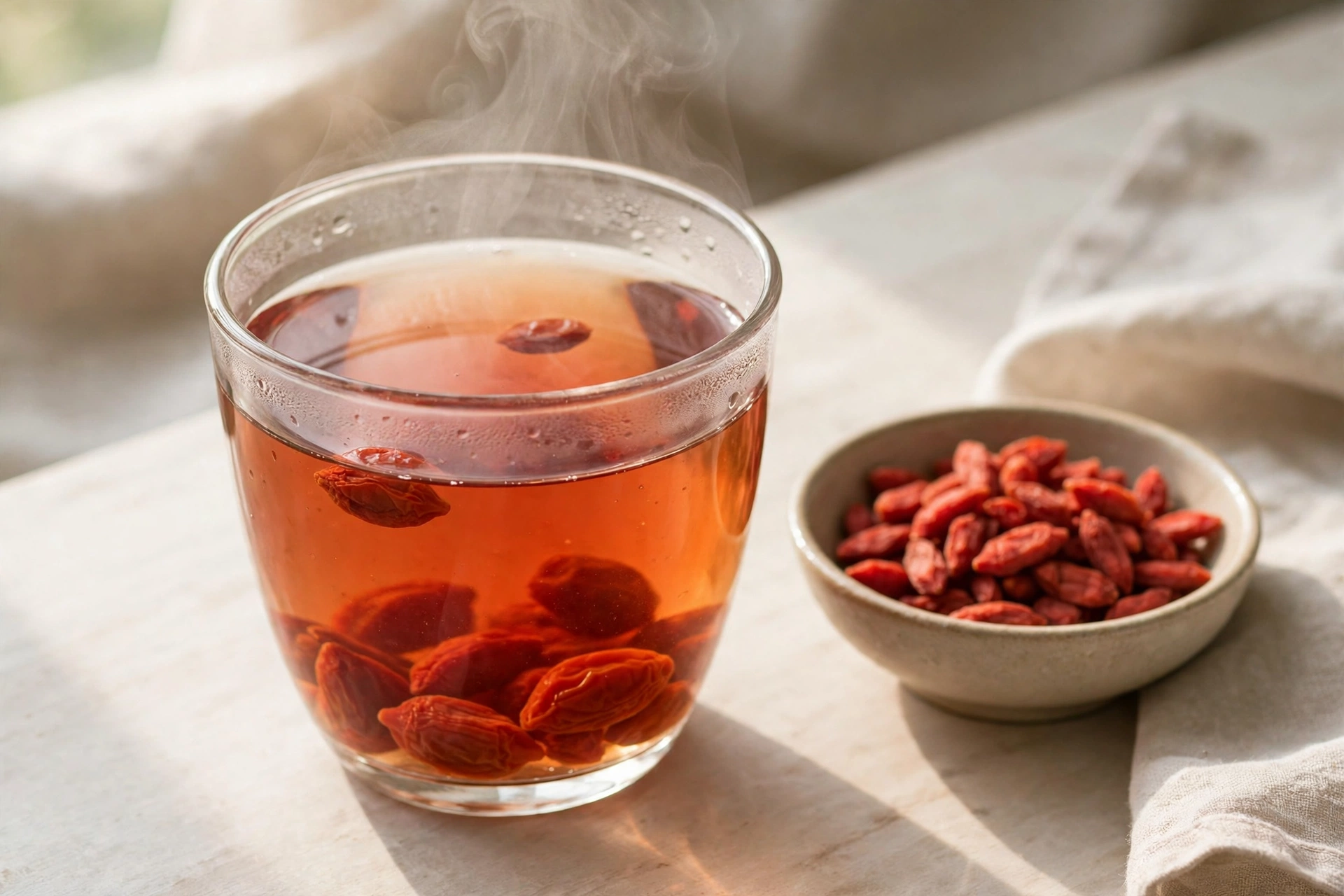
A good daily amount is one to two tablespoons of dried goji berries, about 15 to 30 grams. Eat them straight as a snack, or add them to foods you already make. They soften nicely in hot dishes, so they work well stirred into oatmeal, rice, soups, and stews, and they plump up in tea if you steep a spoonful in hot water for a few minutes.
Easy ways to enjoy them:
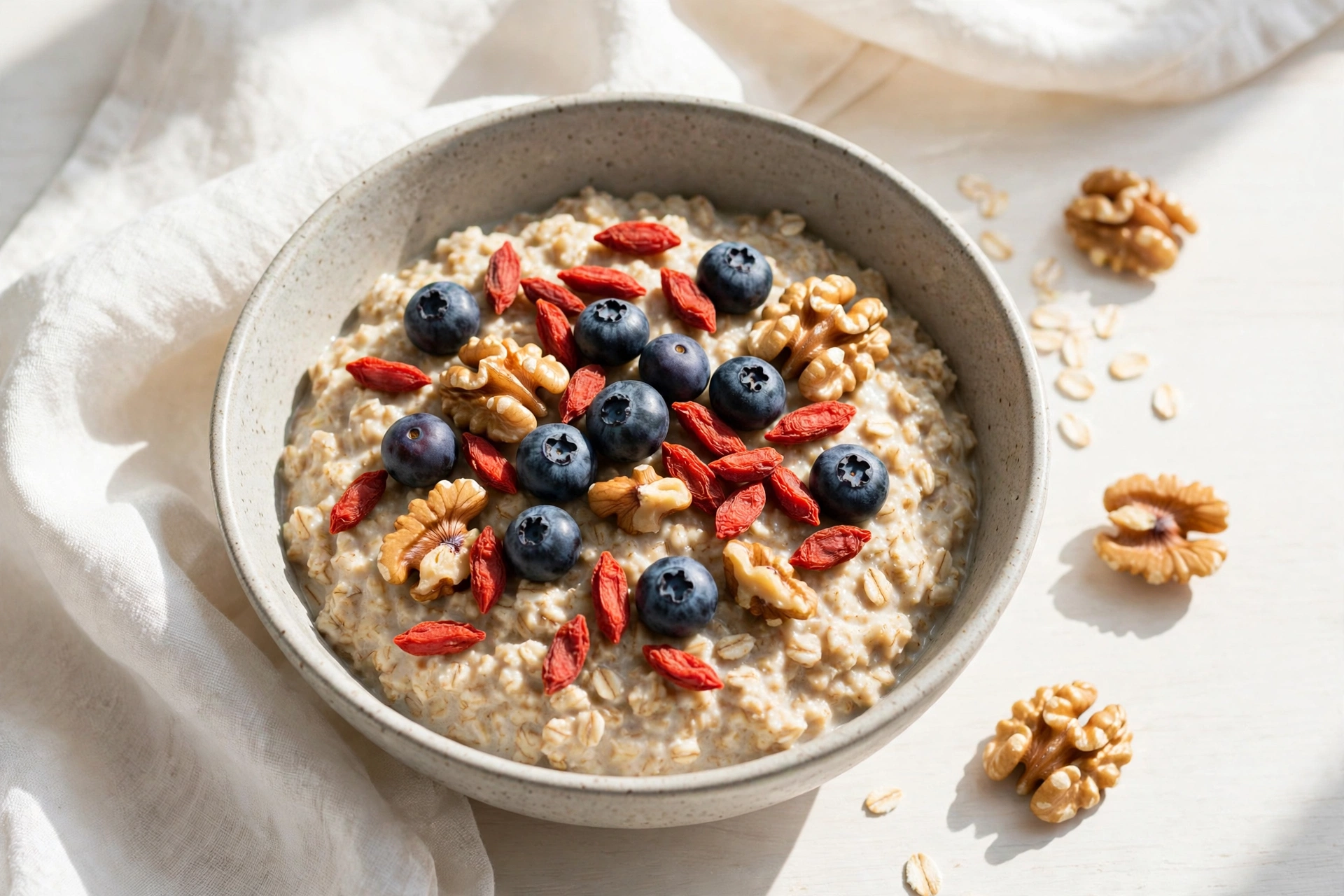
- Breakfast: stir a tablespoon into oatmeal, yogurt, or a smoothie bowl with berries and nuts.
- Trail mix: combine goji berries with walnuts, almonds, and pumpkin seeds for a portable snack.
- Tea: steep a spoonful in hot water for five minutes, then drink the tea and eat the softened berries.
- Salads: scatter them over a green salad with feta and walnuts — the sweet-tart pop works like dried cranberries.
- Cooking: add them to rice, lentil soup, or chicken stew in the last 15 minutes of cooking.
- Baking: use them in place of raisins in muffins, granola bars, and cookies.
Buy dried goji berries from a reputable source, and check the packet for added sugar — plain dried berries should list only goji berries as the ingredient. Some brands add sugar or sulphur dioxide as a preservative; unsweetened, unsulphured berries are the better choice. Store them in a sealed jar in a cool, dark place, where they keep for several months. If the berries feel hard and dry, a quick soak in warm water for ten minutes softens them nicely before you add them to a salad or a bowl of yogurt.
Cautions
Goji berries are safe for most people in food amounts, but there are two cautions that matter. The first is blood thinners. Goji berries may interact with warfarin, a common blood-thinning medicine, and there are case reports of the combination raising bleeding risk. If you take warfarin or any blood thinner, talk to your doctor before eating goji berries regularly — a small occasional amount in a trail mix is different from a daily handful, but your doctor should decide.
The second is blood sugar medicine. Goji berries may lower blood sugar slightly, so people taking diabetes drugs should watch their levels when they start eating them daily. They may also interact with blood pressure medicine, though the evidence is weaker. People with allergies to nightshade plants — tomatoes, potatoes, peppers — should be careful too, since goji berries belong to the same family and a small number of people react to them.
Pregnant women are usually advised to stick to small food amounts, since large doses of goji have traditionally been used in ways that may stimulate the uterus, though normal food amounts are considered safe. As with any new food you plan to eat daily, a quick word with your doctor is wise if you take regular medicine or have a medical condition. This article is general information, not medical advice.
FAQ
How many goji berries should I eat per day?
One to two tablespoons a day, about 15 to 30 grams, is a sensible amount. That gives you a good dose of vitamin A, iron, and fibre without too much sugar. Eating a whole bag at once is not better — it just adds calories and sugar, and it can upset your stomach.
Are goji berries good for your eyes?
They are one of the best foods for eye health because they are so rich in zeaxanthin, the carotenoid that protects the retina. Regular intake is linked with better macular pigment density in small studies, and zeaxanthin is well established as important for long-term eye health. They support your eyes over years, not overnight.
Can diabetics eat goji berries?
Yes, in small portions and paired with protein or fibre, like in oatmeal with nuts. Dried goji berries are sweet, so a large handful alone will raise blood sugar. Keep the portion to a tablespoon or two, watch your levels when you first start, and talk to your doctor if you take blood sugar medicine.
Are goji berries better than blueberries?
They are different rather than better. Goji berries win on vitamin A, zeaxanthin, iron, and protein. Blueberries win on anthocyanins, a different family of antioxidants, and they are usually cheaper and lower in sugar. Eating both gives you a wider range of plant compounds than either one alone, so variety beats picking a single winner.
Can I eat goji berries if I take warfarin?
Be careful and ask your doctor first. Goji berries may interact with warfarin and raise bleeding risk, and there are published case reports of this happening. Your doctor may want to check your blood levels more often, or may advise you to avoid them. Do not start a daily goji habit while on warfarin without medical advice.
Conclusion
Goji berries earn their superfood reputation more honestly than most. They are rich in zeaxanthin for your eyes, vitamin C and zinc for immunity, iron for energy, and antioxidants for your skin and cells — all in a small, tasty, portable fruit. The cautions are real but narrow: blood thinners and diabetes medicine are the main reasons to check with a doctor first. For everyone else, a tablespoon or two a day in oatmeal, tea, or trail mix is a simple, enjoyable habit that adds colour and nutrition to your diet without any fuss.
Sources
Goji — Wikipedia
Vitamin A — National Institutes of Health, Office of Dietary Supplements