
Coconut oil benefits for health are one of the most argued-over topics in nutrition. A decade ago it was sold as a near-miracle food. Then cardiologists pushed back, pointing at its high saturated fat. The truth, as usual, sits in the middle — and it is more interesting than either extreme. Coconut oil is a useful, tasty fat with some genuine strengths, a few real limits, and a lot of hype that needs trimming.
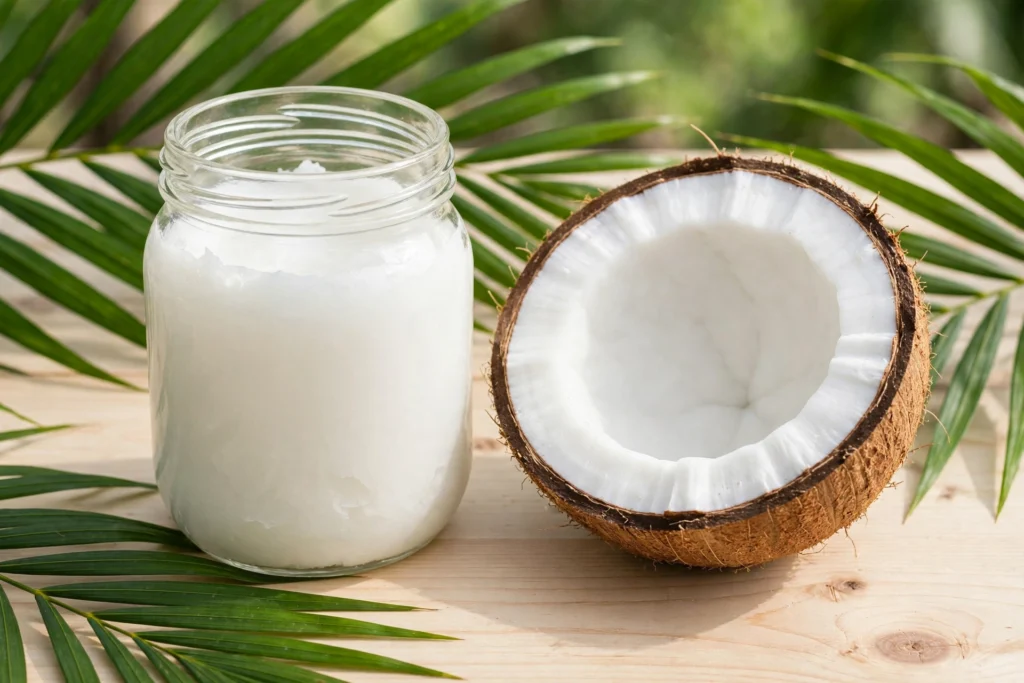
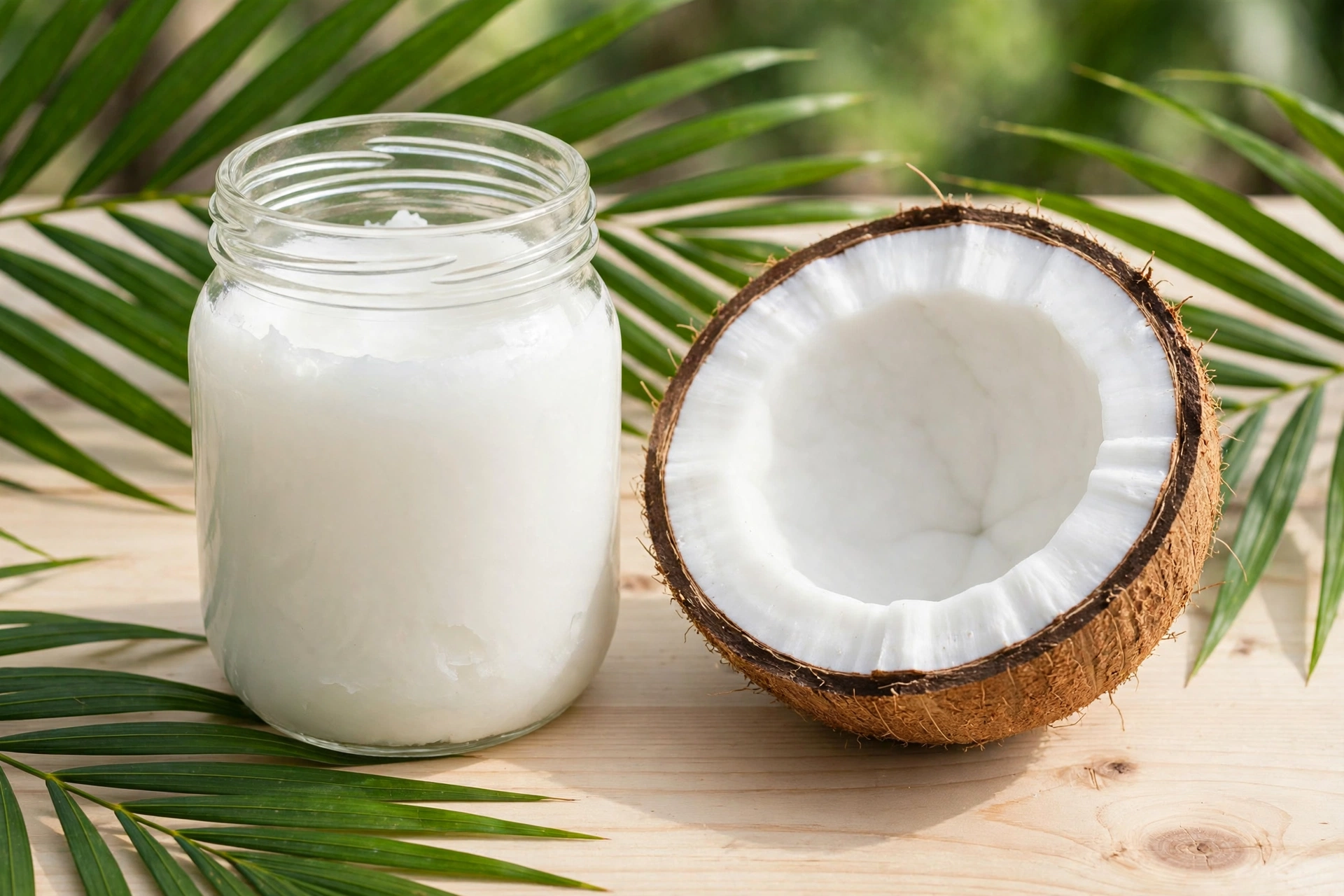
Coconut oil comes from the white flesh of mature coconuts. It is solid and creamy white at room temperature, melts into a clear liquid at about 24 degrees Celsius, and carries a light, sweet coconut scent. A tablespoon has about 120 calories and 14 grams of fat, of which around 12 grams are saturated. What makes it different from butter or lard is the type of saturated fat: a large share is medium-chain triglycerides, or MCTs, especially lauric acid, which the body handles a little differently from longer-chain fats.
This article looks at what coconut oil can actually do — in the kitchen, on the skin, and in the body — and where you should hold back. No miracle claims, just the evidence as it stands today, plus practical ways to use it well.
1. A Stable Cooking Oil for High Heat
One of the clearest strengths of coconut oil is how well it handles heat. Because it is mostly saturated fat, it is far more stable at high temperatures than many vegetable oils. It does not break down and form harmful compounds as quickly when you fry or roast with it, and its smoke point — around 175 degrees Celsius for unrefined oil and about 200 degrees for refined — is high enough for most everyday cooking.
That stability makes it a good choice for stir-fries, roasting vegetables, and baking, where the oil spends a long time in a hot pan. It also keeps well: an opened jar can last a year or more without going rancid, which is longer than most liquid oils. If you cook a lot of South Asian or Southeast Asian food, coconut oil is already the traditional fat, and it suits those dishes perfectly.
Refined coconut oil has almost no coconut flavour and a higher smoke point, so it works when you want a neutral oil. Unrefined, or virgin, coconut oil keeps the coconut taste and smell, which is lovely in curries, cakes, and roasted sweet potatoes. Pick the version that matches the dish, and measure it — a tablespoon is easy to pour, but two or three add up fast.
2. Quick Energy From Medium-Chain Fats
About half the fat in coconut oil is lauric acid, a medium-chain fatty acid, and smaller amounts are other MCTs like capric and caprylic acid. MCTs are absorbed more directly than long-chain fats: they travel straight to the liver, where they can be turned into energy quickly rather than stored. That is why MCT oil, a concentrated extract, became popular with athletes and people on very low-carbohydrate diets.
Studies suggest MCTs may give a small boost to energy expenditure and fullness compared with long-chain fats, and some small trials found that people eating MCT-rich diets felt satisfied for longer. The effect is modest, and coconut oil is not pure MCT oil — only part of its fat is medium-chain, and lauric acid behaves partly like a long-chain fat too. So the energy story is real but smaller than the marketing suggests.
If you want a practical takeaway, a spoonful of coconut oil in a morning smoothie or in coffee can add steady energy and a creamy texture, and some people find it keeps them full until lunch. Treat it as a calorie-dense energy source, not a free pass: the calories count exactly the same as any other fat, around nine per gram.
3. May Help Raise HDL Cholesterol
Here is where the debate gets loudest. Coconut oil raises LDL cholesterol — the type linked with heart risk — and that is a real concern. But it also raises HDL cholesterol, the type often called “good” cholesterol, and it raises HDL more than most other fats do. Some studies found that the ratio of total cholesterol to HDL, which doctors watch closely, stays roughly the same or even improves slightly with coconut oil.
Does that make it heart-healthy? Most heart specialists say no, or at least not as a daily staple. The American Heart Association advises keeping saturated fat below about 6 percent of daily calories — roughly 13 grams on a 2,000-calorie diet — and a single tablespoon of coconut oil nearly fills that budget. The safest reading of the evidence is that coconut oil is fine in small amounts and as a change from butter, but it should not replace unsaturated fats like olive oil as your main cooking fat.
Our guide to Olive Oil Benefits (Why Extra Virgin Olive Oil Is So Healthy) explains why extra virgin olive oil, rich in monounsaturated fat, remains the better everyday choice for heart health — and why rotating oils, rather than relying on one, is the smartest kitchen habit.
4. A Gentle Moisturiser for Skin
Outside the kitchen, coconut oil is one of the most popular natural skin moisturisers in the world, and this use has better support than most of its food claims. Its fatty acids help the skin hold moisture, and studies have found it can improve skin hydration and strengthen the skin barrier in people with dry skin and mild eczema. In one study, virgin coconut oil worked as well as mineral oil for improving skin moisture in people with eczema.
Lauric acid also has mild antimicrobial properties in lab tests, which may help explain why some people find coconut oil useful for minor skin irritation. That does not make it a treatment for infections or serious skin conditions, and it should never replace prescribed medicine. But as a simple, fragrance-free moisturiser for normal skin, it is hard to beat for price and simplicity.
A word of caution: coconut oil can clog pores for some people, especially on the face. If you have acne-prone skin, test it on a small area first, or keep it to your body, hands, and feet. A thin layer after a shower, while skin is still slightly damp, locks in moisture best.
5. Care for Hair and Scalp
Coconut oil is one of the few oils shown to actually penetrate the hair shaft rather than just sitting on top of it. A well-known study found that coconut oil reduced protein loss in both damaged and undamaged hair when used as a pre-wash treatment, and it performed better than mineral oil and sunflower oil. Less protein loss means stronger, shinier hair that breaks less easily.
To use it, warm a small amount between your palms until it melts, smooth it through the lengths and ends of your hair, and leave it for at least 30 minutes — or overnight if your hair is very dry — before washing it out with shampoo. A little goes a long way; too much leaves hair greasy and hard to rinse clean. People with fine hair should use even less and keep it away from the roots.
For the scalp, a light massage with coconut oil can help with dryness and flaking, and some people find it soothing. It is not a proven cure for dandruff, which often has a fungal cause, but keeping the scalp moisturised can reduce the itching and flaking that make dandruff worse.
Coconut oil also works well as part of a broader healthy-fat routine. Where olive oil brings monounsaturated fat and a peppery bite, and avocado brings creamy texture with fibre and potassium, coconut oil brings heat stability and a sweet tropical note. Our guide to Avocado Benefits for Health (Healthy Fats, Fibre, and More) shows how a different healthy fat can round out your meals, and mixing the three across the week keeps both your cooking and your nutrition more varied than relying on any single oil every day.
6. May Support Oral Health as a Mouth Rinse
Oil pulling — swishing oil around the mouth for 10 to 20 minutes — is an old Ayurvedic practice that has become popular again, usually with coconut oil because of its pleasant taste. Small studies suggest it can reduce the bacteria that cause plaque and bad breath, and some people report fresher breath and healthier-looking gums after a few weeks.
The evidence is still thin, and oil pulling is not a replacement for brushing and flossing. But as an extra step, it is harmless for most people and easy to try: take a tablespoon of coconut oil, swish gently, spit it into a bin — never down the sink, where it can solidify and block pipes — and rinse with water. Do it before brushing, not instead of it.
7. A Flavourful Partner for Healthy Foods
One underrated benefit of coconut oil is that it makes healthy food taste better, and food you enjoy is food you actually eat. Roasted vegetables tossed in coconut oil, lentil curry finished with a spoonful, or oatmeal cooked with a little coconut oil and fruit — these dishes are more satisfying than their low-fat versions, and satisfaction is what keeps a healthy diet going for years instead of weeks.
Coconut oil pairs especially well with foods from tropical cuisines, and it works beautifully in baking, where it can replace butter one-for-one in many recipes. If you are cutting back on dairy, it gives cakes and cookies a rich texture without milk or butter. Just remember the calorie count: delicious does not mean unlimited.
For a refreshing contrast, coconut water — the clear liquid inside young coconuts — is a completely different product with its own strengths. Our article on Coconut Water Benefits (Hydration and Electrolytes, Explained Simply) explains how it differs from the oil and when it is the better choice for hydration.

How to Use It
Think of coconut oil as a supporting fat, not your only fat. A good weekly pattern is to use olive oil most days, and coconut oil a few times a week where its flavour and heat stability shine. One to two tablespoons a day is a sensible upper range for most people, and many nutritionists suggest staying closer to one.
Practical ways to use it:
- Cooking: melt a tablespoon in a pan for stir-fries, curries, or roasting vegetables at medium-high heat.
- Baking: replace butter with the same amount of coconut oil in cakes, muffins, and cookies for a dairy-free result.
- Breakfast: stir a teaspoon into oatmeal or a smoothie for creaminess and staying power.
- Popcorn: pop kernels in coconut oil instead of butter for a light tropical flavour.
- Skin: apply a thin layer to damp skin after a shower, or use it as a lip balm in winter.
- Hair: use as a pre-wash mask once a week, focusing on the ends.
Choose virgin, unrefined coconut oil when you want flavour and the most natural processing, and refined coconut oil when you want a neutral taste and a higher smoke point. Store the jar in a cool cupboard — it will go solid in winter and liquid in summer, and both states are completely normal.
Things to Watch
The main concern with coconut oil is its saturated fat content. At about 12 grams of saturated fat per tablespoon, it is one of the richest sources around, and eating large amounts regularly can raise LDL cholesterol. If you have high cholesterol, heart disease, or a family history of heart problems, talk to your doctor about how much fits your diet, and lean on unsaturated fats like olive oil, nuts, and avocado most of the time.
Calories are the second issue. Coconut oil is energy-dense, and the “healthy fat” label does not make its calories disappear. A tablespoon in coffee, a tablespoon in cooking, and a tablespoon in baking add up to 360 calories before you have eaten anything else. Measure it with a spoon rather than pouring freely, and count it in your daily intake.
Allergies are rare but possible — people with a tree nut allergy are sometimes advised to be cautious, though coconut is technically a fruit, not a nut, and most tree-nut-allergic people tolerate it. Check with your allergist if you are unsure. On skin, stop using it if you develop redness, itching, or breakouts, and do not use it on open wounds. This article is general information, not medical advice, and your own health situation always comes first.

FAQ
Is coconut oil better than olive oil?
For most everyday cooking and heart health, olive oil is the better choice because it is rich in monounsaturated fat and linked with lower heart risk in large studies. Coconut oil wins for high-heat cooking and for flavour in certain dishes, and it has some uses olive oil does not, like skin and hair care. Using both, with olive oil as the default, gives you the best of each.
How much coconut oil should I eat per day?
Most experts suggest one to two tablespoons a day as a reasonable upper range, and less if you eat a lot of other saturated fat from meat, butter, or cheese. Keep your total saturated fat under about 6 percent of daily calories if you are watching heart health, and remember that one tablespoon already provides about 12 grams.
Does coconut oil help you lose weight?
There is no strong evidence that coconut oil causes weight loss. Its MCTs may slightly increase fullness and energy burn, but the effect is small and easily cancelled out by the calories in the oil itself. It can be part of a weight-management plan if it replaces a less healthy fat, but adding it on top of your usual diet will add weight, not remove it.
Can I use coconut oil on my face?
Some people can, but it is risky if your skin is oily or acne-prone because coconut oil is rated as fairly likely to clog pores. Patch-test it on a small area for a week before using it on your whole face. Many people prefer it as a body moisturiser, hand cream, or makeup remover, and use a lighter product on the face.
Is refined or unrefined coconut oil better?
Unrefined, or virgin, coconut oil is less processed, keeps the coconut flavour, and may retain more antioxidants. Refined coconut oil has a neutral taste and a higher smoke point, so it suits high-heat cooking and recipes where you do not want coconut flavour. Neither is clearly healthier overall — pick based on how you plan to use it.
Conclusion
Coconut oil is neither a miracle food nor a food to fear. It is a stable, flavourful fat that handles heat well, moisturises skin, cares for hair, and adds quick energy in small amounts. Its saturated fat means it should stay a supporting player, not the star of your diet, with olive oil and other unsaturated fats doing most of the daily work. Use it where it shines, measure it honestly, and enjoy it for what it is: a useful ingredient with a place in the kitchen and the bathroom cabinet alike.
Sources
Coconut oil — Wikipedia
Coconut oil: healthier than other saturated fats or not? — Harvard Health Publishing