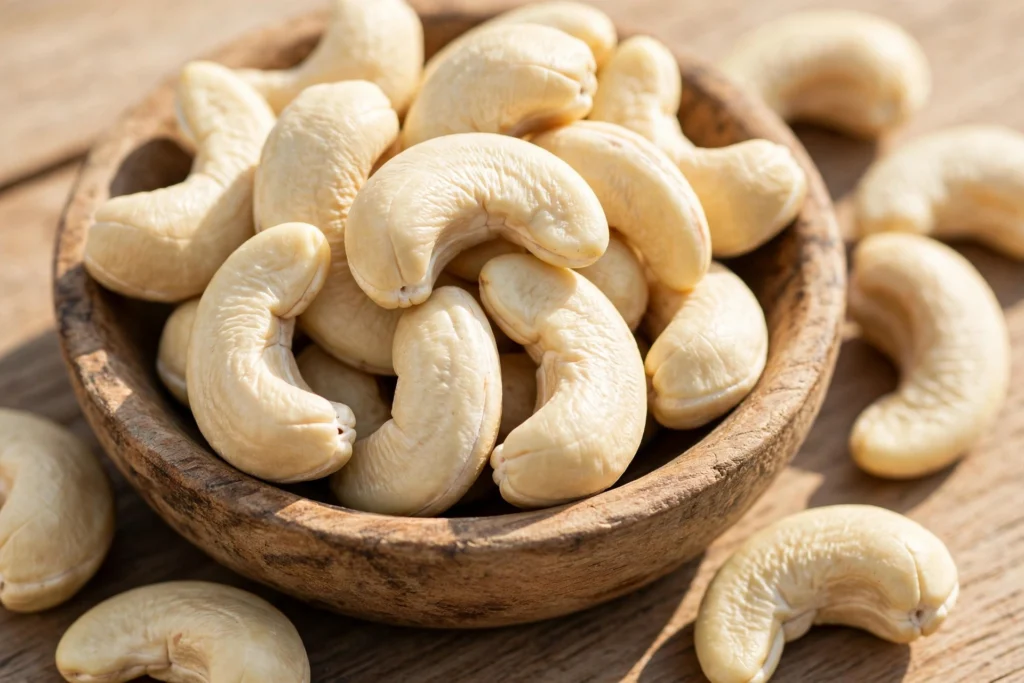

Cashews are the creamy, buttery nuts that show up in stir-fries, curries, trail mixes, and dairy-free sauces — and they’re far more nutritious than their rich taste suggests. Cashew benefits for health include heart-friendly monounsaturated fats, magnesium for bones, and minerals that support energy and immunity, all in a small handful a day.
Cashews are a little different from other nuts. They’re lower in fibre than almonds or walnuts, but richer in iron, zinc, and magnesium, and their soft texture makes them the most versatile nut in the kitchen. In this article, we’ll look at what cashews offer, how many to eat, and the healthiest ways to enjoy them.
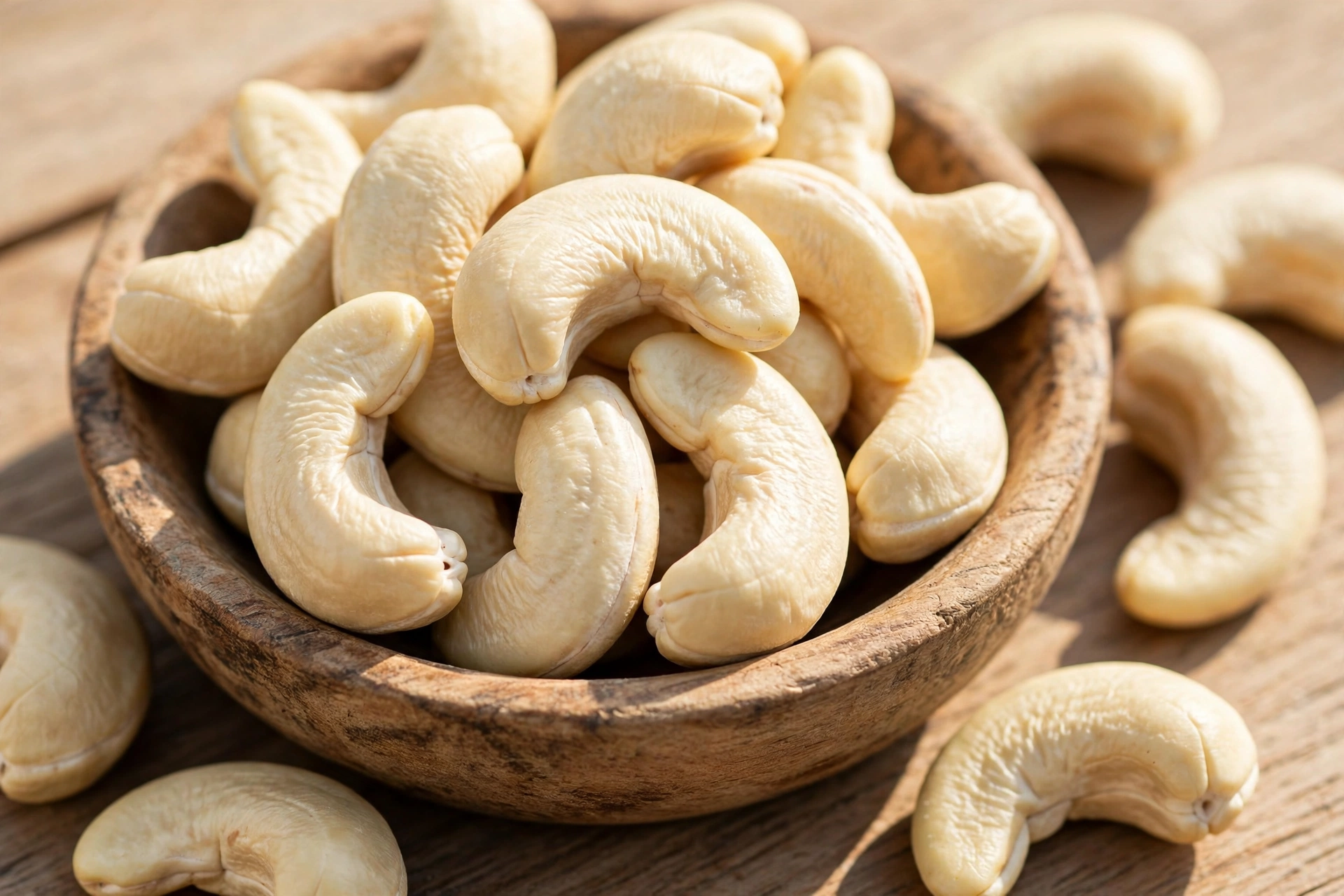
1. Heart-Friendly Fats That Support Cholesterol
Most of the fat in cashews is monounsaturated — the same kind of fat that makes olive oil famous. About 60 percent of cashew fat is oleic acid, the monounsaturated fat linked in studies to lower LDL cholesterol and better heart health. Population studies consistently link nut eaters with lower rates of heart disease, and cashews contribute to that pattern alongside almonds and walnuts.
Cashews also contain plant sterols, compounds that help block cholesterol absorption in the gut, plus a small amount of fibre that helps lower LDL further. The effect of a handful of cashews is modest on its own, but nuts are one of the few snack foods that actively support heart health rather than working against it — and that makes them a smart swap for crisps, biscuits, and other processed snacks.
Portion matters, though. Cashews are energy-dense, with about 160 calories per ounce (roughly 28 grams, or a small handful). That’s a reasonable snack, but an unmeasured bowl can easily run to 500 calories or more. The healthy habit is a measured handful — about 18 cashews — rather than eating straight from the bag.
There’s also a practical reason cashews show up in so many healthy diets: they’re one of the few nuts that work in both sweet and savoury cooking. Almonds and walnuts have strong flavours that limit where they fit, but cashews are mild and creamy, so they blend into sauces, curries, and desserts without dominating the dish. That versatility means people actually eat them often, and a food you eat often is worth more than a food you buy once and forget in the back of the cupboard.
2. Magnesium for Bones, Muscles, and Energy
Cashews are one of the best food sources of magnesium, with an ounce providing about 20 percent of your daily needs. Magnesium is involved in more than 300 enzyme reactions in your body, including energy production, muscle function, and bone building. Low magnesium intake has been linked to weaker bones, muscle cramps, fatigue, and higher blood pressure.
The bone connection is worth knowing. Magnesium helps your body use calcium properly and supports the structure of bone tissue, and studies link higher magnesium intake with better bone density, especially in older adults. Cashews give you magnesium alongside small amounts of calcium and phosphorus, the other minerals bones depend on — a useful combination in one small food.
Magnesium also helps with energy in a more everyday sense. It’s needed to make ATP, the molecule your cells use for energy, and people who are low in magnesium often report feeling tired for no clear reason. A handful of cashews won’t fix chronic fatigue, but as part of a magnesium-rich diet — with leafy greens, beans, and whole grains — they help cover a nutrient many people fall short on.
3. Iron and Zinc for Energy and Immunity
Cashews are unusually rich in iron for a plant food. An ounce provides about 8 percent of your daily iron, and unlike many nuts, cashews are also a good source of copper — about 70 percent of your daily needs per ounce. Copper helps your body absorb and use iron properly, so the two nutrients work as a team in cashews.
Iron matters because it’s needed to make haemoglobin, the protein that carries oxygen in your blood. Low iron shows up as tiredness, pale skin, and poor concentration, and it’s one of the most common nutrient deficiencies worldwide. The iron in cashews is plant iron, which absorbs less easily than iron from meat, but eating cashews with a vitamin C-rich food — like a handful of cashews with a piece of fruit — improves absorption noticeably.
Zinc is the other headline mineral. An ounce of cashews gives you about 15 percent of your daily zinc, which supports immune function, wound healing, and healthy skin. Zinc deficiency is common in people who eat little meat, and cashews are one of the best plant sources available. If you want to compare another zinc-rich snack, Pumpkin Seeds Benefits (Magnesium, Better Sleep, and Prostate Health) covers a seed that’s even richer in the mineral.
4. Steady Energy Without a Sugar Crash
Cashews give you steady energy because of their mix of healthy fats, protein, and fibre. An ounce provides about 5 grams of protein, 1 gram of fibre, and 12 grams of fat, mostly the monounsaturated kind. That combination digests slowly, so the energy from cashews lasts for hours, without the spike and crash that follows a sugary snack.
This makes cashews a genuinely useful snack for long afternoons, workouts, or travel days — situations where a biscuit or a chocolate bar would leave you hungry again within the hour. A small handful of cashews with a piece of fruit is a balanced snack that covers fat, protein, fibre, and natural sugars in one go.
There’s a practical point here too: cashews are portable, they don’t spoil quickly, and they need no preparation. Keeping a small bag in your desk, car, or gym bag means you always have a healthy option within reach, which is half the battle with snacking. The food you have available is the food you’ll eat, so make the available food a good one.
5. Eye Health from Lutein and Zeaxanthin
Cashews contain small amounts of lutein and zeaxanthin, the carotenoids that protect the retina from blue light and have been linked to a lower risk of macular degeneration. The amounts are modest — leafy greens and egg yolks are far richer sources — but they add to the total from a varied diet, and every bit helps when eye health is built over decades.
Cashews also provide zinc, which plays a role in eye health too. Zinc helps your body move vitamin A from the liver to the retina, where it’s needed to make melanin, the pigment that protects your eyes. Low zinc intake has been linked to poorer night vision, and cashews are a practical way to keep your intake up.
The real eye-health value of cashews is indirect: they replace snacks that offer nothing for your eyes at all. A handful of cashews instead of a bag of crisps is a trade that improves your diet in every direction, and repeated daily, those small trades add up to real differences in nutrient intake over months and years.
6. May Support Blood Sugar Control
Cashews are low in carbohydrates — about 9 grams per ounce, with 1 gram of fibre — and they have a low glycaemic index. That makes them a useful snack for people watching their blood sugar, including those with diabetes or prediabetes. A handful of cashews barely moves glucose on its own, and eating them with a carbohydrate food slows down the overall glucose rise from that meal.
Studies on nuts and blood sugar are encouraging. People who eat nuts regularly tend to have better insulin sensitivity, and small trials have found that adding cashews to the diet can improve blood sugar markers in people with type 2 diabetes. The effect is modest, and cashews are not a treatment for diabetes — but as a snack choice, they’re far better than biscuits, sweets, or white bread.
One thing to watch: honey-roasted or sugar-coated cashews undo much of this benefit, since the added sugar raises the glycaemic load significantly. Stick to raw or dry-roasted, unsalted cashews for the blood sugar benefit, and save the sweetened versions for an occasional treat rather than an everyday snack.
7. Skin and Hair Support from Zinc and Copper
Cashews provide two minerals your skin and hair depend on: zinc and copper. Zinc supports skin healing and helps control oil production, and low zinc intake is linked to skin problems and slower wound healing. Copper is needed to make melanin, the pigment that colours your hair and skin, and it also helps your body make collagen, the protein that keeps skin firm.
Cashews also contain vitamin E, a fat-soluble antioxidant that protects skin cells from damage, plus small amounts of selenium. The amounts are modest, but they add to the total from the rest of your diet, and they come in a food that’s easy to eat every day. If you want a stronger source of vitamin E and skin nutrients, Almond Benefits for Health (How Many to Eat a Day) covers a nut that’s even richer in the vitamin.
As with every skin benefit from food, patience matters. Skin cells take about a month to reach the surface, so dietary changes show up slowly. But a diet rich in zinc, copper, and healthy fats is one of the few skin strategies with real evidence behind it, and cashews are a tasty way to contribute.
8. Weight Management — Surprisingly Helpful
It seems odd that a high-calorie food could help with weight management, but the research on nuts tells a consistent story: people who eat nuts regularly are no more likely to gain weight than those who don’t, and in some studies they’re less likely to. The reason is satiety — the protein, fat, and fibre in nuts keep you full, so you eat less later in the day.
Cashews are also less calorie-dense in practice than their label suggests. Studies on nut digestion show that your body doesn’t absorb all the fat in whole nuts — some of it passes through undigested, because the fat is locked inside cell walls that your gut can’t fully break down. That means the effective calorie count of a handful of cashews is lower than the number on the packet.
The key, as always, is portion control. A measured handful — about 18 cashews, or one ounce — is a satisfying snack that supports weight management. An unmeasured bowl while watching television is a different story, and it’s where most people go wrong with nuts. Measure it, enjoy it, and put the bag away.

How to Eat It
Aim for about one ounce (28 grams) of cashews a day — roughly a small handful, or 18 nuts. The simplest way is raw or dry-roasted and unsalted, eaten as a snack on their own or mixed into a trail mix with other nuts and seeds. For a balanced snack, pair cashews with a piece of fruit or a few dried dates — the combination of healthy fat, protein, and natural sugars keeps you full for hours.
Cashews are also brilliant in cooking. Soaked cashews blend into a creamy sauce that’s a convincing stand-in for cream in curries, pastas, and desserts, and they’re a classic in stir-fries, where their buttery texture contrasts nicely with crisp vegetables. Cashew butter is another option — spread it on toast or add it to smoothies for a rich, nutty flavour. If you enjoy nut butters, Benefits of Eating Peanuts (Protein, Energy, and Heart Health) covers another affordable favourite.
When you buy cashews, choose raw or dry-roasted and unsalted if you can — salted and flavoured versions add sodium and sometimes sugar. Store them in an airtight container in a cool, dark place, or in the fridge if you won’t use them within a few weeks, since the fats in nuts can go rancid. A rancid cashew tastes bitter and stale, so trust your nose and throw them out if they smell off.
Things to Watch
Cashews are safe for most people, but tree nut allergy is serious and relatively common — and cashew allergy is one of the more severe nut allergies. If you or a child has a nut allergy, avoid cashews entirely unless a doctor has cleared them, and be aware that cashews are often processed in facilities that handle other nuts. Anyone who notices itching, swelling, or breathing difficulty after eating cashews should seek medical help immediately.
Cashews are also high in calories, so portion control matters. A handful a day is a healthy habit; a large bowl every evening is a lot of extra calories that can add up to weight gain over time. Measure your portion, at least until you know what a handful looks like.
One more thing: raw cashews in shops are actually steamed, not truly raw — true raw cashews contain urushiol, the same irritant found in poison ivy, and they’re never sold unprocessed. The “raw” cashews you buy are safe. And if you have kidney stones, talk to your doctor — cashews are moderate in oxalates, so very large amounts may matter for some people.

FAQ
How many cashews should I eat a day?
About one ounce (28 grams), or roughly 18 cashews, is a good daily portion. That gives you the nutrients without too many calories. Measure it out rather than eating from the bag, since it’s easy to eat two or three portions without noticing.
Are cashews good for weight loss?
Yes, in measured portions. Their protein, fat, and fibre keep you full, and studies show nut eaters don’t gain weight as easily as people expect. The key is portion control — a handful, not a bowl.
Are cashews good for your heart?
Yes, their monounsaturated fats and plant sterols support healthy cholesterol, and population studies link nut eaters with lower heart disease risk. Choose unsalted cashews and keep the portion to a handful a day.
Do cashews help you sleep?
They may help a little. Cashews contain magnesium and tryptophan, both involved in sleep, and a small handful in the evening is a sensible snack. They won’t replace good sleep habits, but they don’t hurt.
Are roasted cashews as healthy as raw cashews?
Dry-roasted cashews are nearly as healthy as raw — roasting causes only small nutrient losses. Oil-roasted, salted, or honey-coated cashews are less healthy, since they add fat, sodium, or sugar. Choose raw or dry-roasted and unsalted when you can.
Conclusion
Cashews are proof that a delicious food can also be a nutritious one. A small handful a day gives you heart-friendly fats, magnesium for bones and energy, iron and zinc for immunity, and steady energy that lasts for hours — all in a nut that’s creamy, versatile, and easy to enjoy. They’re not the highest-fibre nut, and they’re not the lowest in calories, but their mineral profile is one of the best in the nut family.
The habit is simple: measure a handful, enjoy it, and put the bag away. Use cashews as a snack, in cooking, or blended into sauces, and they become a quiet part of a healthy diet rather than an indulgence. That’s the best kind of health food — one you actually look forward to eating.
Sources
Learn more from these trusted references: Cashew — Wikipedia and the Harvard T.H. Chan School of Public Health — Nuts and Seeds.