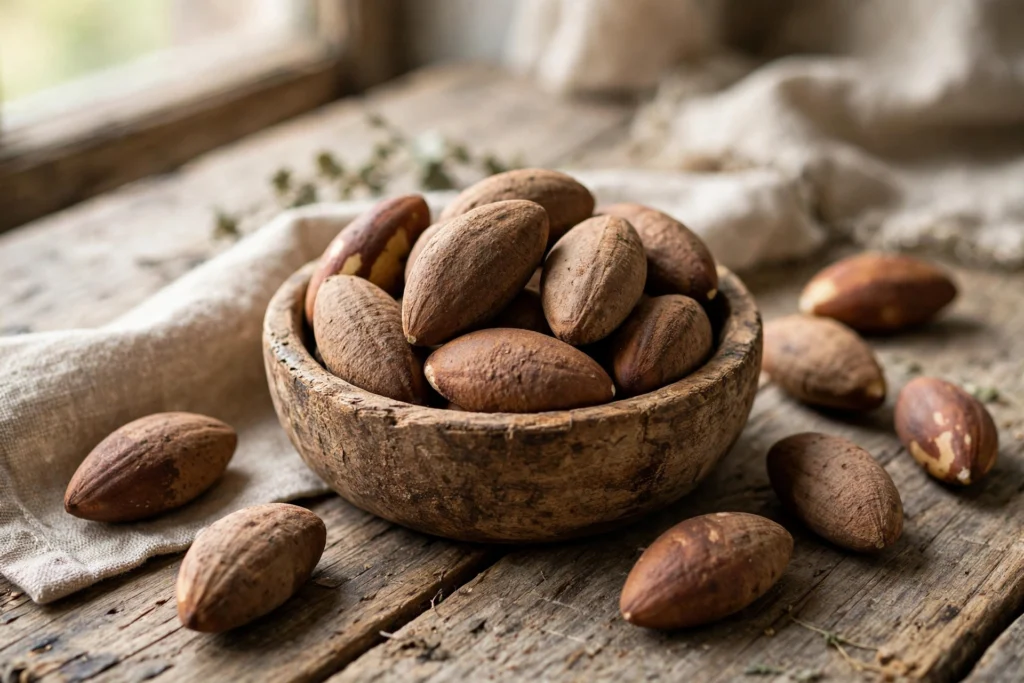

Brazil nut benefits for health start with one simple fact: a single Brazil nut can hold more selenium than you need in an entire day. That sounds almost too good to be true, and in a way it is the whole story of this nut in a nutshell. Brazil nuts are rich, buttery, and unusually powerful, which means a little goes a long way.
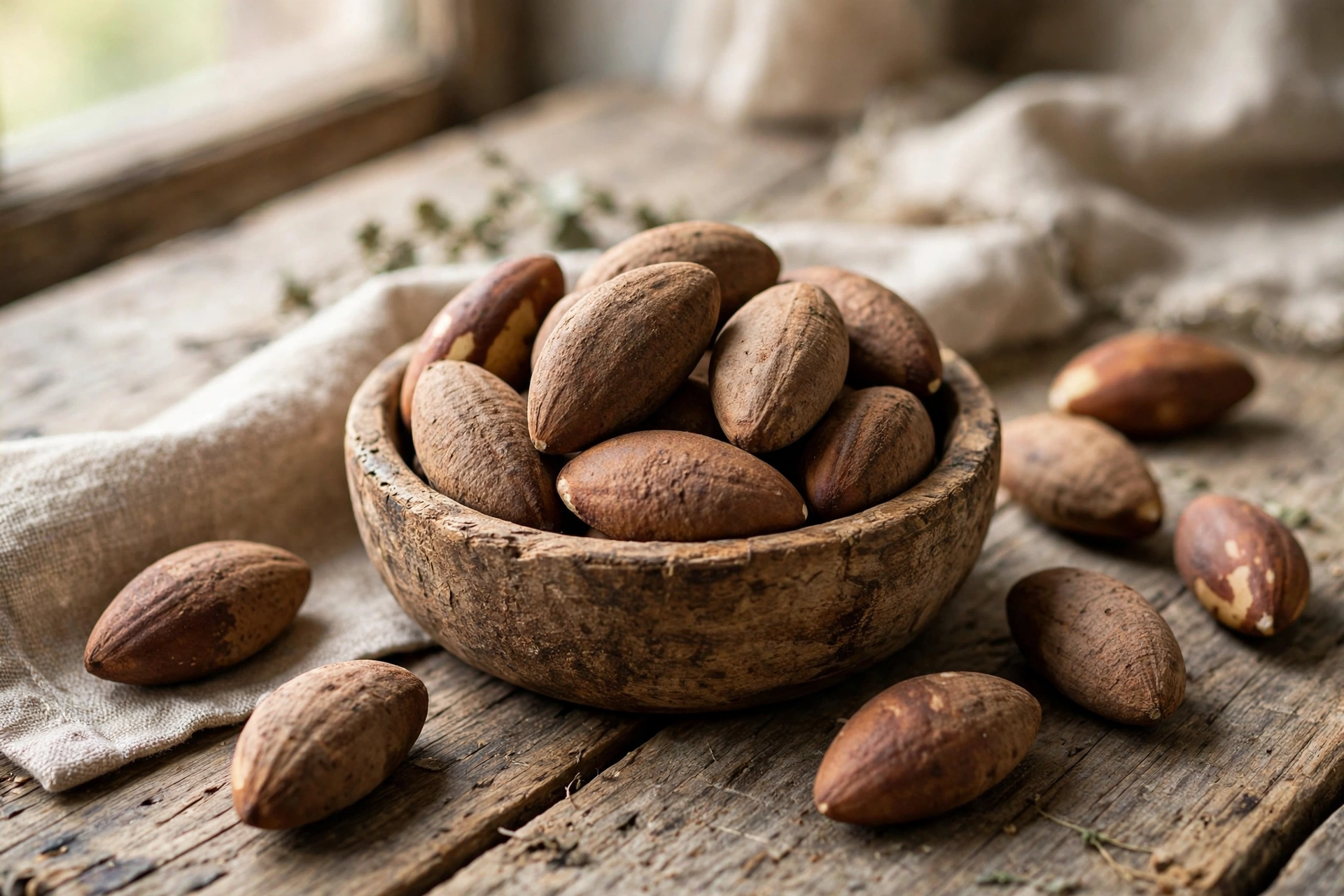
These nuts grow on huge trees in the Amazon rainforest, mostly in Brazil, Bolivia, and Peru. The trees can live for hundreds of years and grow taller than most buildings. Inside a hard, coconut-like fruit sit the triangular nuts we eat, each one packed with healthy fats, magnesium, and that famous selenium.
You do not need a bowl of Brazil nuts to get something from them. Most nutrition experts say one or two a day is plenty, and that is part of what makes them so interesting. This article walks through what Brazil nuts may do for your thyroid, mood, heart, and more, where the evidence is strong and where it is still early, and the one caution that matters more here than with almost any other nut.
1. Selenium for Thyroid Health
The thyroid is a small gland in your neck that quietly runs a big part of your metabolism, energy, and body temperature. It needs selenium to work properly, and Brazil nuts are the richest food source of this mineral by a wide margin. One nut can contain anywhere from 50 to 90 micrograms of selenium, and the daily recommended amount for most adults is about 55 micrograms. That means a single nut can cover the whole day.
Selenium helps the thyroid turn one thyroid hormone into its active form, a step the body cannot skip. Studies suggest that people who do not get enough selenium may have a harder time keeping thyroid function steady, and research has looked at selenium supplements in people with autoimmune thyroid conditions such as Hashimoto’s thyroiditis. The results are mixed, and doctors do not agree that everyone with a thyroid problem should take extra selenium. Food is a different story from a supplement, though, and a nut or two a day is a gentle way to cover a basic need.
What makes Brazil nuts special here is how concentrated they are. You would need to eat a lot of other selenium foods, like tuna, eggs, or sunflower seeds, to match one Brazil nut. That concentration is also the reason portion size matters so much, and we will come back to that in the cautions section. For now, the key point is simple: if your diet is low in selenium, Brazil nuts are the fastest food-based way to fix that gap.
2. Support for Mood and Brain Health
Low selenium has been linked in several studies to low mood, irritability, and tiredness. One small study found that people who ate Brazil nuts daily reported better mood and less anxiety after a few weeks, though the study was small and more research is needed before anyone can call this a proven effect. Still, the connection makes sense when you look at how the brain uses selenium.
The brain uses a lot of energy and produces a lot of oxidative stress as a byproduct, and selenium is part of the body’s antioxidant defense system. It helps build enzymes called selenoproteins that protect brain cells from damage. Brazil nuts also contain magnesium and healthy fats, both of which the brain needs to function well. Magnesium in particular has been studied for its role in calm and sleep, and many people do not get enough of it.
None of this means a Brazil nut will cure depression or anxiety, and it would be wrong to suggest that. Mood is complicated, and food is only one piece of it. But a diet that is short on selenium, magnesium, and healthy fats is not doing your brain any favors, and Brazil nuts cover all three in a very small serving.
3. Antioxidant Protection for Your Cells
Every day, your body deals with unstable molecules called free radicals, which come from normal metabolism, pollution, sunlight, and even exercise. When free radicals outnumber the body’s defenses, the result is oxidative stress, which has been linked to aging and a long list of chronic conditions. Selenium is one of the nutrients that helps the body fight back.
Selenium works through an enzyme called glutathione peroxidase, which is one of the body’s most important internal antioxidants. Think of it as part of the cleanup crew that neutralizes free radicals before they can damage cells. Brazil nuts also contain vitamin E and plant compounds called phenols, which add their own antioxidant activity. Together, they give this nut a stronger antioxidant profile than most other nuts, at least per serving.
Research has measured higher levels of selenium and antioxidant enzyme activity in people who eat Brazil nuts regularly, even at just one nut a day. That does not guarantee a longer life or freedom from disease, and no single food can promise that. It does suggest that Brazil nuts are a practical way to support the body’s own defense systems with almost no effort.
4. Heart Health and Healthy Fats
Most of the fat in Brazil nuts is unsaturated fat, the kind that has been linked to better heart health when it replaces saturated fat in the diet. A one-ounce serving, which is about six nuts, contains around 19 grams of fat, most of it monounsaturated and polyunsaturated. That is a similar fat profile to other tree nuts, and tree nuts as a group have been studied a lot for heart health.
Large observational studies have found that people who eat nuts regularly tend to have lower rates of heart disease than people who rarely eat them. Brazil nuts have also been studied more directly: small trials have reported improvements in cholesterol patterns, including lower LDL cholesterol, after people added Brazil nuts to their diet for a few weeks. Selenium may play a part here too, since oxidative damage to LDL cholesterol is one step in the process that leads to clogged arteries.
Portion size matters here as well. Six Brazil nuts carry about 190 calories, so eating them by the handful every day can quietly add a lot of energy to your diet. One or two nuts give you the selenium without the calorie load, and you can get your other healthy fats from foods like olive oil or avocados. If you enjoy the taste of Brazil nuts and want a bigger serving, try mixing one or two Brazil nuts with a handful of lighter nuts, like almonds, so you get the flavor without overdoing the calories or the selenium.
5. Immune System Support
Your immune system depends on a steady supply of nutrients to do its job, and selenium is one of them. Research shows that selenium helps immune cells respond to infections and helps control inflammation once a threat has passed. People who are low in selenium may have weaker immune responses, and studies in animals and small human trials have found that correcting a deficiency can improve immune markers.
Brazil nuts add more than selenium to the immune picture. They contain zinc in small amounts, and zinc is well known for its role in immune function. They also provide vitamin E, which supports the protective membranes of immune cells. No single nutrient runs the immune system on its own, and eating Brazil nuts will not stop you from catching a cold. What they can do is help you avoid a nutrient gap that would make your immune system work harder than it needs to.
This is a good example of why whole foods often beat supplements. A Brazil nut gives you selenium alongside healthy fats that help your body absorb fat-soluble vitamins, plus magnesium and other minerals that work together. A selenium pill gives you one thing. For most healthy people, the food version is the safer and more sensible choice.
6. Healthy Skin and Hair
Selenium and vitamin E both show up in skin health research, and Brazil nuts contain both. Selenium supports the skin’s defenses against sun damage, while vitamin E helps protect the oils in skin cells from going rancid. Some dermatologists point out that people with very low selenium intake sometimes notice dry skin or hair changes, though this is uncommon in people who eat a varied diet.
Brazil nuts also contain zinc and healthy fats, which support the skin barrier, the layer that keeps moisture in and irritants out. The fats in nuts help your body absorb vitamin E and other fat-soluble nutrients, which is one reason nuts are often mentioned in skin-friendly eating patterns. You will not see a new glow overnight from eating a Brazil nut, and anyone who promises that is selling something. Over weeks and months, though, a diet that covers these nutrients gives your skin and hair the raw materials they need to stay healthy.
Hair is mostly protein, and Brazil nuts provide a small amount of protein along with selenium, which has been linked to hair health in research on deficiency. Severe selenium deficiency can cause hair loss, though this is rare. For most people, the realistic benefit is simpler: Brazil nuts help cover a nutrient that is easy to miss, and that coverage supports the normal upkeep of skin and hair.
7. Blood Sugar and Steady Energy
Brazil nuts are very low in carbohydrates and contain almost no sugar, which makes them a steady snack for blood sugar. A single nut has less than one gram of carbohydrate, and the fat and small amount of protein slow digestion, so you do not get the quick spike and crash that comes from a sweet snack. That makes them a useful option for people who are watching their blood sugar, including people with type 2 diabetes.
Some research has looked at selenium and blood sugar more closely, and the results are a reminder that more is not always better. Very high selenium intake has been linked in some studies to a higher risk of type 2 diabetes, which is one more reason to stick to one or two nuts a day. At normal food amounts, though, Brazil nuts fit well into a blood-sugar-friendly eating pattern.
They also work well as part of a snack that keeps you full. Pair one Brazil nut with a piece of fruit or a small bowl of yogurt, and you get fiber, protein, and healthy fat together, which keeps hunger away longer than a snack made of carbs alone. That kind of steady energy is the real everyday benefit, and it is easy to build into a normal routine.

How to Eat It
The simplest way to eat Brazil nuts is raw, straight from the bag, one or two a day. They have a rich, creamy taste that is a little like coconut, and they need no preparation at all. Store them in an airtight container in a cool place, or in the fridge if you live somewhere warm, because their high fat content means they can go rancid faster than drier nuts.
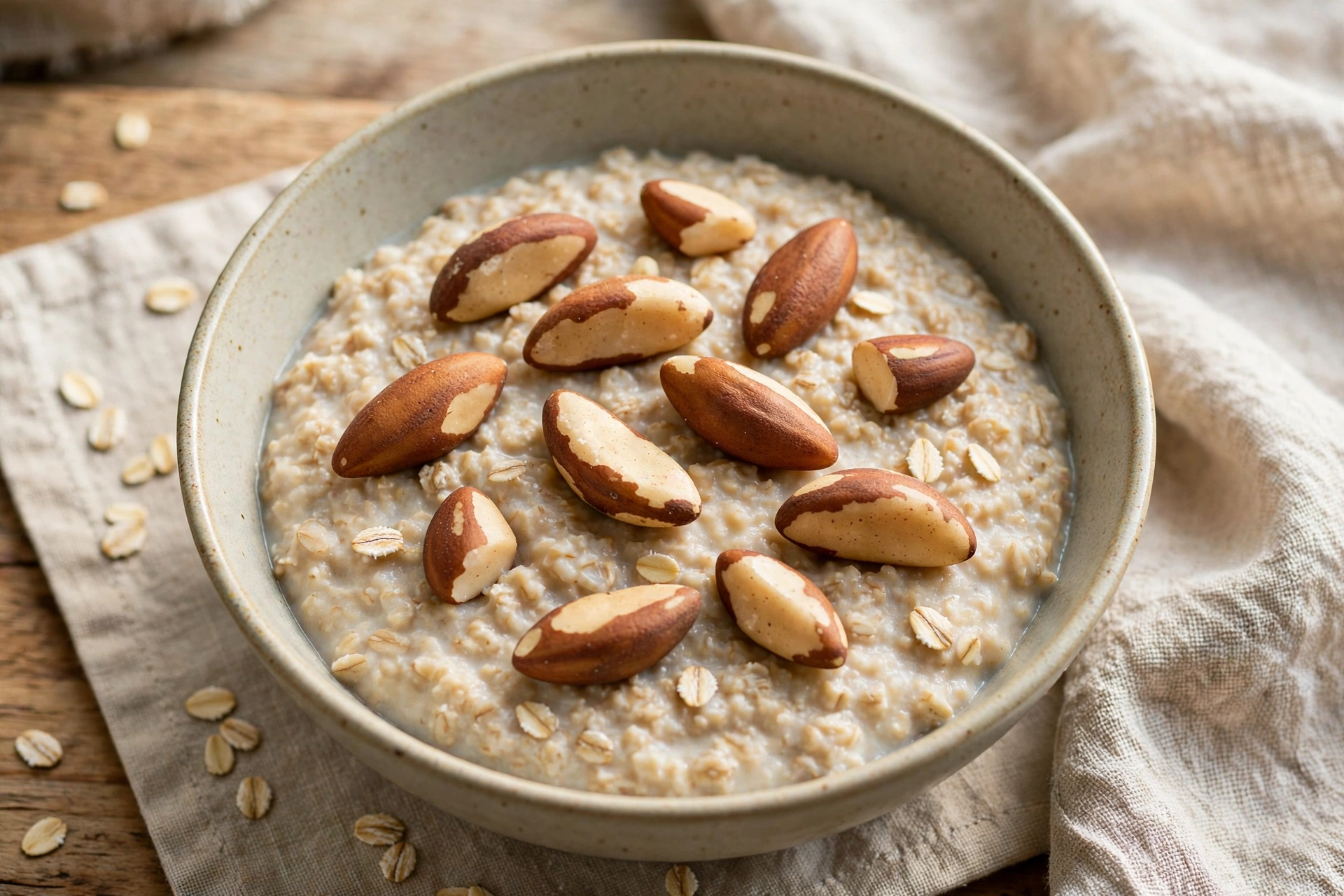
You can also chop them into oatmeal, yogurt, or a salad, where a single nut goes a long way. They work well in trail mix, but measure the mix rather than eating from the bag, since it is easy to eat six or eight Brazil nuts without noticing. Some people blend one into a smoothie, which spreads the selenium across the whole drink. Roasting is fine too, though raw nuts keep slightly more of their nutrients.
If you want a regular habit without thinking about it, keep a small jar on the kitchen counter and take one nut with breakfast. That is all it takes. If you are already eating other selenium-rich foods every day, like seafood or eggs, you may not need a Brazil nut daily at all, and a few times a week is plenty. For more everyday nut ideas, see our guide to Walnut Benefits for Health (Brain, Heart, and More) and Almond Benefits for Health (How Many to Eat a Day).
Cautions
The main caution with Brazil nuts is selenium toxicity, and it is a real one. The tolerable upper limit for selenium in adults is 400 micrograms a day, and a single Brazil nut can contain 90 micrograms or more, with some nuts testing much higher. Eating a handful of Brazil nuts every day for weeks can push you over that limit. Symptoms of too much selenium include hair loss, brittle nails, a garlic-like smell on the breath, stomach upset, and in serious cases, nerve problems. This condition is called selenosis, and it is the reason every health authority says to limit Brazil nuts to one or two a day.
People who take a multivitamin or a selenium supplement should be especially careful, since the supplement adds to what the nuts provide. If you take selenium for a thyroid condition, talk to your doctor before adding Brazil nuts to your routine. Brazil nuts are also tree nuts, so anyone with a tree nut allergy should avoid them completely. Like other nuts, they are high in calories, so portion control matters if you are watching your weight. Finally, buy from a reliable source and store them properly, since rancid nuts taste bitter and are not worth eating.
FAQ
How many Brazil nuts should I eat a day?
One to two Brazil nuts a day is plenty for most adults. That amount usually covers your daily selenium need without coming close to the upper limit. Eating more every day can lead to too much selenium over time, so treat them as a small daily habit, not a snack you eat by the handful.
Are Brazil nuts good for thyroid health?
Brazil nuts are one of the richest food sources of selenium, a mineral the thyroid needs to produce and activate its hormones. Studies suggest selenium supports normal thyroid function, especially in people who are low in it. They are not a treatment for thyroid disease, though, and anyone with a thyroid condition should follow their doctor’s advice.
Can Brazil nuts improve mood?
Some small studies have linked Brazil nut intake to better mood, possibly because selenium supports brain health and antioxidant defenses. The evidence is early and the studies are small, so this is a possible benefit rather than a proven one. A balanced diet, sleep, and exercise matter far more for mood than any single food.
Are Brazil nuts safe during pregnancy?
One Brazil nut a day is generally considered safe during pregnancy and can help cover selenium needs, but pregnant women should not eat large amounts because of the selenium toxicity risk. If you are pregnant and unsure, ask your doctor or midwife about your overall selenium intake, including any supplements you take.
Do Brazil nuts help with weight loss?
Brazil nuts can help with weight control in small amounts because their fat and protein make them filling, and one nut adds very few calories. Eating them by the handful is a different story, since six nuts carry close to 190 calories. For weight loss, the serving size matters more than the nut itself. You can also try lighter options like Pumpkin Seeds Benefits (Magnesium, Better Sleep, and Prostate Health) for a lower-calorie crunch.
Conclusion
Brazil nuts are a small food with an outsized nutrient profile. One or two a day can cover your selenium needs, support your thyroid, add antioxidant protection, and bring healthy fats, magnesium, and vitamin E into your diet with almost no effort. The catch is that the same concentration that makes them useful also makes them easy to overdo, so the serving size is the whole game. Keep it to one or two, store them well, and let them be one small part of a varied diet rather than the star of it.
Sources
National Institutes of Health, Office of Dietary Supplements — Selenium Fact Sheet
Wikipedia — Brazil Nut