
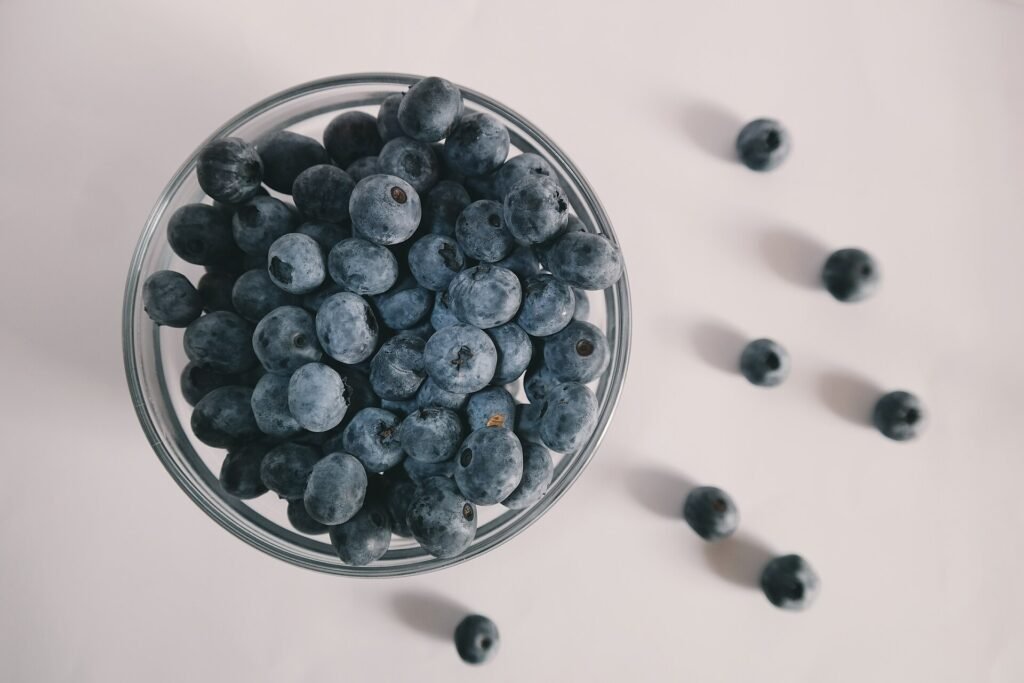

Blueberries are small, round, deep-blue berries that grow on low shrubs, mainly in North America. When fresh, they are soft, juicy, and sweet with just a little tang. You can eat them by the handful straight from the punnet, and that is exactly how most people fall in love with them.
People care about blueberries for more than taste. Of all the common fruits, they are one of the richest in colorful plant compounds called anthocyanins — the pigments that give them that dark blue-purple skin. They are also naturally low in calories, provide useful fiber and vitamin C, and fit into almost any way of eating, from a plain bowl of yogurt to a weekend pancake breakfast.
This article covers the honest benefits of eating blueberries, what is actually inside them, how much makes sense to eat, and who should be a little careful. No miracle claims, just what these little berries can reasonably do as part of a balanced diet.
Quick Benefits at a Glance
- Rich in anthocyanins, the blue pigments that act as antioxidants in the body
- Low in calories for their size, with helpful fiber to keep you feeling fuller
- A good source of vitamin C and vitamin K for everyday nutrition
- May help support heart and blood vessel health as part of a healthy pattern of eating
- Linked in studies to better memory and thinking in older adults, though research is ongoing
- Gentle on blood sugar compared with many sweet snacks, thanks to their fiber
- Easy to eat fresh, frozen, cooked, or blended — no peeling or prep needed
- A naturally sweet swap for sugary toppings and desserts
What Is in Blueberries? Nutrition Basics
Blueberries are mostly water, which is part of why they feel so refreshing. Their nutrition looks impressive because you get vitamins, minerals, and plant compounds without a lot of calories or added sugar.
Here are approximate standard values per 100 grams of raw blueberries — roughly two-thirds of a cup:
- Calories: about 57
- Water: about 84 g
- Carbohydrates: about 14.5 g
- Natural sugars: about 10 g
- Fiber: about 2.4 g
- Protein: about 0.7 g
- Fat: about 0.3 g
- Vitamin C: about 10 mg, around 11% of the daily value
- Vitamin K: about 19 micrograms, around 16% of the daily value
- Manganese: about 0.34 mg, around 15% of the daily value
- Small amounts of vitamin E, vitamin B6, folate, copper, and potassium
A typical serving is one cup, about 150 grams. That gives you roughly 85 calories, 3.6 grams of fiber, and about 15 mg of vitamin C. Frozen blueberries have a very similar profile to fresh ones, because they are usually frozen soon after picking. Sweetened dried blueberries are different — they can have much more sugar and calories per handful, so check the label if you buy them.
The anthocyanins deserve a special mention. These are flavonoids, a family of plant compounds. In blueberries they are concentrated in the skin, which is why the whole berry is worth eating rather than just drinking a strained juice.
Help for Your Heart and Blood Vessels
Heart health is one of the most talked-about benefits of eating blueberries, and it is also one of the areas with the most human research behind it.
Blood vessels need to stay flexible so blood can flow easily. The anthocyanins in blueberries are linked in studies to better function of the endothelium, which is the thin inner lining of blood vessels. When that lining works well, vessels can relax and widen more normally. Several trials in adults who ate blueberries or blueberry powder daily for a few weeks found small improvements in measures of vessel function. The effects were modest, not dramatic, and they were seen as part of an overall diet, not from berries alone.
Blueberries may also help support healthy blood pressure that is already in the normal range. They provide potassium, which helps balance sodium in the body, and their plant compounds may help the body make nitric oxide, a molecule that helps vessels relax. Again, this is support, not treatment. If you have high blood pressure, blueberries can be a tasty part of a heart-friendly plate that also includes vegetables, whole grains, and less salt — but they do not replace medicine or medical care.
An easy way to think about it: swapping a sugary dessert for a cup of blueberries a few times a week removes added sugar and adds fiber and plant compounds at the same time. That swap, repeated over months, is where the real benefit likely comes from.
Support for Memory and Brain Health
Your brain uses a lot of oxygen, and that makes it sensitive to everyday oxidative stress — the wear and tear caused by unstable molecules called free radicals. Antioxidants from food help the body keep that process in balance.
Blueberries are often studied for brain health for this reason. In several studies of older adults, people who regularly ate blueberries or drank blueberry juice did a little better on some memory and learning tests than comparison groups. Animal research suggests anthocyanins can reach brain tissue and may help support communication between brain cells, but human evidence is still developing and the results are not the same for everyone.
What can you honestly take from this? Eating blueberries regularly is a sensible, enjoyable habit that may help support thinking and memory as you age, especially when combined with other proven habits like sleep, exercise, and keeping your mind active. It is not a way to prevent dementia, and no single food can do that. Think of blueberries as one helpful piece in a much bigger picture that also includes leafy greens — you can read more about that in our guide to spinach benefits for health, which pairs beautifully with berries in salads and smoothies.
A Friendlier Sweet Option for Blood Sugar
If you watch your blood sugar, fruit can feel confusing. Blueberries do contain natural sugar, about 10 grams per 100 grams, but they come packaged with water and fiber, which slows down how fast that sugar reaches your bloodstream.
Because of that, whole blueberries have a relatively low to moderate glycemic response compared with juice, candy, or sweetened cereals. Eating them whole matters. Juice removes most of the fiber, so the sugar is absorbed faster. A whole cup of fresh berries with a meal or with protein like Greek yogurt will usually be gentler than drinking the same berries as a sweetened drink.
Some early research has looked at whether blueberry compounds may help support insulin sensitivity, which is how well your cells respond to insulin. The findings are interesting but preliminary, and they mostly come from small studies using concentrated powders. If you have diabetes or prediabetes, blueberries can often fit into your eating plan in sensible portions, but check your personal targets with your care team and keep an eye on total carbohydrates for the meal.
For most people, the practical takeaway is simple: when you want something sweet, a handful of blueberries is a far better choice than a pastry, and it satisfies that sweet craving without a sharp spike and crash.
Good for Your Gut and Digestion
Fiber is not glamorous, but your gut loves it. A cup of blueberries gives you about 3.6 grams of fiber, a mix that helps food move through your system and helps you feel regular.
That fiber also feeds the helpful bacteria living in your large intestine. When those bacteria ferment fiber and plant compounds, they produce substances that help nourish the gut lining. Blueberries contain polyphenols that reach the colon largely intact, where gut bacteria break them down into smaller compounds. Researchers are still learning exactly how this affects long-term gut health, and results vary from person to person, but diets rich in varied plant foods consistently support a more diverse gut community.
If you are not used to much fiber, increase the amount gradually and drink water through the day. A sudden jump in berries, bran, and beans all at once can leave anyone feeling gassy or bloated for a few days while the body adjusts.
Eyes, Skin, and Everyday Antioxidant Support
The same pigments that make blueberries blue help explain why people link them to eye and skin health.
Your eyes, especially the retina at the back of the eye, are exposed to light and oxygen all day. Diets rich in colorful fruits and vegetables are linked in population studies to healthier eyes over time. Blueberries provide vitamin C and anthocyanins, both involved in the body’s antioxidant defenses. That does not mean blueberries improve eyesight or protect you from eye disease on their own, but they contribute useful nutrients alongside carrots, leafy greens, and other produce.
For skin, vitamin C matters because your body uses it to make collagen, the protein that keeps skin firm and helps wounds close. A cup of blueberries covers a helpful share of your daily vitamin C, though citrus fruits and peppers give more per serving. Eating a variety works best. If you enjoy comparing everyday fruits, our article on the benefits of eating apples daily is a nice companion read — apples and blueberries together in a fruit salad give you different fibers and plant compounds in one bowl.
This antioxidant support is general and gradual. It comes from eating colorful foods most days over years, not from a single smoothie after a late night.
May Help With Exercise Recovery and Everyday Inflammation
After hard exercise, muscles feel sore partly because of temporary inflammation and oxidative stress from the workout itself. That process is normal and part of getting stronger, but food choices can influence how you feel while you recover.
A few small studies in athletes found that eating blueberries before and after intense exercise was linked to lower markers of oxidative stress and a slightly faster return of muscle strength. The studies were small and used fairly large amounts, sometimes the equivalent of more than a cup a day, so do not expect a handful to erase a tough workout. Still, a blueberry smoothie with milk or yogurt after training is a smart recovery snack for other reasons too: it gives you fluid, some carbohydrate to refill energy, and — from the dairy or soy — protein to help repair muscle.
For everyday life, the bigger point is that regularly eating foods rich in plant compounds is linked to healthier levels of inflammation markers in the body over time. That is a slow, background benefit of a varied diet, not a quick fix for pain or injury.
Weight-Friendly and Satisfying for So Few Calories
Blueberries are a useful food if you are watching your weight, simply because they give you a lot of flavor and volume for few calories. A whole cup is only about 85 calories, yet it takes time to eat, feels sweet, and adds fiber and water, both of which help you feel full.
They work especially well as a replacement. Blueberries on top of oatmeal instead of brown sugar, blueberries in place of syrup-heavy jam, or a bowl of berries instead of ice cream a few nights a week — each swap trims calories without leaving you feeling deprived. If you are tracking your intake, tools like our calorie calculator can help you see how small swaps like these fit into your daily needs.
What blueberries will not do is burn fat on their own. No food does that. Weight change comes from your overall pattern of eating, movement, and sleep over time. Berries just make that pattern easier and more enjoyable to stick with, which is honestly where most of the value lies.
How to Eat Blueberries and Add Them to Your Day
Fresh blueberries need almost no work. Rinse them gently just before eating, pat them dry, and keep the rest unwashed in the fridge, because extra moisture makes them spoil faster. Fresh berries usually keep well for about a week when refrigerated in a shallow container lined with a paper towel.
Frozen blueberries are just as nutritious and often cheaper. They are perfect for smoothies, baking, and cooking down into a quick sauce. There is no need to thaw them for smoothies or muffins — just add them straight in. In baking, toss frozen berries in a spoonful of flour first so they do not sink to the bottom.
Simple ideas to try:
- Stir a handful into oatmeal, overnight oats, or plain yogurt with a few nuts
- Blend into a smoothie with banana, spinach, milk or a fortified soy drink
- Scatter over pancakes, waffles, or French toast instead of extra syrup
- Toss into green salads with feta or goat cheese and a light vinaigrette
- Cook a cup gently in a small pan for five minutes until juicy, then spoon over toast or porridge as a quick compote
- Freeze fresh berries in a single layer, then store in a bag for a cold, sweet snack on hot days
- Mix half and half with other berries or diced fruit for a simple fruit salad
Blueberries pair well with lemon, vanilla, cinnamon, and mint. Lemon zest in particular makes their flavor pop. They also work in savory dishes — try a spoonful in a salad with grilled chicken, or a blueberry salsa with lime and a little red onion over grilled fish.
When buying fresh berries, look for a deep, even blue color with a pale dusty coating called the bloom. That bloom is natural and protects the fruit. Avoid punnets with juice stains, mold, or many shriveled berries.
How Much Blueberry Is Sensible Per Day?
For most adults, about one cup a day — roughly 150 grams, or a generous handful or two — is a sensible, enjoyable amount. That portion is used in many studies and gives you the fiber and plant compounds without crowding out other foods.
You do not need to eat them every single day to benefit. Three to five servings a week, as part of a mix of different fruits, is a realistic goal for many people. Variety matters because different colors bring different compounds: berries for anthocyanins, citrus for vitamin C, orange vegetables for beta-carotene, and so on.
Children can enjoy blueberries too, in smaller portions suited to their age. For babies and toddlers, cut larger berries in half or quarters lengthwise to reduce the choking risk, since whole round berries are just the wrong shape for little airways.
There is no official upper limit for whole blueberries from food, but eating very large amounts — several cups at every meal — could give you too much fiber at once and leave less room for protein, healthy fats, and other foods you need. Balance beats extremes.

Side Effects and Who Should Be Careful
Blueberries are safe for most people in normal food amounts, and true problems are uncommon. Still, a few situations deserve attention.
Allergy. Blueberry allergy is rare, but it can happen, sometimes in people who react to other berries or to birch pollen. Signs can include itching in the mouth, hives, swelling, or stomach upset. Anyone with a severe reaction should stop eating them and seek medical help promptly.
Blood-thinning medicine. Blueberries contain vitamin K, which plays a role in blood clotting. A normal cup has a modest amount, far less than leafy greens, but if you take warfarin or a similar medicine, the key is to keep your vitamin K intake fairly steady rather than suddenly eating huge amounts. Mention regular berry habits to your prescriber rather than avoiding the fruit on your own.
Kidney stones and salicylates. Blueberries contain small amounts of oxalates and natural salicylates. Most people with a history of kidney stones do not need to avoid blueberries specifically, but if you follow a strict low-oxalate or low-salicylate plan for medical reasons, check your personal list with your clinician or dietitian.
Stomach discomfort and sugar. Several cups at once can cause loose stools or bloating in some people because of the fiber and natural fruit sugars. Sweetened dried blueberries and blueberry-flavored products can be surprisingly high in added sugar, so they are not the same as fresh fruit if you are watching sugar intake.
Supplements and extracts. Concentrated blueberry or anthocyanin supplements are not the same as eating the fruit. Their safety in pregnancy, while breastfeeding, and alongside medicines is less well studied, and quality varies. Food first is the safer default; check with a clinician before using extracts, especially in large doses.
This article is general information about food, not medical advice. If you have a medical condition or take regular medication, talk to your own doctor or dietitian about what fits you best.
Frequently Asked Questions
Are blueberries good for you every day?
Yes, for most people a cup of blueberries a day fits well into a healthy diet. Daily eating is fine as long as it sits alongside other fruits, vegetables, proteins, and whole grains. If daily berries get boring or expensive, a few times a week still adds useful fiber and plant compounds.
Are frozen blueberries as healthy as fresh ones?
Very close, yes. Frozen blueberries are usually frozen soon after harvest, which helps preserve vitamin C and anthocyanins. In some cases they can even test a little higher than fresh berries that have sat in transit for many days. Just choose plain frozen berries without added sugar or syrup.
Do blueberries help you lose weight?
Not directly, and no food melts fat on its own. Blueberries can help a weight-conscious diet because a cup is low in calories, sweet, and filling, so it makes a satisfying swap for desserts and sugary snacks. Lasting weight change depends on your overall eating and activity pattern over time.
Can people with diabetes eat blueberries?
Many people with diabetes include blueberries in moderate portions, often around three-quarters to one cup, ideally with a meal or with protein like yogurt to soften the blood sugar rise. Whole berries are a better choice than juice. Because carb targets differ by person, check your own plan with your care team.
How should you wash and store blueberries?
Wait to wash them until just before you eat them, then rinse gently in a colander and pat dry. Store unwashed berries in the fridge in a shallow, ventilated container with a paper towel to absorb moisture. Use them within about a week, and throw away any with visible mold, since it spreads quickly in a punnet.
Are wild blueberries better than regular cultivated ones?
Wild blueberries are smaller and tend to have a slightly higher concentration of skin — and therefore anthocyanins — per cup, plus a more intense flavor. Cultivated blueberries are larger, juicier, and still very nutritious. Both are good choices; the best one is the one you will actually eat and can afford.
Can you eat blueberries at night?
Yes. There is nothing about blueberries that makes them a problem in the evening. A small bowl of berries, or berries with yogurt, is a light nighttime snack compared with many desserts. If reflux bothers you late at night, keep the portion modest and avoid eating right before lying down, as with any food.
Do blueberries stain teeth or cause other cosmetic issues?
The dark pigments can temporarily stain teeth, fingers, and fabrics, especially when cooked. Rinsing your mouth with water after eating and regular brushing handles the teeth side easily. The color is also why chefs love them — that deep blue looks beautiful in food, even if it turns pancake batter a little purple-grey.
Conclusion
Blueberries earn their reputation honestly. They are not magic, and they will not cure or prevent disease, but they pack an unusual amount of fiber, vitamin C, vitamin K, and colorful anthocyanins into a sweet, low-calorie handful that almost everyone enjoys eating.
Add a cup to your breakfast, blend frozen berries into a smoothie, or simply eat them straight from the punnet while dinner cooks. Small habits like that, built on foods you genuinely like, are the ones that last. If the benefits of eating blueberries encourage you to reach for fruit more often and vary the colors on your plate, these tiny berries have done their job well.



Pingback: Pomegranate Benefits for Health: Nutrition and Proven Uses
Pingback: Grape Benefits for Health (Heart, Brain, and Antioxidants)
Pingback: Eggplant Benefits for Health (Heart, Brain, and Weight)