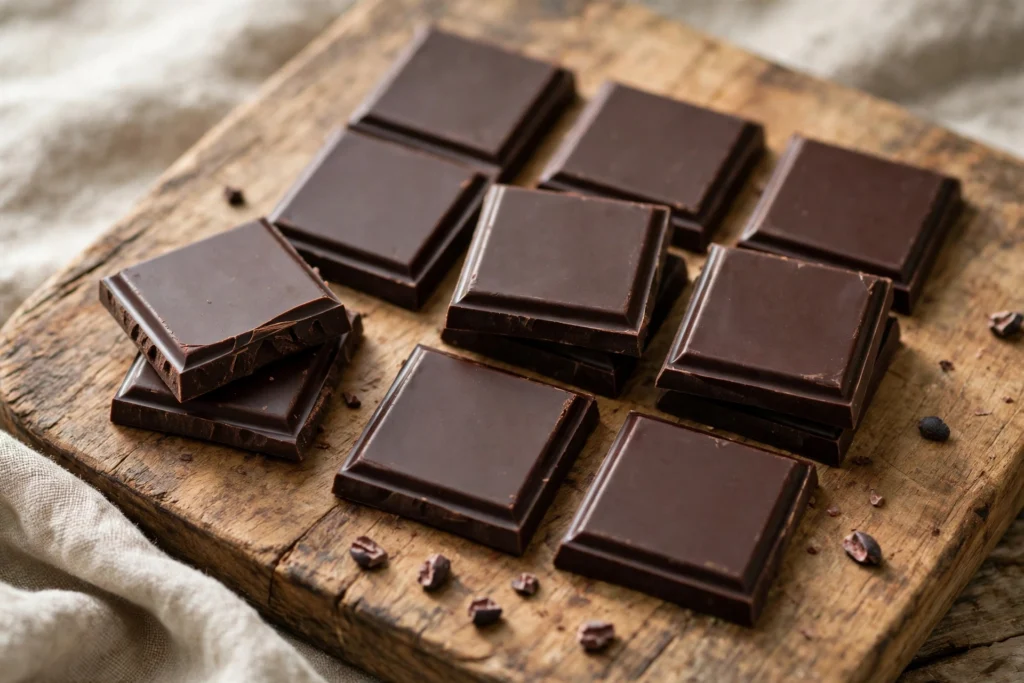

Dark chocolate benefits for health are the rare kind of good news that actually tastes good. A few squares of dark chocolate can deliver antioxidants, minerals, and compounds that support heart health and mood, and it does it in a food most people genuinely enjoy. That is a combination few healthy foods can claim.
Dark chocolate is made from cocoa beans, the seeds of the cacao tree, which grows in tropical regions around the equator. The beans are fermented, dried, roasted, and ground into cocoa mass, which is then mixed with cocoa butter and a little sugar to make chocolate. The higher the cocoa percentage, the more of the beneficial compounds and the less sugar. A bar labeled 70 percent cocoa or higher is the kind worth eating for health.
This article looks at what dark chocolate may do for your heart, brain, mood, and more, how much makes sense to eat, and the difference between dark chocolate and the sweet milk chocolate most people grew up with. The short version is that a small amount of good dark chocolate can be part of a healthy diet, and a large amount of sweet chocolate cannot.
1. Antioxidant Power from Flavanols
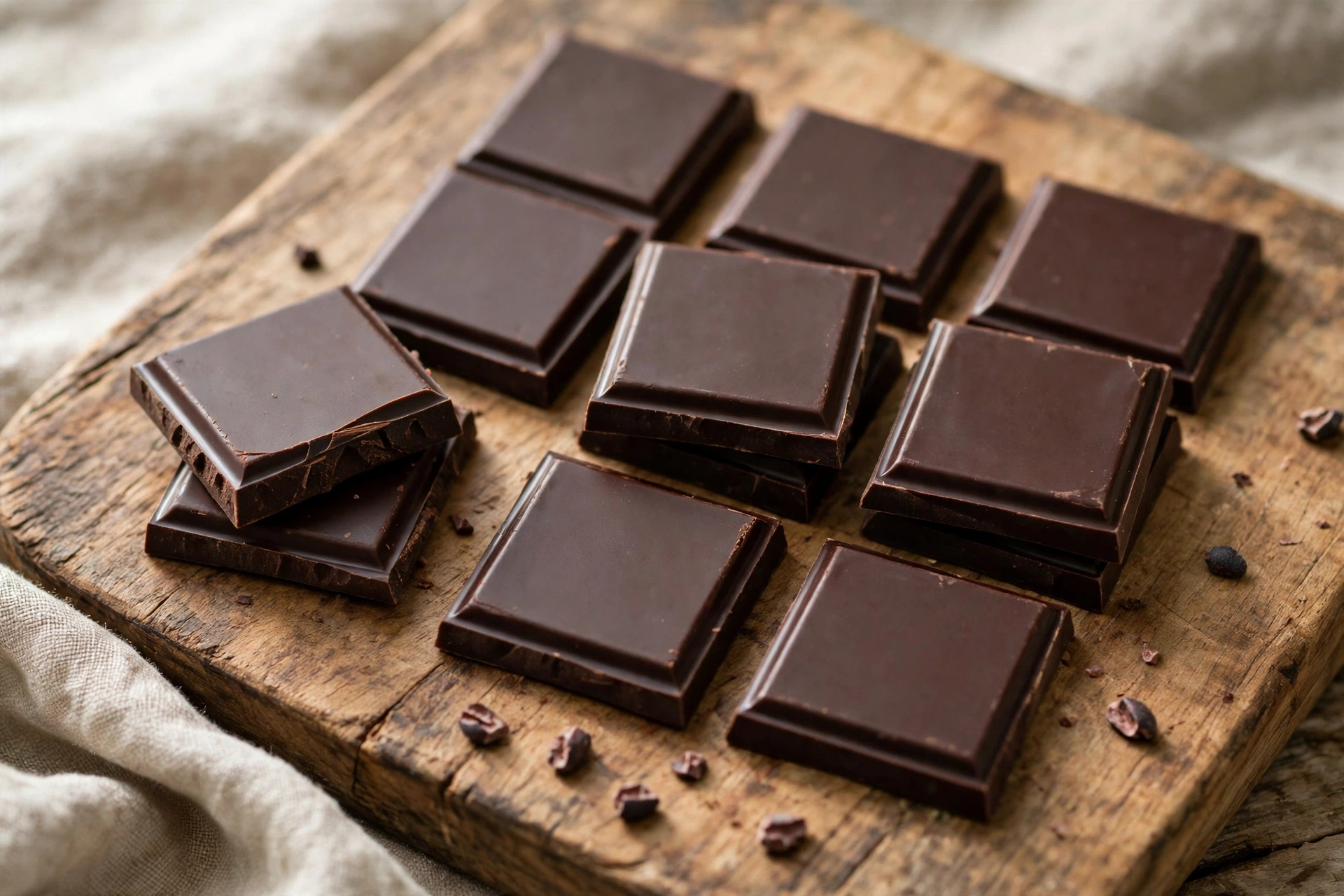
Dark chocolate is one of the richest food sources of flavanols, a group of plant compounds with strong antioxidant activity. In laboratory tests, cocoa powder has scored higher in antioxidant capacity than many fruits, including blueberries and acai berries. Flavanols help neutralize free radicals, the unstable molecules that damage cells and contribute to aging and chronic disease.
Research has found that eating dark chocolate raises antioxidant levels in the blood. In one study, people who ate dark chocolate daily for two weeks had higher levels of antioxidants and lower levels of oxidative stress markers. The effect is real, though it depends on the cocoa content: milk chocolate has far fewer flavanols, and white chocolate has almost none, because most of the flavanols are in the cocoa solids.
Processing matters too. Cocoa that has been treated with alkali, a process called Dutching, loses much of its flavanol content, and that is the kind used in many chocolate products. Look for chocolate that lists cocoa mass or cocoa liquor as the first ingredient and has a cocoa content of 70 percent or higher. That is where the antioxidant benefit lives.
2. Heart Health and Blood Pressure
Flavanols in dark chocolate have been studied for heart health more than almost any other chocolate compound. They help blood vessels relax by supporting nitric oxide, a molecule that tells blood vessels to widen, which can lower blood pressure. Several trials have found that people who ate dark chocolate daily for a few weeks saw modest drops in blood pressure, especially if their blood pressure was already high.
Research has also found that dark chocolate may improve cholesterol patterns, with small studies reporting higher HDL cholesterol, the type often called good cholesterol, and lower oxidized LDL cholesterol after dark chocolate consumption. Large observational studies have linked moderate dark chocolate intake to a lower risk of heart disease, though these studies cannot prove cause and effect, and the people who eat dark chocolate may also have other healthy habits.
Dark chocolate is not a treatment for heart disease, and it should never replace medication or a heart-friendly diet. But a small amount of high-cocoa chocolate, as part of an overall pattern rich in vegetables, whole grains, and fish, is a reasonable choice. For more heart-friendly foods, see our guide to Olive Oil Benefits (Why Extra Virgin Olive Oil Is So Healthy).
3. Mood, Brain, and Focus
Dark chocolate contains several compounds that affect mood and the brain. It provides theobromine, a mild stimulant similar to caffeine, and small amounts of caffeine itself. It also contains phenylethylamine, a compound the brain produces when we feel happy, and it supports the production of serotonin and endorphins, brain chemicals linked to pleasure and well-being.
Research on chocolate and mood is mixed but encouraging. Some studies have found that people who eat dark chocolate report better mood and less stress, and one trial found that eating dark chocolate daily for a month was linked to lower levels of the stress hormone cortisol. The effect may be partly psychological, since chocolate is a comfort food for many people, and partly chemical, from the compounds it contains.
Flavanols may also support brain health by improving blood flow to the brain. Small studies have found better cognitive performance after flavanol-rich cocoa, especially in older adults, though the evidence is still early. Dark chocolate will not fix depression or make you smarter, and it would be wrong to suggest that. But a small piece of dark chocolate as part of a balanced diet is a pleasant way to support mood and focus. For another mood-friendly food, see our guide to Green Tea Benefits (What a Daily Cup Can Really Do for You).
4. Blood Sugar and Insulin Sensitivity
Dark chocolate with a high cocoa content is relatively low in sugar compared with milk chocolate, and some research suggests it may help with blood sugar control. Flavanols have been studied for their effects on insulin sensitivity, the body’s ability to respond to insulin properly, and several small trials have found improvements after people ate flavanol-rich cocoa for a few weeks.
One study found that people who ate dark chocolate daily had better insulin sensitivity than a comparison group, and another found that dark chocolate improved blood sugar control in people with type 2 diabetes. These studies are small, and dark chocolate is not a diabetes treatment, but the pattern is consistent enough to be interesting. The key is cocoa content: chocolate with 70 percent cocoa or more has far less sugar than milk chocolate, and it is the sugar that pushes blood sugar up.
That said, dark chocolate still contains calories and some sugar, so portion matters. A small square or two after a meal is a very different food from half a bar eaten as a snack. For people watching their blood sugar, the best approach is a small portion of high-cocoa chocolate, eaten slowly, ideally after a meal rather than on an empty stomach.
5. Skin Health and Sun Protection
Flavanols in dark chocolate have been studied for skin health, and the results are modest but real. In one trial, people who ate flavanol-rich dark chocolate daily for 12 weeks had better skin hydration and were less sensitive to UV light than a comparison group. The effect was small, and it is nowhere near a replacement for sunscreen, but it suggests that cocoa flavanols support skin from the inside.
Dark chocolate also contains minerals that support skin health, including zinc, copper, and iron. Zinc helps skin heal, copper supports collagen production, and iron carries oxygen to skin cells. The healthy fats in cocoa butter also help the skin hold moisture. None of this makes dark chocolate a skin treatment, and eating a lot of chocolate will not fix skin problems.
It is worth noting that the chocolate used in skin studies is high in flavanols and low in sugar, which is very different from most commercial chocolate bars. Milk chocolate and sweet chocolate bars do not provide the same benefit, and their sugar content may actually work against skin health. If skin is your goal, the cocoa percentage matters more than the brand.
6. Iron, Magnesium, and Minerals
Dark chocolate is a surprisingly good source of minerals. A 100-gram bar of dark chocolate with 70 to 85 percent cocoa provides about 11 milligrams of iron, more than half of the daily need, along with about 230 milligrams of magnesium, more than half of the daily need, plus copper, manganese, zinc, and phosphorus. That is a strong mineral profile for a food most people think of as a treat.
Magnesium is involved in hundreds of reactions in the body, including energy production, muscle function, and sleep regulation. Many people do not get enough magnesium, and dark chocolate is one of the tastiest ways to close that gap, though a small serving only provides a fraction of what you need. Iron carries oxygen in the blood, and the iron in dark chocolate is plant iron, which is absorbed better when eaten with vitamin C.
These minerals do not make dark chocolate a health food on their own, and they should not replace vegetables, legumes, and whole grains as mineral sources. They do mean that a small piece of dark chocolate contributes more nutrition than most treats, and that is a fair point in its favor. For another mineral-rich food, see our guide to Dates Benefits for Health (Natural Energy, Fibre, and More).
7. Gut Health and the Microbiome
Research on dark chocolate and gut health is still young, but it is one of the more interesting areas of cocoa science. Cocoa contains fiber and polyphenols that gut bacteria can ferment, and studies have found that eating dark chocolate regularly may increase the growth of beneficial gut bacteria, including Bifidobacteria and Lactobacilli, while reducing less helpful species.
One small trial found that people who ate dark chocolate daily for four weeks had changes in their gut bacteria that were linked to better markers of heart health. Another study found that cocoa polyphenols acted as prebiotics, feeding the good bacteria in the gut. These studies are small, and the effects are modest, but they add another reason to think of dark chocolate as more than just a sweet.
The fiber in dark chocolate also contributes to gut health, with a 100-gram bar providing about 11 grams of fiber, though a normal serving of 20 to 30 grams provides only 2 to 3 grams. Dark chocolate is not a high-fiber food in normal portions, and it should not replace vegetables, legumes, and whole grains as fiber sources. But as part of a varied diet, its polyphenols and fiber add a small benefit to the gut.
8. Theobromine and Gentle Stimulation
Dark chocolate contains theobromine, a compound similar to caffeine but gentler and longer lasting. A 100-gram bar of dark chocolate provides about 800 milligrams of theobromine, and a normal serving of 20 to 30 grams provides roughly 200 milligrams. Theobromine is a mild stimulant that can improve alertness and mood without the jittery feeling that coffee sometimes brings, and it also helps blood vessels relax, which may support healthy blood pressure.
Theobromine has been studied for its effects on the heart and lungs, and some research suggests it may help with cough suppression and with blood flow. The evidence is still early, and theobromine is not a reason to eat dark chocolate on its own, but it is part of what makes dark chocolate feel different from other sweets. The combination of theobromine, a small amount of caffeine, and flavanols gives dark chocolate a unique profile among treats.
It is worth noting that theobromine is the reason chocolate is toxic to dogs, since dogs process it far more slowly than humans do. For people, the amounts in a normal serving of dark chocolate are safe and even pleasant. A few squares of dark chocolate in the afternoon can provide a gentle lift without the crash that comes from a sugary snack or a large coffee, and that is a practical benefit that many people notice even before they know the science behind it.
How to Enjoy It
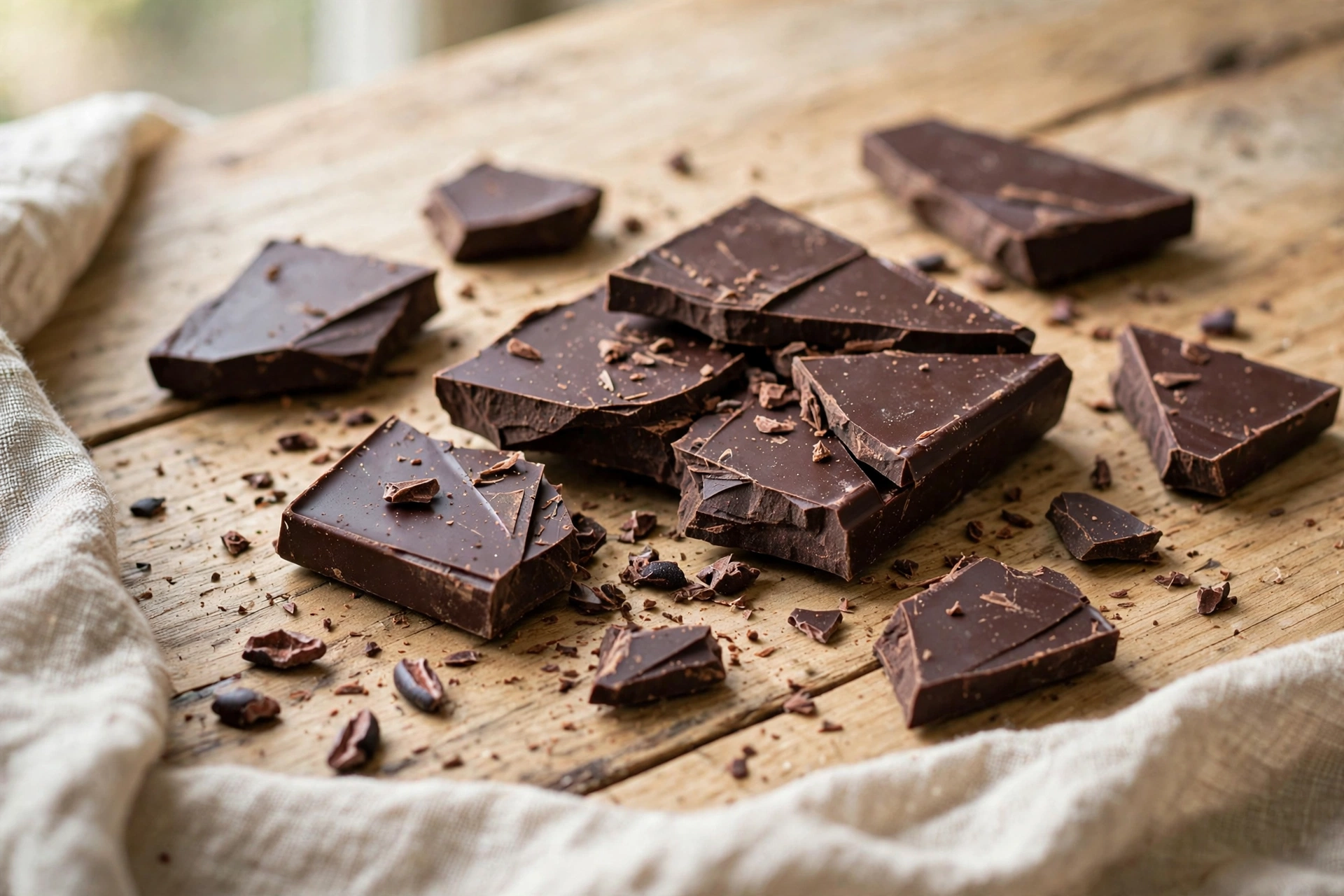
Choose dark chocolate with at least 70 percent cocoa, and look for a short ingredient list: cocoa mass, cocoa butter, and a little sugar. Avoid chocolate with added vegetable oils, artificial flavors, or a long list of additives. A serving of about 20 to 30 grams, roughly one or two squares, is a good daily amount.
Eat dark chocolate slowly, letting it melt in your mouth, which helps you enjoy it more and eat less of it. It works well after a meal as a small dessert, with fruit, nuts, or a cup of tea. Dark chocolate also works in baking, though recipes that add a lot of sugar and butter undo the health case. Store it in a cool, dry place, away from strong smells, since chocolate absorbs odors easily.
Cautions
Dark chocolate is calorie-dense, with about 160 calories per 30 grams, so large portions can add up quickly. It also contains caffeine and theobromine, which can disturb sleep if eaten late at night, and it can trigger migraines or acid reflux in some people. Dark chocolate contains oxalates, so people prone to calcium oxalate kidney stones may want to keep portions moderate.
Some dark chocolate products have been found to contain higher levels of lead and cadmium than other foods, because cocoa plants absorb these metals from soil. Health authorities consider the levels in normal amounts of chocolate to be safe, but eating very large amounts every day is not a good idea. Choose reputable brands, and keep the portion small. Finally, dark chocolate is not suitable for people with a cocoa allergy, and it is toxic to dogs, so keep it away from pets.

FAQ
How much dark chocolate should I eat a day?
About 20 to 30 grams a day, roughly one or two squares, is a sensible amount for most people. That gives you a good dose of flavanols and minerals without too many calories or too much sugar. Eating a whole bar every day is not a health habit, no matter how high the cocoa content.
What percentage of dark chocolate is healthiest?
Chocolate with 70 percent cocoa or higher is the best choice for health, since it has more flavanols and less sugar. Chocolate with 85 percent cocoa has even more flavanols and less sugar, though it tastes more bitter. Milk chocolate, which usually has 30 to 40 percent cocoa, has far fewer flavanols and much more sugar, so it does not provide the same benefits.
Is dark chocolate good for your heart?
Dark chocolate with a high cocoa content has been linked to better blood pressure and cholesterol patterns in small studies, thanks to its flavanols. Large observational studies have also linked moderate dark chocolate intake to a lower risk of heart disease. It is a heart-friendly food in small amounts, as part of an overall balanced diet, not a treatment for heart disease.
Does dark chocolate help with mood?
Dark chocolate contains compounds that affect mood, including theobromine, caffeine, and phenylethylamine, and some studies have found that people who eat dark chocolate report better mood and less stress. The effect is modest, and it may be partly psychological, since chocolate is a comfort food. Dark chocolate will not fix depression, but a small piece can be a pleasant part of a balanced diet.
Can I eat dark chocolate if I have diabetes?
Dark chocolate with a high cocoa content is relatively low in sugar, and some research suggests its flavanols may help with insulin sensitivity. A small portion of 70 percent chocolate or higher can fit into a diabetes-friendly diet for many people, but it still contains calories and some sugar. Talk to your doctor or dietitian about what fits your individual plan.
Conclusion
Dark chocolate is a rare food that is both enjoyable and genuinely nutritious, as long as you choose the right kind and keep the portion small. A few squares of 70 percent chocolate or higher give you flavanols, iron, magnesium, and a small lift in mood, all in a food that feels like a treat. The catch is that the benefits belong to dark chocolate, not to sweet milk chocolate, and the portion is the whole game. Eat it slowly, savor it, and let it be a small, daily pleasure rather than a habit that quietly adds up.
Sources
Wikipedia — Dark Chocolate
Harvard T.H. Chan School of Public Health — Dark Chocolate