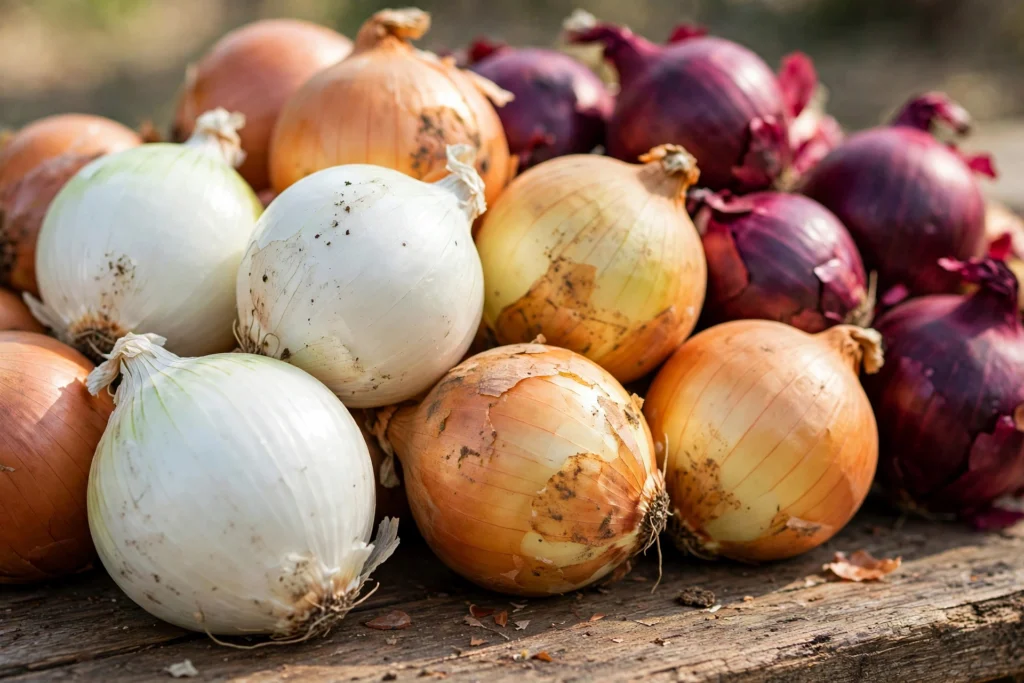

Onions make your eyes water, and most of us only think of them as a base for curries, soups, and stir-fries. But this humble bulb has been valued as food and medicine for thousands of years, and modern research keeps finding reasons to take it seriously. Onion benefits for health go well past flavour — the same compounds that give onions their bite also seem to support immunity, heart health, and bone strength.
The good news is you don’t need to eat onions raw by the bowlful to get something out of them. A medium onion a day, cooked into food you already enjoy, is enough to add up over time. In this article, we’ll walk through what onions actually contain, what the science says they may do for your body, and the easy ways to eat more of them without dreading the smell or the tears.
1. A Natural Boost for Your Immune System
Onions are rich in vitamin C and a plant compound called quercetin, and both of these are linked to a stronger immune response. Vitamin C helps your body make white blood cells, the front-line defenders that fight off infections, and a single medium onion gives you roughly 10 to 12 percent of your daily vitamin C needs. That may not sound like much, but it adds up fast when onions show up in lunch and dinner most days.
Quercetin is the more interesting part. It’s a flavonoid, a type of antioxidant, and onions are one of the richest food sources of it on the planet. Studies suggest quercetin can help calm inflammation and support the immune system during cold season. Red onions carry the most quercetin, since the pigment that makes them red is packed with these compounds, but yellow and white onions still offer a solid amount.
Onions also contain prebiotics — fibres that feed the good bacteria in your gut. Since a large share of your immune system lives in the gut, feeding those bacteria well is one more quiet way onions help your defences. Cooked onions keep most of these benefits, so you don’t have to suffer through raw slices to get them.
There’s also a long tradition behind this. Onion has been a staple in Mediterranean, Middle Eastern, and South Asian cooking for centuries, and those food cultures tend to score well on heart health and longevity in population studies. Nobody can credit a single vegetable for that, but onions are a good example of a food that traditional diets got right long before science caught up. When a food shows up in healthy diets all over the world, across very different cuisines, that’s usually a sign worth paying attention to.
2. Heart Health Support, One Onion at a Time
Heart disease remains the leading cause of death in many countries, and diet is one of the few risk factors we can actually control. Onions help here in a few small but real ways. Their sulphur compounds and quercetin have been linked in studies to lower blood pressure and healthier cholesterol levels, though the effects are modest and work best as part of an overall healthy diet.
One thing researchers keep coming back to is how onions may help stop LDL cholesterol — the “bad” kind — from oxidising. Oxidised LDL is more likely to stick to artery walls, so anything that slows that process is worth paying attention to. Onion extracts have shown this effect in lab and animal studies, and population studies link higher onion intake with a lower risk of heart problems.
Onions may also help blood flow a little better. Their sulphur compounds appear to have a mild blood-thinning effect, similar in spirit to garlic, which is why onions and garlic show up together in so many traditional heart-friendly diets. If you take blood-thinning medication, though, talk to your doctor before loading up on large amounts of raw onion every day.
3. Stronger Bones as You Age
This one surprises most people. A study published in the journal Menopause found that women who ate onions daily had higher bone density than those who rarely ate them, and the effect was strongest in older women. The researchers think the sulphur compounds and antioxidants in onions may slow down the bone breakdown that speeds up after menopause.
Onions are not a replacement for calcium or vitamin D, and nobody should treat them as a cure for osteoporosis. But they do contain small amounts of calcium and vitamin K, and they seem to support the bone-building process in a way that goes beyond their mineral content. Think of them as one more habit that stacks the odds in your favour.
The practical takeaway is simple: people who eat onions regularly tend to have better bone markers, and the dose in the studies was about one medium onion a day. That’s an easy habit to keep — a chopped onion in a salad, a soup, or a stir-fry covers it without any extra effort.
4. Blood Sugar Control and Steady Energy
Onions have a very low glycaemic index, which means they barely move your blood sugar on their own. That’s useful for anyone watching their glucose, but onions may do more than just stay out of the way. Their sulphur compounds, including allyl propyl disulphide, have been studied for their ability to help the body use insulin more effectively.
In animal studies, onion extract lowered fasting blood sugar, and small human trials have shown similar trends, especially with red onion. The evidence in people is still early, so onions are not a treatment for diabetes — but they are one of the safest foods to add to a blood-sugar-friendly plate, and they make low-glycaemic meals taste far better.
There’s a second benefit here that people miss: onions add bulk and flavour to meals without adding calories or carbs. A big pile of caramelised onions can turn a plain plate of lentils or grilled chicken into something you actually look forward to, which makes it easier to stick with healthier eating over months and years.
5. Gut Health and Better Digestion
Onions are one of the best food sources of inulin and fructooligosaccharides — two prebiotic fibres that feed Bifidobacteria, the friendly bacteria in your colon. When those bacteria thrive, they produce short-chain fatty acids that help keep the gut lining healthy and support regular digestion.
People who eat onions regularly often notice their digestion feels more settled, though there’s a catch: the same fibres that feed good bacteria can also cause gas and bloating, especially if you jump from eating almost no onions to eating a lot of them. The fix is to start small — a quarter of an onion a day — and let your gut adjust over a week or two.
Cooking changes the picture too. Raw onions are harder on sensitive stomachs, while cooked onions are gentler and still keep much of their prebiotic fibre. If raw onion gives you trouble, try roasted, sautéed, or slow-cooked onion first, and save the raw slices for days when your stomach feels strong.
6. Antioxidants That Fight Everyday Damage
Every day your body deals with free radicals — unstable molecules from pollution, sunlight, and normal metabolism that can damage cells over time. Antioxidants are the cleanup crew, and onions bring a solid team: quercetin, anthocyanins in red onions, and sulphur compounds that help your body make its own antioxidant, glutathione.
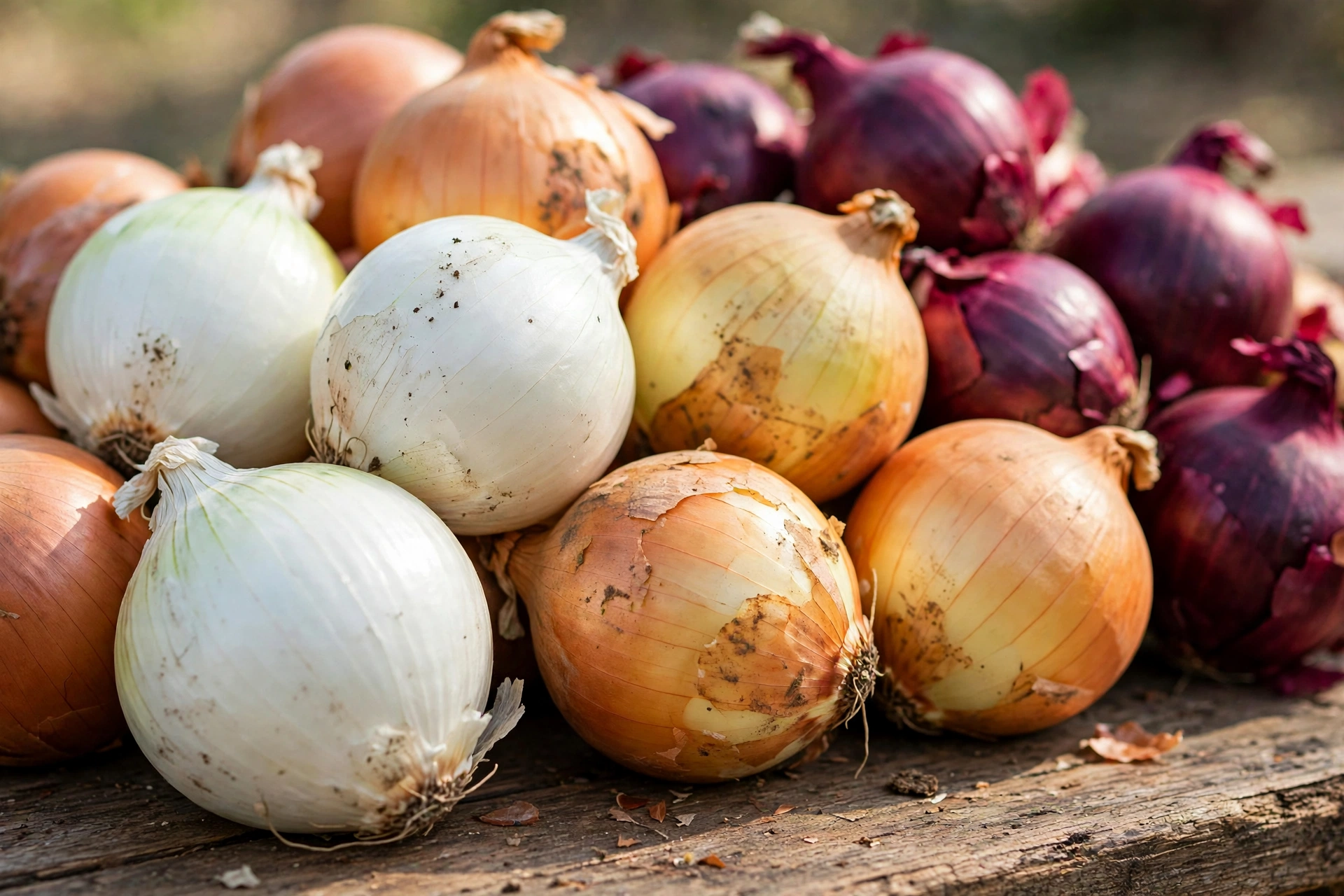
Red onions win the antioxidant contest by a clear margin, thanks to anthocyanins, the same pigments that colour berries and red cabbage. Yellow onions come next, with white onions trailing behind. That doesn’t make white onions useless — they still carry sulphur compounds and vitamin C — but if you want the most antioxidant bang per bite, reach for red.
The total antioxidant load of one onion is modest next to a bowl of berries, but onions have a secret weapon: frequency. Most people eat onions several times a week, sometimes daily, while berries are a sometimes food. Small amounts, eaten often, add up to real protection over a lifetime.
One easy way to get more of these compounds is to mix onion colours through the week. Use red onion in salads and sandwiches, where its colour and crunch shine, and yellow onion for cooking, where its sweetness comes out as it softens. White onion works well in salsas and fresh dishes where you want a sharp, clean bite. Rotating colours is a simple trick that broadens the mix of plant compounds you take in, and it costs nothing extra — you’re buying onions anyway.
7. May Help Lower Cancer Risk
This is the benefit that needs the most care in how we talk about it. No food prevents cancer, and anyone who tells you otherwise is selling something. What the research does show is that people who eat more allium vegetables — onions and garlic — tend to have lower rates of certain cancers, especially stomach and colorectal cancers, in large population studies.
The likely reason is the combination of sulphur compounds, quercetin, and other plant chemicals that may help the body neutralise carcinogens and slow abnormal cell growth. Lab studies show onion compounds can trigger damaged cells to self-destruct, a process called apoptosis, but lab results in a petri dish are a long way from a proven effect in a human body.
So treat this one as a promising pattern, not a promise. Eating onions regularly is one small part of a diet rich in vegetables, and diets rich in vegetables are consistently linked with lower cancer risk. That’s the honest version of the story, and it’s still a good reason to keep onions on your plate. If you want another vegetable with a strong research record behind it, Broccoli Health Benefits (Why This Vegetable Deserves a Spot on Your Plate) is well worth a read.
How to Eat It
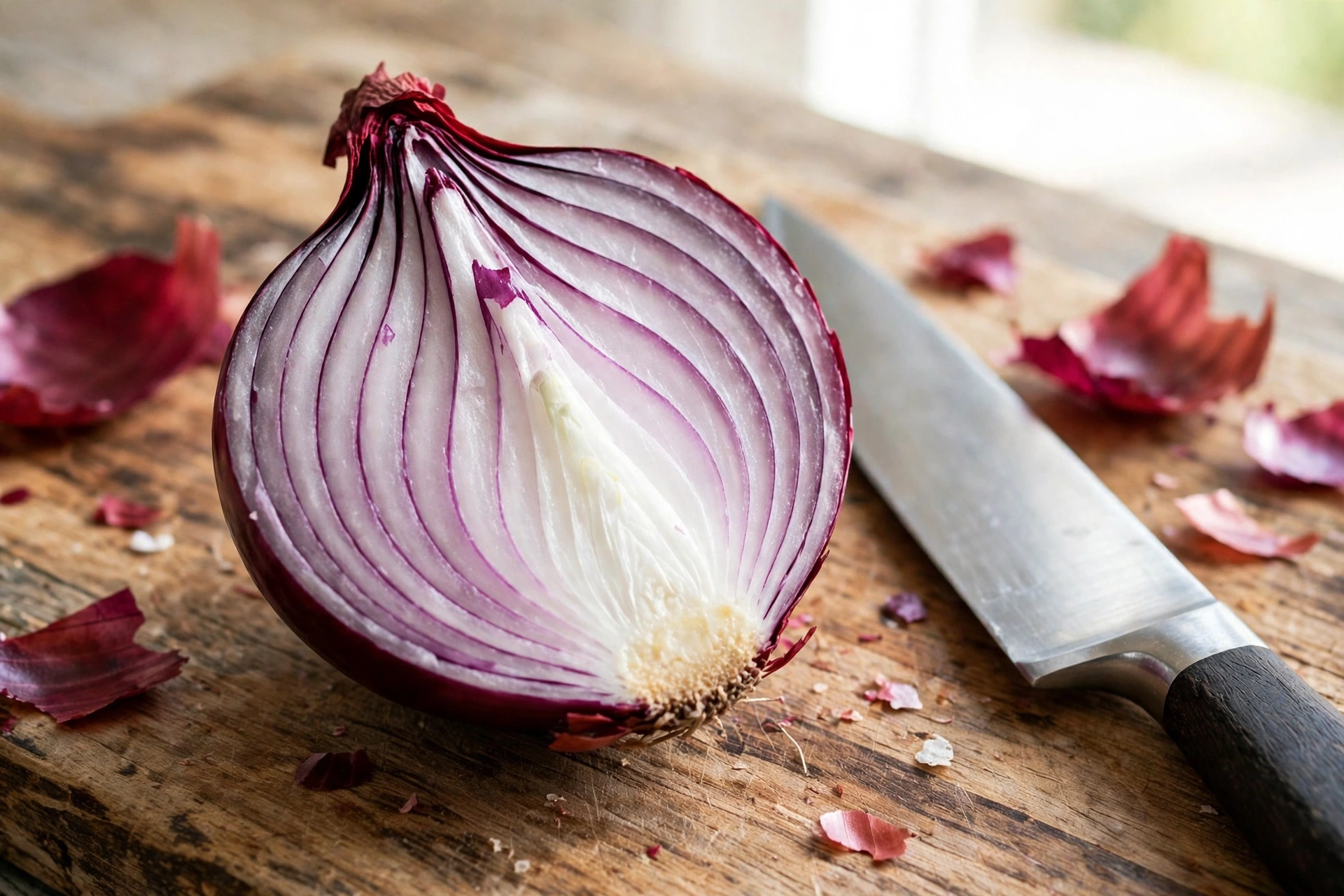
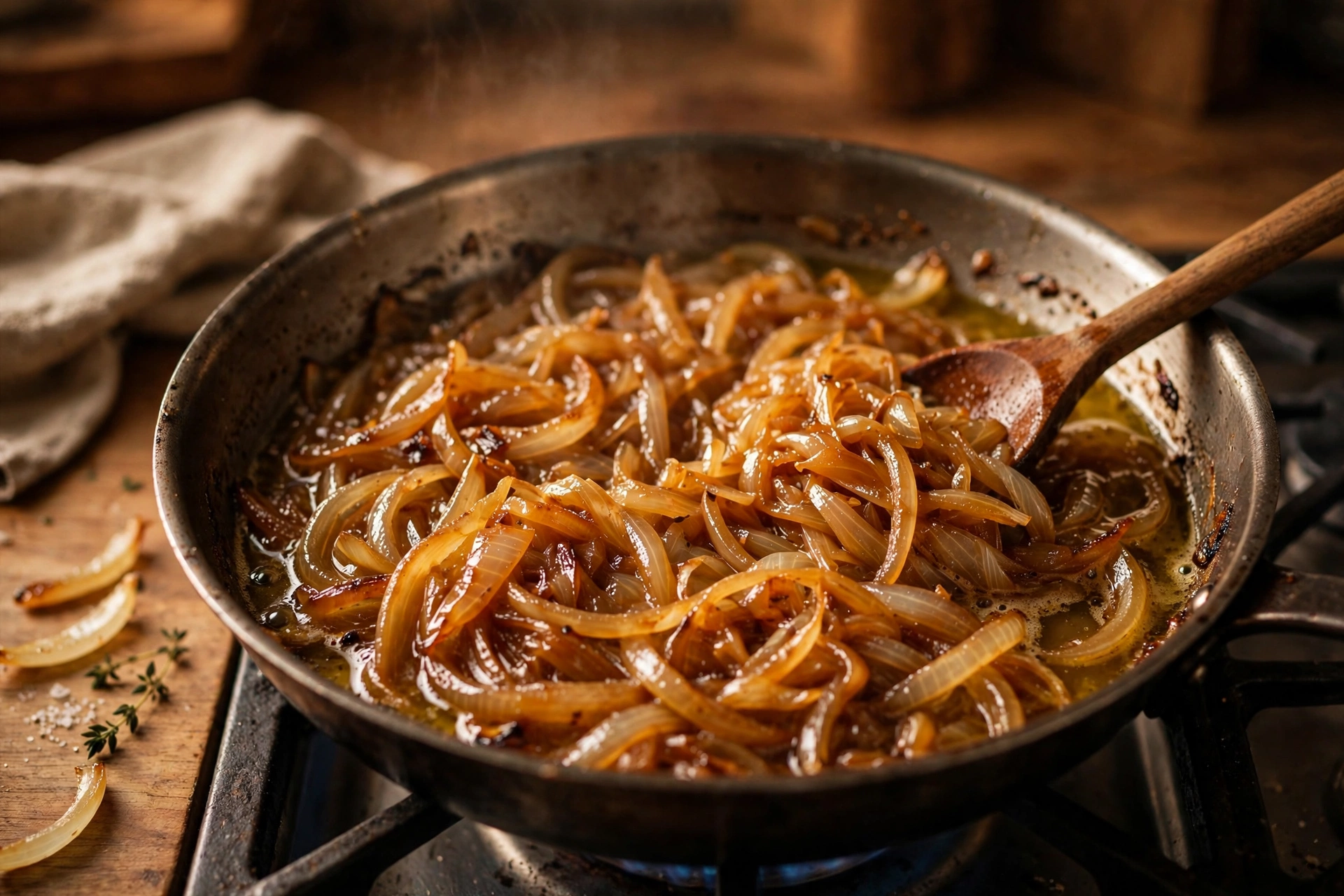
The easiest way to eat more onion is to stop treating it as a garnish and start treating it as a real ingredient. A medium onion, about 110 grams, is a sensible daily target. Chop it into salads, grate it into raita, slice it into sandwiches, or cook it down into the base of almost any savoury dish. Cooked onion turns sweet and soft, which is why even people who dislike raw onion usually enjoy it caramelised or roasted.
Try a few simple routines. Start the day with onion in an omelette or a savoury pancake. Add sliced red onion to a lunch salad with lemon juice — the acid tames the sharpness. For dinner, slow-cook onions into lentils, beans, or a tomato sauce. Pickled red onions are another great option: they keep for two weeks in the fridge, add crunch and colour to tacos, burgers, and rice bowls, and the vinegar adds its own small health perks. A spoonful of grated ginger in the same pickle brine adds warmth and a little extra digestive support — see Ginger Benefits for Health (Digestion, Nausea, and Immunity) for why that pairing works so well. And if you want a ready-made pairing, a plate of onions with Garlic Benefits for Health (What Science Actually Says) is a classic combination — the two alliums work beautifully together in both flavour and nutrition.
Storage matters too. Keep whole onions in a cool, dry, dark place with good airflow, away from potatoes, which make onions sprout faster. Once cut, wrap the rest tightly and refrigerate it; it will keep for about a week. And if raw onion breath bothers you, chewing a sprig of parsley or a slice of lemon after eating helps more than most people expect.
Things to Watch
Onions are safe for most people, but they do have a few quirks. The most common is digestive trouble — gas, bloating, or heartburn — especially from raw onion. People with IBS or acid reflux often find raw onion is a trigger, and cooked onion is usually much easier to handle. If you notice a pattern, cut back rather than pushing through.
Onion allergy is rare but real, and it often shows up in people who are also sensitive to garlic. Symptoms can include itching, swelling, or stomach upset after eating onion. Anyone who notices these symptoms should stop eating onion and check with a doctor.
One more thing to keep in mind: onions can make your breath and sweat smell stronger, and they can irritate your eyes while you chop them. Chilling the onion for 30 minutes before cutting, using a sharp knife, and cutting under a running fan all help. And if you take blood-thinning medicine, keep your onion intake steady rather than swinging between none and huge amounts, and mention it to your doctor — the same mild blood-thinning effect that helps the heart can matter when combined with medication.
FAQ
Is it good to eat onions every day?
Yes, for most people a medium onion a day is a healthy habit. Studies on bone density and heart health used roughly that amount, and onions are low in calories and rich in useful compounds. If raw onion upsets your stomach, cooked onion counts too.
Are red onions healthier than white onions?
Red onions carry more quercetin and anthocyanins, so they edge out white onions on antioxidants. Yellow onions sit in the middle. White onions still offer sulphur compounds and vitamin C, so the best onion is honestly the one you’ll actually eat.
Do cooked onions lose their health benefits?
Cooking reduces some vitamin C and quercetin, but much of the benefit survives, especially the prebiotic fibre and sulphur compounds. Light cooking keeps more nutrients than long, high-heat frying. Raw onion is strongest, cooked onion is gentler on the stomach — both are worth eating.
Can onions help with a cold?
Onions support the immune system through vitamin C, quercetin, and prebiotics, but they are not a cold cure. Eating them regularly may help your body respond better to infections, and onion in a warm soup is soothing when you’re already sick. Rest, fluids, and time still do the heavy lifting.
Why do onions make you cry?
Cutting an onion breaks its cells open, releasing enzymes that create a gas called syn-propanethial-S-oxide. That gas reaches your eyes and triggers tears. Chilling the onion, using a sharp knife, and good ventilation all reduce the effect.
Conclusion
Onions are cheap, available all year, and quietly one of the most useful vegetables you can eat. They support your immune system, your heart, your bones, and your gut — not through any single magic compound, but through a mix of quercetin, sulphur compounds, vitamin C, and prebiotic fibre that you get a little of every time you cook with them. One medium onion a day, in food you already enjoy, is all it takes to make them part of your routine.
So the next time you chop an onion, remember it’s doing more than adding flavour to dinner. It’s a small, everyday habit that stacks up over months and years, and it costs almost nothing. That’s a rare combination, and it’s why the onion deserves more respect than it usually gets.
Sources
Learn more from these trusted references: Onion — Wikipedia and the NIH Vitamin C Fact Sheet.