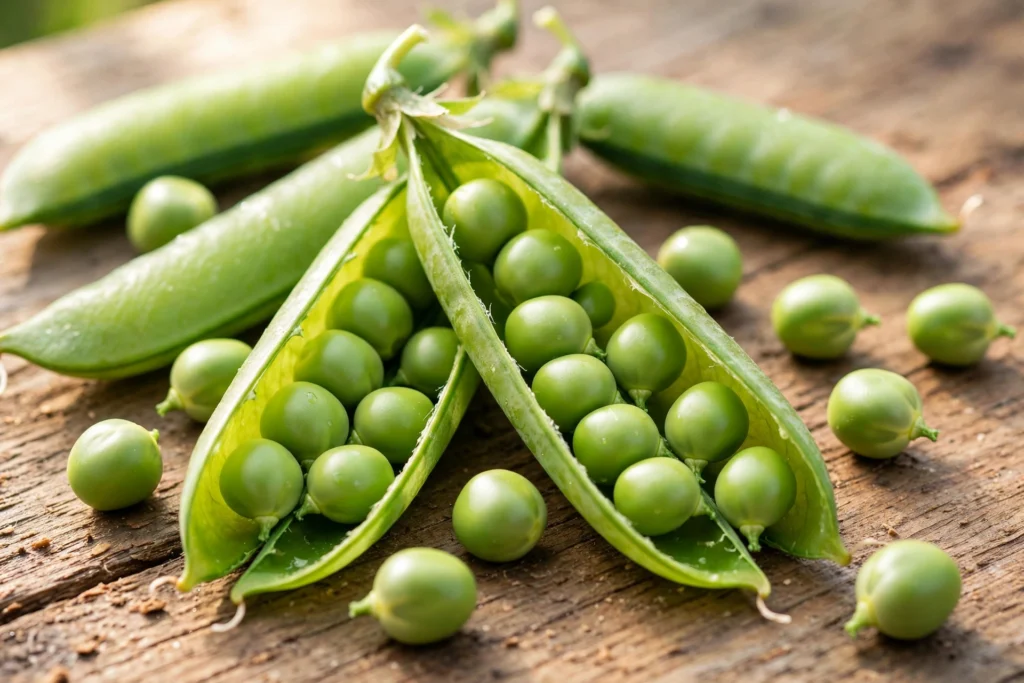

Green peas are easy to dismiss as a side dish — the small green things next to the main event. But that misses the point entirely. Green peas benefits for health are far stronger than their size suggests: they’re one of the few vegetables with real protein, they’re packed with fibre, and they bring vitamins and minerals that support your heart, eyes, and blood sugar.
Peas have fed people for thousands of years, from ancient farming villages to modern frozen food aisles, and there’s a reason they’ve stuck around. They’re cheap, they store well frozen, and they cook in minutes. In this article, we’ll look at what peas really offer and the easiest ways to eat more of them.
1. Plant Protein That Actually Counts
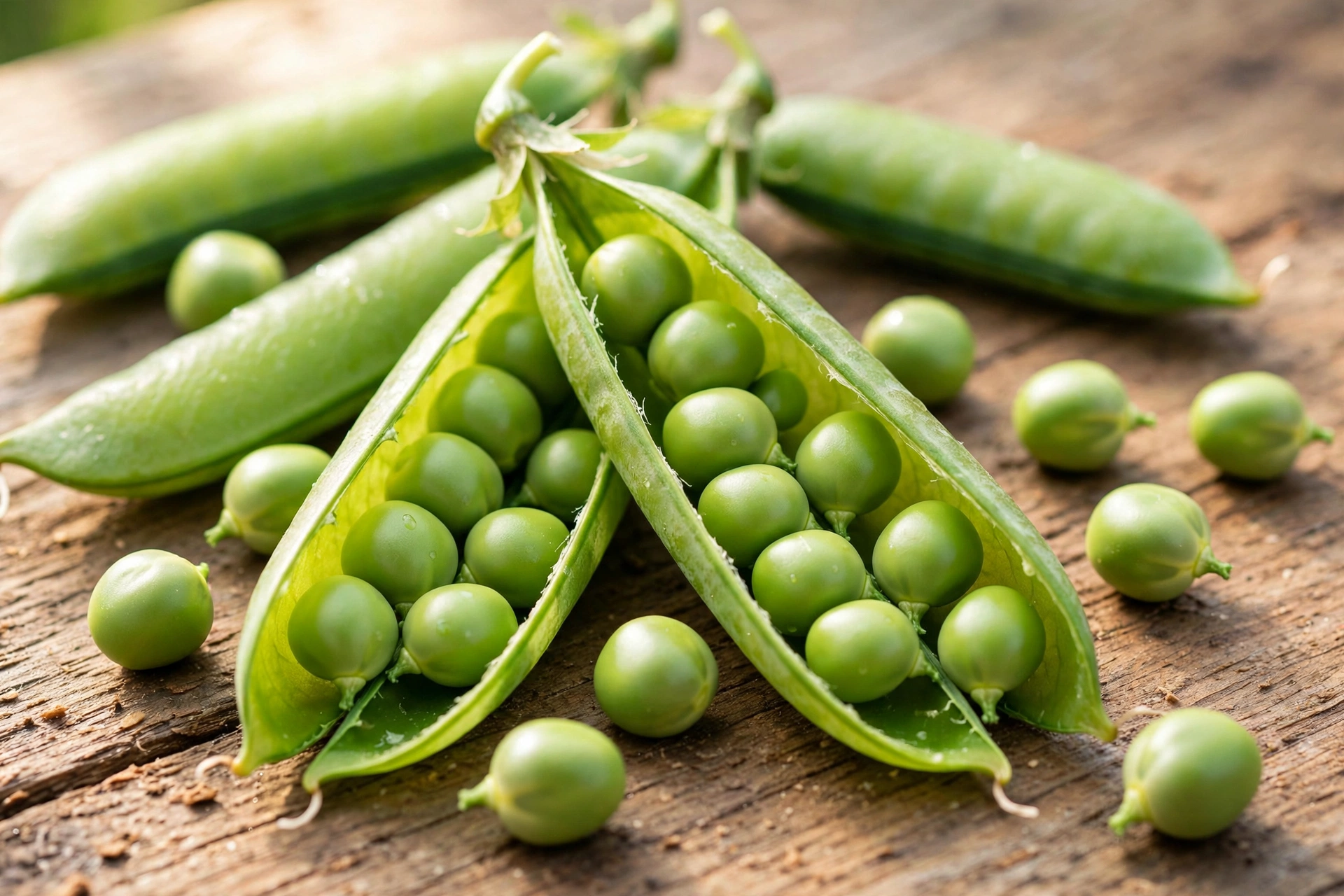
Most vegetables contain only a gram or two of protein per serving, but green peas are different. A cup of cooked peas gives you about 8 grams of protein — more than a cup of milk, and far more than any other common vegetable. That makes peas one of the most useful plant proteins in the kitchen, especially for people who eat little meat or are trying to cut back.
Pea protein has another advantage: it’s easy to digest and rarely causes the gas that beans and lentils can trigger. That’s why pea protein powder has become so popular in protein shakes — it’s gentle on the stomach, and it contains all nine essential amino acids, though it’s a little low in methionine. Pairing peas with grains, like rice or bread, covers that gap nicely, which is why peas and rice have been eaten together for centuries.
For everyday eating, peas are a simple way to lift the protein content of a meal without adding meat. Add a cup to a pasta dish, a curry, or a fried rice, and you’ve added 8 grams of protein for about 120 calories. If you want to compare other plant protein sources, Benefits of Eating Peanuts (Protein, Energy, and Heart Health) is a useful next read.
2. Fibre for Digestion and Steady Blood Sugar
A cup of cooked peas contains about 8 to 9 grams of fibre — roughly a third of what most adults need in a whole day. That’s an exceptional amount for a single food, and it does two important jobs. The insoluble fibre adds bulk and keeps digestion regular, while the soluble fibre slows down how fast sugar enters your blood, which helps keep energy levels steady after a meal.
That steady energy matters. Meals high in fibre and protein, like a pea curry with brown rice, digest slowly, so you stay full for hours instead of crashing an hour later. This is one of the reasons peas are a good food for people watching their blood sugar — the fibre blunts the glucose rise that starchy foods would otherwise cause.
The fibre in peas also feeds the good bacteria in your gut. When those bacteria ferment the fibre, they produce short-chain fatty acids that help keep the gut lining healthy and support a balanced immune system. If your gut isn’t used to much fibre, start with half a cup and build up, so you don’t end up gassy and uncomfortable.
3. Heart Health from Fibre, Potassium, and More
Peas support the heart through a combination of nutrients that work together. Their soluble fibre helps lower LDL cholesterol by binding bile acids in the gut, and studies show that eating legumes — the family peas belong to — is linked with lower cholesterol and a lower risk of heart disease. Peas also provide about 350 milligrams of potassium per cup, which helps balance sodium and keep blood pressure in check.
Peas also contain magnesium, about 60 milligrams per cup, which supports healthy blood pressure and heart rhythm, plus small amounts of folate, which helps keep homocysteine levels in check. Homocysteine is an amino acid that, at high levels, has been linked to a higher risk of heart disease, and folate helps your body process it properly.
The overall pattern is consistent: people who eat legumes regularly tend to have better heart health markers than those who don’t. Peas are one of the easiest legumes to eat often, because they’re mild, quick to cook, and fit into almost any cuisine — from a British pea soup to an Indian matar paneer to a Chinese fried rice.
4. Eye Health and the Carotenoids in Peas
Peas contain lutein and zeaxanthin, the carotenoids that collect in the retina and protect your eyes from blue light and oxidative damage. A cup of peas provides a useful amount of these pigments, and regular intake has been linked in studies to a lower risk of age-related macular degeneration and cataracts.
Peas also provide vitamin A, about 20 percent of your daily needs per cup, which your eyes depend on for night vision and overall health. Leafy greens are even richer in eye-protecting nutrients, so if you want to build on this benefit, Spinach Benefits for Health (Nutrition, Uses, and Cautions) is a good place to start. Vitamin A deficiency is one of the leading causes of preventable blindness worldwide, and while it’s rare in wealthy countries, keeping your intake adequate through foods like peas is a simple safeguard.
There’s a practical point here: the carotenoids in peas are fat-soluble, so they absorb better when you eat peas with a little fat — a drizzle of olive oil, a knob of butter, or peas cooked in a sauce. That’s one more reason peas work so well in real meals rather than eaten plain.
5. Blood Sugar Control for Steady Energy
Peas have a low glycaemic index — around 22 to 54 depending on the type and how they’re cooked — which means they raise blood sugar slowly and gently. That makes them one of the best starchy foods for people with diabetes or prediabetes, and for anyone who wants to avoid the energy crash that follows a high-carb meal.
The reason is the combination of fibre and protein. Together, they slow down digestion, so the natural sugars in peas enter your blood gradually rather than all at once. A meal built around peas, vegetables, and a whole grain gives you sustained energy for hours, which is a very different experience from a plate of white rice or white bread on its own.
This is also why peas work well as a partial replacement for higher-glycaemic foods. Swapping half the rice in a meal for peas cuts the glycaemic load while adding protein and fibre — a trade that improves the meal in every direction at once. It’s a small change, but repeated daily, it makes a real difference to blood sugar control.
6. Vitamins and Minerals in a Small Package
Peas are remarkably nutrient-dense for their size. A cup of cooked peas provides about 35 percent of your daily vitamin K, which helps your body use calcium and build strong bones, plus about 25 percent of your daily vitamin C, which supports immunity and helps you absorb iron from plant foods. They also give you meaningful amounts of thiamine, niacin, and folate — B vitamins your body needs for energy metabolism and healthy blood cells.
The mineral list is just as good: manganese, phosphorus, iron, zinc, and copper all show up in useful amounts. Iron is especially worth noting, since a cup of peas gives you about 14 percent of your daily iron — and the vitamin C in the same peas helps your body absorb it. That’s a neat bit of packaging that whole foods do better than supplements.
None of these nutrients is present in record-breaking amounts on its own. But the breadth is what makes peas special — a wide spread of vitamins and minerals in one small, cheap, easy food. That’s the definition of nutrient density, and it’s why peas deserve more respect than they get.
Peas have a history worth knowing too. They were one of the first crops humans ever farmed, grown in the Middle East more than 8,000 years ago, and they’ve fed people through famines and hard winters ever since. Gregor Mendel, the monk who founded modern genetics, did his famous experiments on pea plants in the 1860s, choosing them precisely because they were easy to grow and showed clear traits. A food with that much history behind it has earned its place on the plate — and modern nutrition science keeps confirming what farmers figured out long ago.
7. Weight Management Without Hunger
Peas are surprisingly filling for their calorie count. A cup of cooked peas has about 120 calories, but with 8 grams of fibre and 8 grams of protein, it keeps you full far longer than a similar number of calories from bread or rice. Protein and fibre are the two nutrients most linked to satiety, and peas are one of the few foods that deliver both in serious amounts.
This makes peas a useful tool for weight management. Adding peas to a meal lets you eat a satisfying portion while keeping the total calories in check, and the steady energy they provide helps you avoid the snacking that often follows a low-protein, low-fibre lunch. A pea soup, for instance, is a genuinely filling meal for very few calories.
Peas also help indirectly. Because they’re so versatile, they make it easier to build meals around vegetables and legumes instead of meat and refined carbs, and that shift in eating pattern is linked with healthier body weight over time. It’s not about any single food — it’s about the pattern, and peas make the pattern easier to follow.
8. Bone Health and Vitamin K
Bones need more than calcium, and peas contribute two nutrients that often get overlooked: vitamin K and manganese. Vitamin K helps your body activate osteocalcin, a protein that binds calcium into bone, and a cup of peas provides about a third of your daily vitamin K. Manganese is needed to build bone tissue, and peas give you about 20 percent of your daily needs per cup.
Peas also provide small amounts of calcium, phosphorus, and magnesium — all involved in bone maintenance. The amounts are modest, but they add to the total from the rest of your diet, and they come in a food that also supports your heart, gut, and blood sugar. That’s the advantage of eating whole foods: one food supports many systems at once.
As with every food in this article, peas are not a treatment for osteoporosis, and nobody should rely on them alone for bone health. But as one part of a diet rich in vegetables, legumes, and adequate calcium and vitamin D, they contribute real, useful nutrients that support your skeleton as you age.
How to Eat It
Aim for one cup of peas several times a week — fresh, frozen, or dried split peas all count, and frozen peas are just as nutritious as fresh, since they’re frozen within hours of picking. The simplest method is to boil or steam them for two to three minutes, then toss with a little butter or olive oil and salt. They work as a side dish with almost anything, from grilled fish to roast chicken.
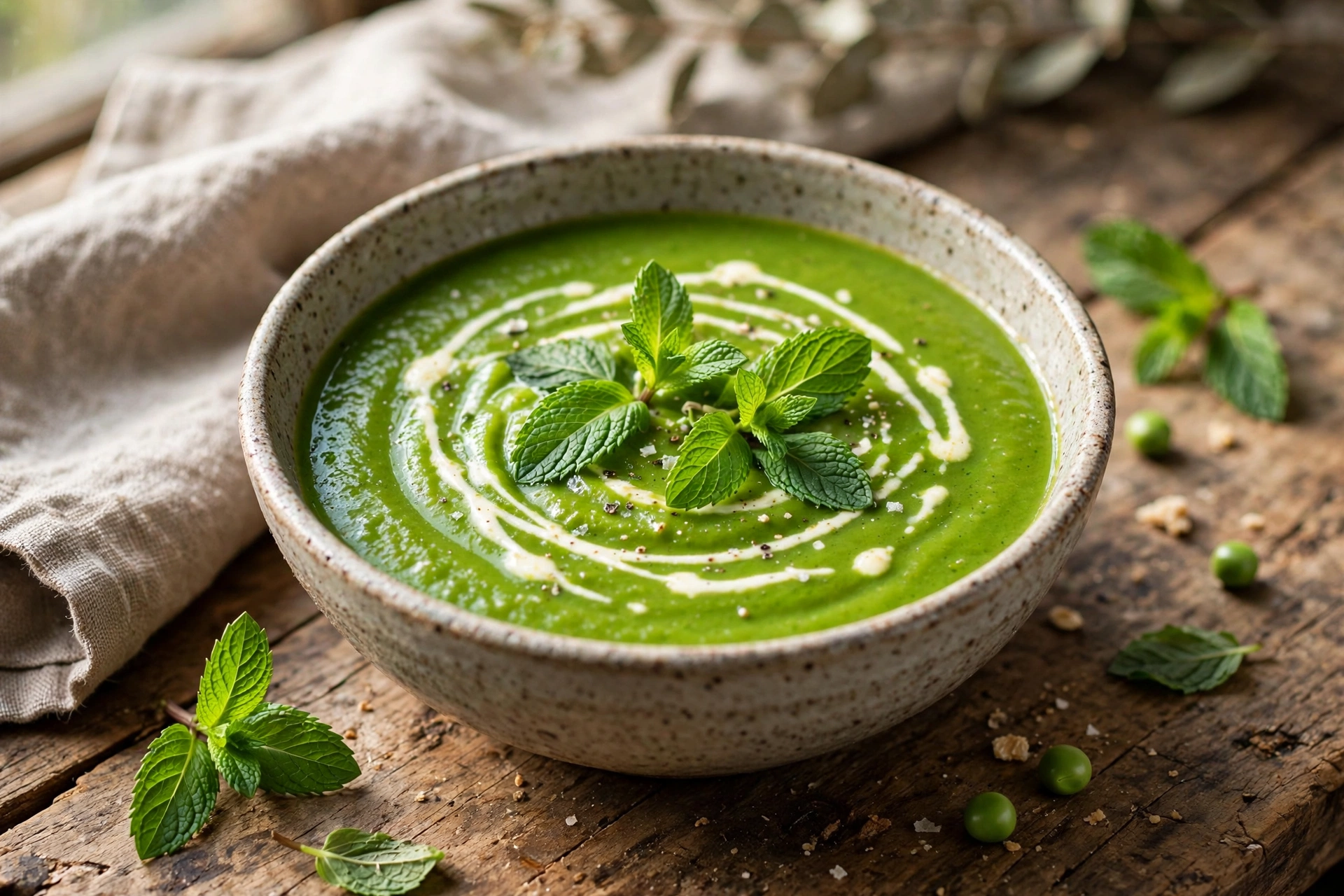
For fuller meals, try a pea soup — blend cooked peas with onion, garlic, and stock for a bright green soup that takes fifteen minutes. Peas also shine in fried rice, pasta dishes, curries, and stews, where they add colour, sweetness, and protein. A classic pairing is peas with eggs: a pea and egg scramble or frittata is quick, cheap, and filling, and it combines two strong protein sources — see Egg Benefits for Health (Protein, Brain, and Eye Nutrition) for why eggs are worth including.
When you buy fresh peas, look for pods that feel firm and bright green, and shell them just before cooking. Frozen peas are the practical choice for most people — keep a bag in the freezer and add a handful to any meal. Dried split peas are different: they need soaking and longer cooking, but they make excellent soups and dals, and they’re even cheaper than frozen peas.
Things to Watch
Peas are safe for most people, but they can cause gas and bloating, especially if you eat a lot of them at once. This comes from the fibre and natural sugars that gut bacteria ferment, and it’s the same reason beans cause gas. Starting with smaller portions and building up slowly helps your gut adjust, and cooking peas well makes them easier to digest.
People with gout sometimes ask about peas, because they contain purines, which the body turns into uric acid. Peas are moderate in purines — lower than meat and seafood, but higher than most vegetables. If you have gout, you don’t need to avoid peas entirely, but keep portions moderate and talk to your doctor about your overall diet.
Peas also contain vitamin K, so if you take a blood-thinning medicine like warfarin, keep your intake fairly steady rather than swinging between none and huge portions. Pea allergy is uncommon but real, and it sometimes shows up in people allergic to peanuts or other legumes — if you notice itching, swelling, or stomach upset after eating peas, stop and check with a doctor.

FAQ
Are green peas a good source of protein?
Yes, they’re one of the best vegetable sources of protein. A cup of cooked peas has about 8 grams of protein, far more than most vegetables. It’s not a complete protein on its own, so pair peas with grains like rice or bread to cover all essential amino acids.
Are frozen peas as healthy as fresh peas?
Yes, frozen peas are just as nutritious as fresh, and sometimes more so, because they’re frozen within hours of harvest. Fresh peas lose nutrients quickly once picked, while freezing locks them in. Keep a bag in the freezer for easy meals.
Do peas cause gas?
They can, especially in large portions, because of their fibre and natural sugars. Cooking them well and starting with smaller portions helps. Most people find their gut adjusts within a week or two of eating peas regularly.
Are peas good for diabetes?
Yes, peas are one of the best foods for blood sugar control. They have a low glycaemic index, and their fibre and protein slow digestion, so glucose enters the blood gradually. They work well as a partial replacement for rice or potatoes.
Can you eat peas every day?
Yes, for most people a cup of peas daily is perfectly fine. Just vary your vegetables across the week so you get a broader mix of nutrients, and watch your portions if you have gout or take blood-thinning medicine.
Conclusion
Green peas are small, cheap, and easy to overlook — and that’s a shame, because they’re one of the most nutritious vegetables in the kitchen. Eight grams of protein, eight grams of fibre, vitamin K, vitamin C, potassium, and eye-protecting carotenoids, all in a single cup that cooks in three minutes. Very few foods deliver that much nutrition for that little effort.
Keep a bag of frozen peas in the freezer and start adding a handful to meals you already make — pasta, rice, soup, curry, or an omelette. It’s one of the simplest upgrades you can make to your diet, and it’s one you’ll barely notice making. That’s how good habits stick.
Sources
Learn more from these trusted references: Pea — Wikipedia and the Harvard T.H. Chan School of Public Health — Legumes and Pulses.