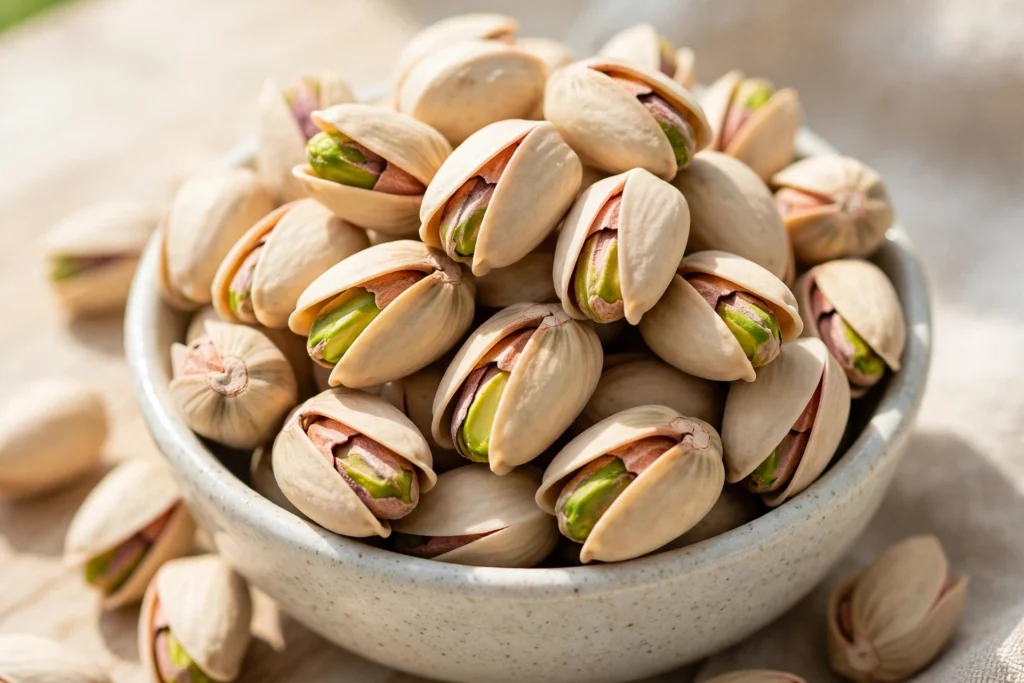

Pistachios are the small green nuts with a loyal following — and for good reason. They’re one of the few nuts that are a complete protein, they’re rich in eye-protecting lutein, and their shells slow you down, which helps with portion control. Pistachio benefits for health cover protein, eyes, heart, and gut, all in a snack that feels like a treat.
Pistachios have been eaten for thousands of years, from ancient Persia to modern snack aisles, and they’re one of the most nutrient-dense nuts you can buy. In this article, we’ll look at what pistachios offer, how many to eat, and why the shell might be their secret weapon.
1. Complete Protein in a Small Package
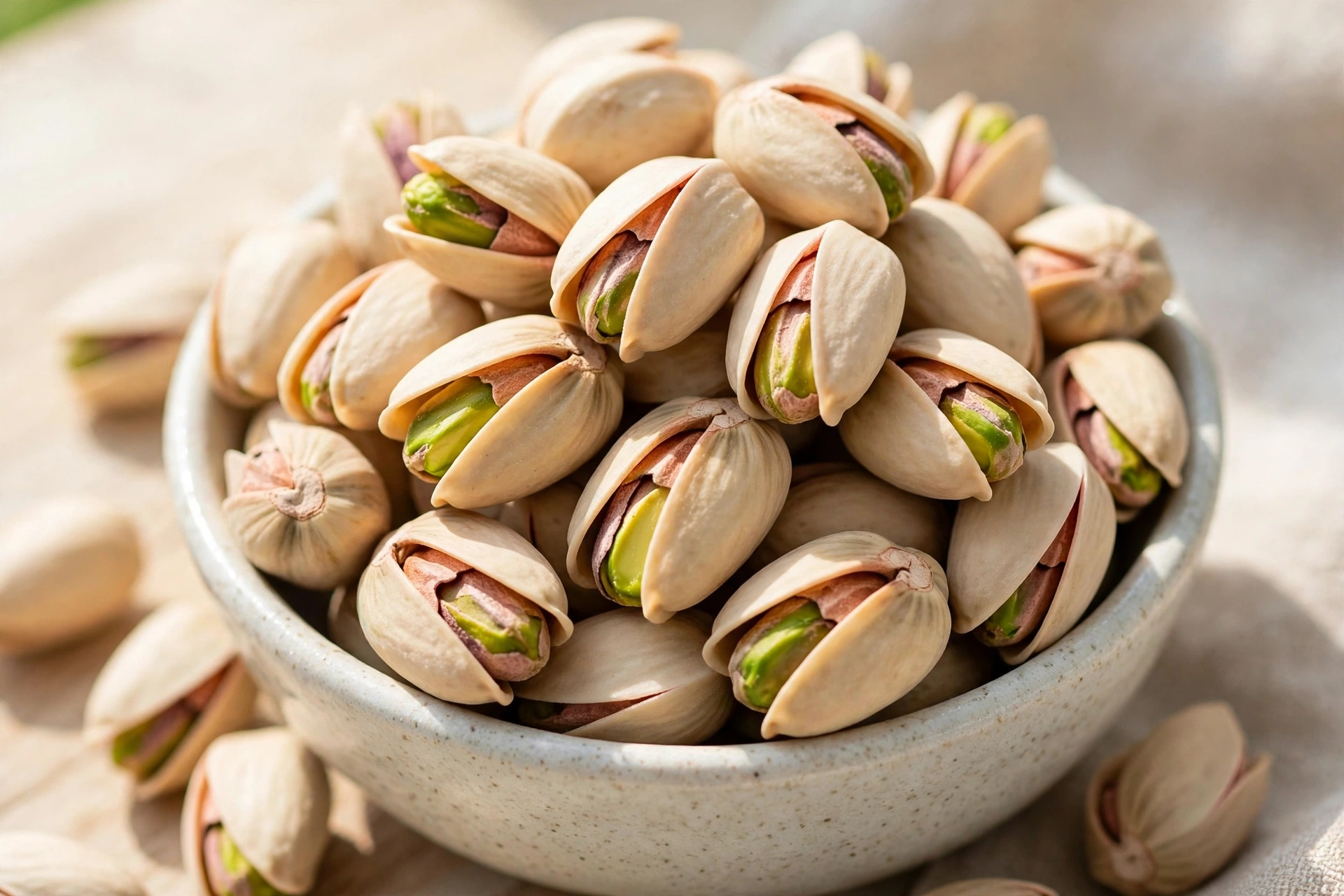
Pistachios are unusual among nuts because they contain all nine essential amino acids in useful amounts, making them a complete protein — something most plant foods can’t claim. An ounce of pistachios gives you about 6 grams of protein, which is more than most other nuts, and it’s a meaningful contribution toward the 50 to 60 grams most adults need each day.
That makes pistachios a particularly useful snack for people who eat little meat, and for anyone trying to get more protein without adding another meal. A handful of pistachios after a workout, or with an afternoon snack, adds protein that helps with muscle repair and keeps you full for hours. If you want to compare another high-protein food, Egg Benefits for Health (Protein, Brain, and Eye Nutrition) covers a classic source in detail.
Pistachios have a history worth knowing too. They’ve been grown in the Middle East for thousands of years, and the word pistachio comes from the Persian ‘pisteh’. Archaeologists have found pistachio shells in sites dating back to 7,000 BC, and the nuts were a prized food in ancient Persia, valued both as a snack and as a food for travellers, since they kept well on long journeys. The modern pistachio industry in California only took off in the 1970s, but the nut itself is one of the oldest cultivated foods in the world. The protein in pistachios also helps with blood sugar control. Protein slows down digestion, so the small amount of carbohydrate in pistachios enters your blood gradually, and eating pistachios with a carbohydrate food — like fruit or crackers — blunts the glucose rise from that food too. It’s a small effect, but it’s a useful one for anyone watching their blood sugar.
2. Eye Health and the Lutein Advantage
Pistachios are the only nut with significant amounts of lutein and zeaxanthin, the carotenoids that protect your eyes. An ounce of pistachios provides about 1,500 micrograms of these pigments, which collect in the retina and filter harmful blue light. Higher intake of lutein and zeaxanthin has been linked in studies to a lower risk of age-related macular degeneration and cataracts.
That green colour is the giveaway — the pigments that make pistachios green are the same ones that protect your eyes. It’s a useful reminder that colour in food usually signals nutrition, and the vivid green of a pistachio is one of the clearest examples. If you want to compare another eye-friendly food, Carrot Benefits for Health (Eyes, Skin, and Immunity) covers a vegetable that’s rich in related carotenoids.
Pistachios also provide vitamin E and zinc, both of which support eye health in their own ways. Vitamin E protects eye cells from oxidative damage, while zinc helps your body move vitamin A to the retina. The amounts are modest, but they add to the total from the rest of your diet, and they come in a food that’s easy to eat every day.
3. Heart Health from Fats, Fibre, and Plant Sterols
Pistachios support heart health through a combination of nutrients. Their fat is mostly monounsaturated and polyunsaturated — the heart-friendly kinds — and they contain plant sterols that help block cholesterol absorption in the gut. Their fibre, about 3 grams per ounce, helps lower LDL cholesterol by binding bile acids.
Studies on pistachios and heart health are encouraging. Trials have found that adding pistachios to the diet can lower LDL cholesterol and improve blood vessel function, and population studies link nut eaters with lower rates of heart disease. Pistachios also provide potassium, about 290 milligrams per ounce, which helps balance sodium and support healthy blood pressure.
One study worth mentioning found that pistachios may help lower blood pressure more than some other nuts, possibly because of their potassium and their amino acid arginine, which helps blood vessels relax. Arginine is a building block of nitric oxide, a molecule that helps blood vessels widen and improves blood flow, and pistachios are one of the richest nut sources of it. That’s a useful detail for anyone thinking about heart health, since better blood flow supports everything from exercise performance to healthy blood pressure. The effect is modest, and pistachios are not a blood pressure treatment — but as part of a heart-healthy eating pattern, they contribute real, useful nutrients.
4. Gut Health and Prebiotic Fibre
Pistachios are one of the best nuts for gut health, thanks to their fibre and their prebiotic effects. An ounce provides about 3 grams of fibre, which is more than most other nuts, and studies have found that eating pistachios increases the levels of beneficial gut bacteria, particularly Bifidobacteria, the same friendly bacteria that yoghurt and other fermented foods support.
That prebiotic effect is one of the more interesting recent findings about pistachios. The fibre and polyphenols in the nuts appear to feed good bacteria selectively, which helps keep the gut lining healthy and supports a balanced immune system. It’s a reminder that gut health isn’t just about yoghurt and supplements — nuts play a role too.
The fibre in pistachios also helps with digestion in the everyday sense: it adds bulk, keeps things moving, and helps prevent constipation. If your gut isn’t used to much fibre, start with a small handful and build up, since a sudden increase can cause gas and bloating.
5. Weight Management and the Shell Effect
Pistachios are one of the best nuts for weight management, and the reason is partly psychological. When you eat pistachios in the shell, you have to work for each nut — cracking it open, eating it, and dealing with the shell. That slows you down, and studies show that people eat fewer calories from in-shell pistachios than from shelled ones, because the effort and the visible pile of shells both signal when to stop.
That pile of shells is a real tool. In one study, people who could see their empty shells ate about 40 percent fewer calories than people whose shells were cleared away, because the visual cue reminded them how much they’d eaten. It’s a simple, free trick that works with no willpower required — just buy pistachios in the shell and leave the shells where you can see them.
Pistachios are also relatively low in calories for a nut, at about 160 calories per ounce, and their protein and fibre keep you full. The combination of a satisfying snack, a built-in portion control mechanism, and good satiety makes pistachios one of the smartest choices in the entire snack aisle.
6. Blood Sugar Control and Steady Energy
Pistachios are low in carbohydrates — about 8 grams per ounce, with 3 grams of fibre — and they have a low glycaemic index. That makes them a useful snack for people watching their blood sugar, including those with diabetes or prediabetes. Studies have found that eating pistachios with a carbohydrate food, like white bread or rice, reduces the blood sugar spike from that food.
The mechanism is the combination of protein, fat, and fibre, which slows down digestion and spreads the glucose rise over a longer period. That’s a genuinely useful effect for everyday eating — a handful of pistachios before or with a meal is a simple habit that helps keep energy levels steady through the afternoon.
Research on pistachios and diabetes is still developing, but small trials have found improvements in blood sugar markers and insulin sensitivity in people with type 2 diabetes who added pistachios to their diet. The effect is modest, and pistachios are not a treatment — but as a snack choice, they’re far better than biscuits, sweets, or crisps.
7. Minerals for Energy, Bones, and Immunity
Pistachios are rich in several minerals that many people fall short on. An ounce provides about 20 percent of your daily vitamin B6, which your body needs to make red blood cells and neurotransmitters, plus useful amounts of copper, manganese, magnesium, and phosphorus. Copper is especially notable — an ounce gives you about 40 percent of your daily needs, and copper helps your body absorb iron and make energy.
Vitamin B6 deserves special attention. It’s involved in more than 100 enzyme reactions, including the production of serotonin and melatonin, the chemicals that regulate mood and sleep. Low B6 intake has been linked to fatigue and poor mood, and pistachios are one of the best food sources available — better than most other nuts by a clear margin.
Pistachios also provide thiamine, folate, and vitamin E, plus small amounts of iron and zinc. None of these is present in record-breaking amounts on its own, but the breadth is what makes pistachios special — a wide spread of vitamins and minerals in one small, enjoyable food.
8. Antioxidants That Protect Your Cells
Pistachios are rich in antioxidants, including lutein, vitamin E, and a range of polyphenols. Studies have found that pistachios have a higher total antioxidant capacity than many other nuts, and their green and purple colours are a visible sign of the pigments inside. These compounds help neutralise free radicals — the unstable molecules that damage cells over time.
One interesting finding is that the antioxidants in pistachios are highly bioavailable, meaning your body absorbs and uses them well. A study that measured antioxidant levels in the blood after eating pistachios found a significant increase, which suggests the compounds aren’t just present in the nut — they actually get into your system and do their work.
As with every food in this article, the effect of one handful is modest. But pistachios are a food people can eat daily, and small antioxidant effects add up when they repeat that often. The key is consistency: a handful a day, every day, delivers far more protection than an occasional large portion.
How to Eat It
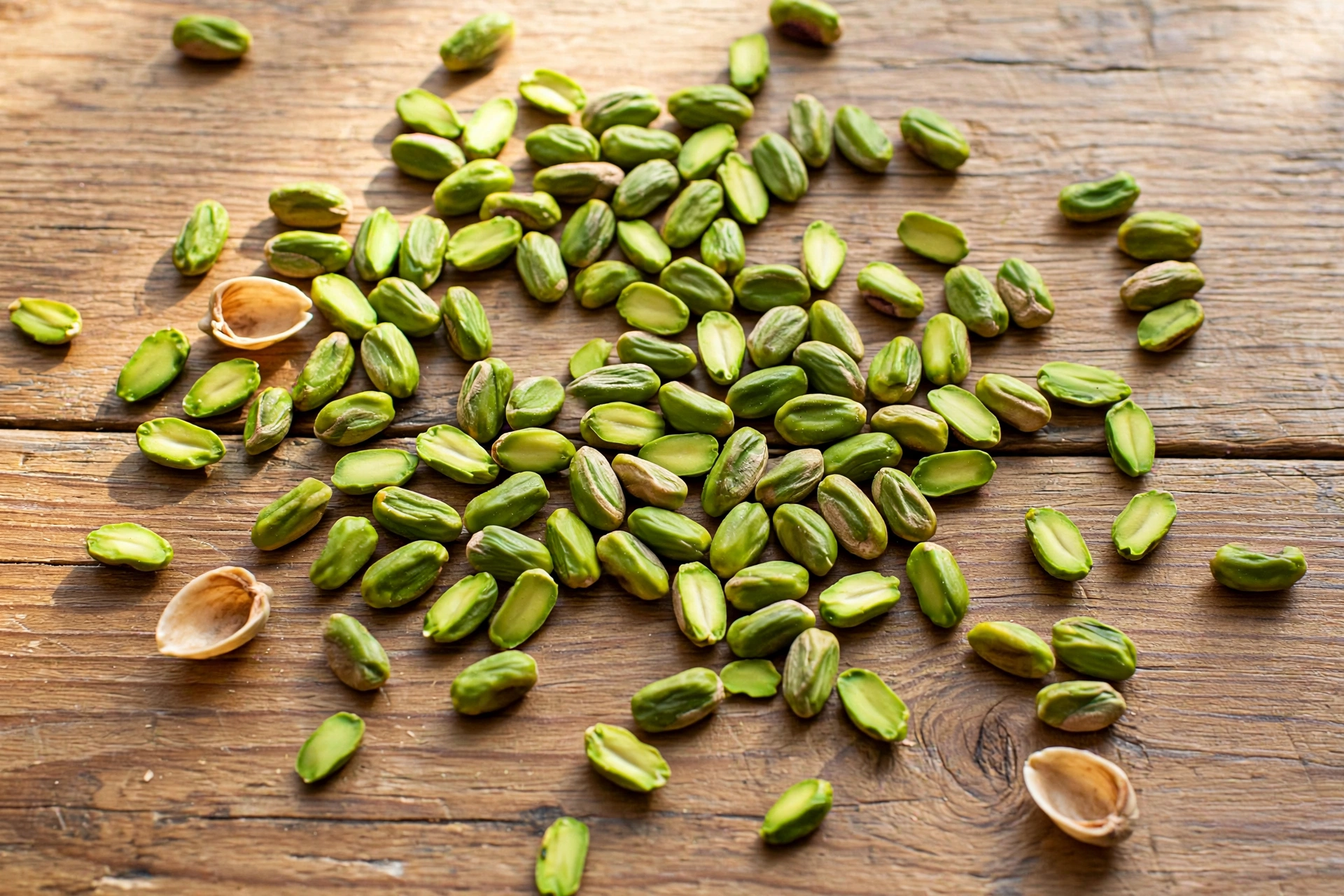
Aim for about one ounce (28 grams) of pistachios a day — roughly 49 nuts, or a small handful. The best choice is in-shell, unsalted pistachios: the shells slow you down and help with portion control, and skipping the salt keeps your sodium intake in check. Eat them as a snack on their own, or mix them into a trail mix with other nuts and dried fruit.
Pistachios are also great in cooking. Chop them and sprinkle over salads, yoghurt, or oatmeal for crunch and colour. They’re a classic in Middle Eastern desserts like baklava, and they make a beautiful green pesto when blended with basil, garlic, and olive oil. Crushed pistachios make an elegant coating for fish or chicken, and they add a lovely colour to rice dishes. For another nut that’s excellent in cooking, Walnut Benefits for Health (Brain, Heart, and More) covers a strong alternative.
When you buy pistachios, look for shells that are partly open — a closed shell usually means an immature nut, and it’s hard to open. Store them in an airtight container in a cool, dark place, or in the fridge if you won’t use them within a few weeks. Shelled pistachios go stale faster than in-shell ones, so buy in-shell when you can, and check for a fresh, nutty smell rather than a stale or bitter one.
Things to Watch
Pistachios are safe for most people, but tree nut allergy is serious, and pistachio allergy is often linked to cashew allergy, since the two nuts are related. If you have a nut allergy, avoid pistachios unless a doctor has cleared them. Anyone who notices itching, swelling, or breathing difficulty after eating pistachios should seek medical help immediately.
Salted pistachios are the main trap. A salted ounce can contain 120 milligrams of sodium or more, and it’s easy to eat several ounces at a sitting, which adds up to a lot of salt. Choose unsalted pistachios when you can, and if you do eat salted ones, keep the portion to a single handful.
Pistachios are also high in calories, so portion control matters even with the shell effect. A handful a day is a healthy habit; a large bowl every evening is a lot of extra calories. And one practical note: pistachios can be expensive, so buying in bulk and storing them properly is the most affordable way to keep them in your diet.

FAQ
How many pistachios should I eat a day?
About one ounce (28 grams), or roughly 49 pistachios, is a good daily portion. In-shell pistachios help with portion control, since the shells slow you down and show you how much you’ve eaten.
Are pistachios good for weight loss?
Yes, they’re one of the best nuts for weight loss. They’re relatively low in calories for a nut, their protein and fibre keep you full, and the shells slow you down. Studies show people eat fewer calories from in-shell pistachios than from shelled ones.
Are pistachios good for your eyes?
Yes, they’re the only nut with significant lutein and zeaxanthin, the carotenoids that protect the retina. Regular intake has been linked to a lower risk of macular degeneration and cataracts.
Do pistachios help you sleep?
They may help a little. Pistachios contain vitamin B6 and magnesium, both involved in sleep regulation, and they contain small amounts of melatonin. They won’t replace good sleep habits, but a small handful in the evening is a sensible snack.
Are salted pistachios unhealthy?
They’re not terrible, but the salt adds up fast — it’s easy to eat several hundred milligrams of sodium from a few handfuls. Unsalted pistachios are the better everyday choice, and salted ones are best kept as an occasional treat.
Conclusion
Pistachios are a rare combination: a snack that tastes like a treat and works like a health food. Complete protein, eye-protecting lutein, heart-friendly fats, gut-friendly fibre, and a built-in portion control system in the form of a shell — all in a small green nut that’s been enjoyed for thousands of years. Very few snacks can claim that much, and fewer still are as easy to keep in your kitchen — pistachios store well, travel well, and need no preparation at all.
The habit is simple: buy them in the shell, unsalted, and keep a small handful as your afternoon snack. Leave the shells where you can see them, and let them do the portion control for you. It’s one of the easiest healthy habits there is, and it’s one you’ll actually enjoy keeping — a snack that feels indulgent while quietly doing your body a favour.
Sources
Learn more from these trusted references: Pistachio — Wikipedia and the Harvard T.H. Chan School of Public Health — Nuts and Seeds.