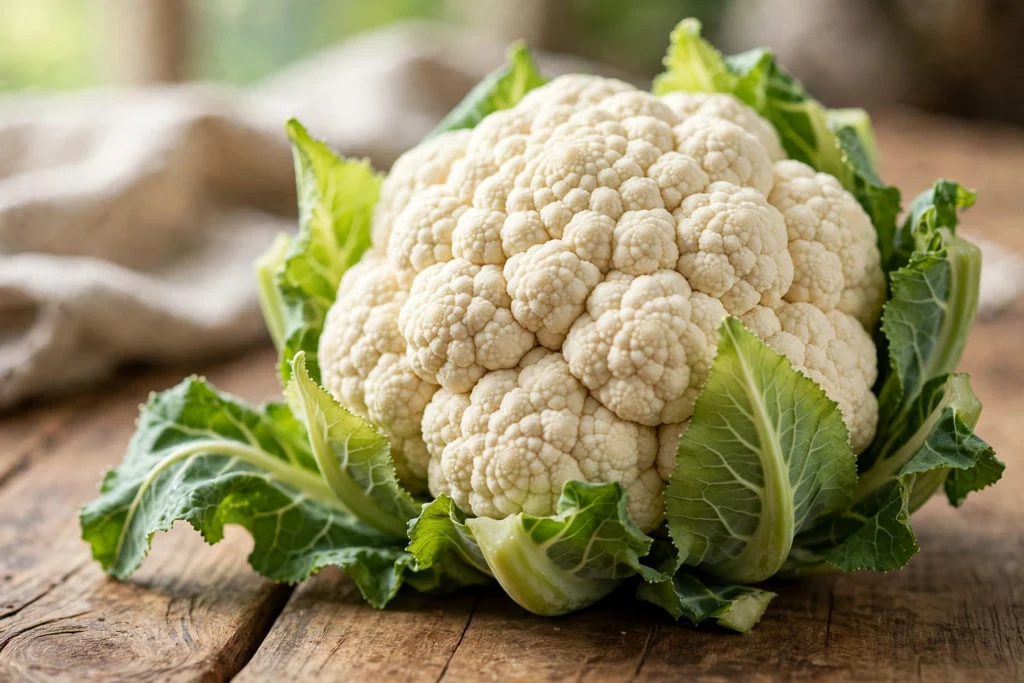

Cauliflower spent years as the plain white vegetable next to broccoli, the one people pushed to the side of the plate. Then cauliflower rice, cauliflower pizza bases, and roasted cauliflower steaks turned it into a star, and suddenly everyone wanted to know what it actually does for your health. Cauliflower benefits for health are genuinely impressive — fibre for digestion, choline for the brain, and a low-calorie profile that makes weight management much easier.
The best part is how flexible it is. Cauliflower takes on the flavour of whatever you cook it with, so it works in curries, soups, roasts, and even mashed as a lighter stand-in for potatoes. In this article, we’ll go through what cauliflower contains, what the science says about its benefits, and the easiest ways to make it a regular part of your meals.
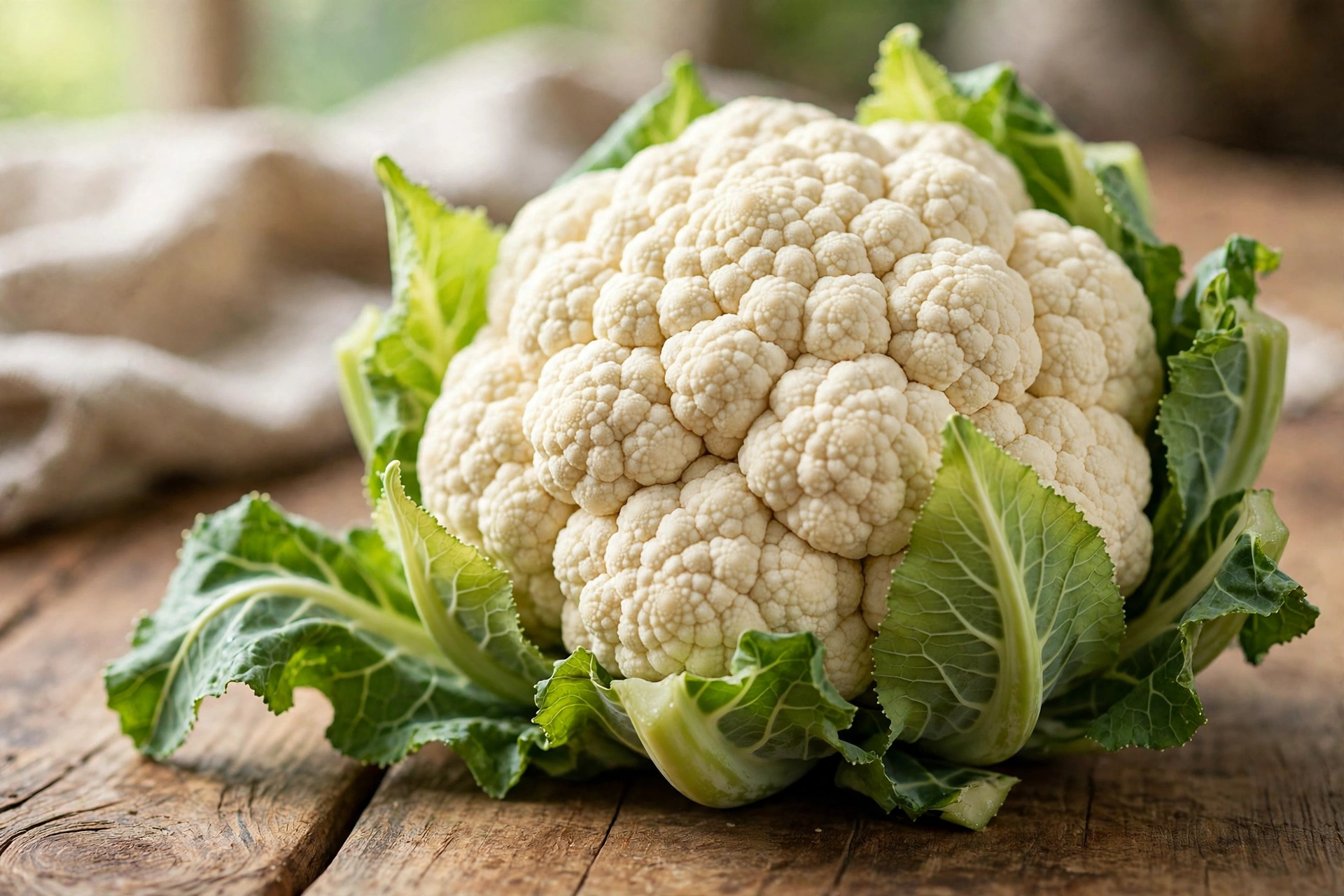
1. Fibre for Digestion and a Healthy Gut
A cup of raw cauliflower gives you about 2 grams of fibre, and a cooked cup gives you closer to 2.8 grams, all for only around 25 calories. That fibre does two jobs at once. The insoluble part adds bulk and keeps food moving through your digestive tract, which helps prevent constipation, while the soluble part feeds the friendly bacteria in your gut. Those bacteria ferment the fibre and produce short-chain fatty acids, which help keep the gut lining strong and support a balanced immune system.
Cauliflower also contains a decent amount of water — about 92 percent by weight — which works with the fibre to keep digestion smooth. Dry, low-fibre diets are one of the most common reasons people feel sluggish and bloated, and adding a cup or two of cauliflower to a meal is a simple way to move in the other direction without changing anything else about how you eat.
If your gut isn’t used to much fibre, build up slowly. Jumping from almost no vegetables to a huge plate of cauliflower in one day can leave you gassy and uncomfortable, because your gut bacteria need time to adjust. Start with half a cup, a few times a week, and work up from there. Cooked cauliflower is also gentler than raw, so steaming or roasting is a good starting point if your stomach is sensitive.
2. Choline for Brain Health and Memory
Choline is a nutrient most people have never heard of, yet it plays a central role in brain health. Your body uses choline to build cell membranes and to make acetylcholine, a neurotransmitter involved in memory and learning. Cauliflower is one of the best plant sources of choline, with a cup providing roughly 45 to 48 milligrams — about 8 to 11 percent of what most adults need each day.
That matters because choline deficiency is surprisingly common. Surveys suggest most adults don’t get enough of it, and low intake during pregnancy has been linked to poorer brain development in children. Eggs and meat are the richest sources, but for people who eat mostly plants, cauliflower is one of the most useful foods on the list. Pairing cauliflower with eggs in a meal — say, a cauliflower and egg stir-fry — covers choline from two directions at once.
Research on choline and adult memory is still developing, and nobody should treat cauliflower as a memory cure. But keeping your choline intake adequate is one of those quiet, long-term habits that supports brain health as you age, and cauliflower makes it easy to do without supplements or expensive foods.
3. Weight Management Without Feeling Hungry
Cauliflower is one of the most useful vegetables for weight management, and the reason is simple arithmetic. A cup has only about 25 calories, yet it takes up real space on your plate and in your stomach. That means you can eat a generous portion, feel full, and still stay well within your calorie budget. Foods that give you volume without calories are the secret weapon of sustainable weight loss, because the hardest part of eating less is feeling hungry.
This is exactly why cauliflower rice and cauliflower mash became so popular. Swapping half the rice in a meal for cauliflower rice cuts a meaningful number of calories while keeping the portion size the same, and most people barely notice the difference once a sauce or curry is on top. The same trick works with mashed cauliflower mixed into mashed potato, or roasted cauliflower added to a pasta dish to stretch it further.
There’s a catch worth knowing: cauliflower only helps your weight if it replaces something higher in calories. Adding cauliflower cheese sauce on top of an already heavy meal doesn’t do much. The win comes from the swap — cauliflower instead of some of the rice, the potatoes, or the pasta — and that’s where the real calorie savings show up over weeks and months.
There’s another reason cauliflower works well for weight: it’s filling in a way that salads sometimes aren’t. A big plate of roasted cauliflower feels like a real meal, not a side dish you’re enduring while you wait for something better. That matters more than people admit, because most diets fail not from lack of willpower but from meals that leave you hungry and bored. Cauliflower, seasoned well and cooked properly, is a food you can actually look forward to — and that’s what makes the calorie savings stick.
4. Vitamin C and Vitamin K in Every Serving
Cauliflower is surprisingly rich in vitamin C. A single cup of raw cauliflower provides about 77 percent of your daily vitamin C needs, which puts it ahead of many fruits. Vitamin C supports your immune system, helps your body absorb iron from plant foods, and is needed to make collagen, the protein that keeps skin, gums, and joints healthy. Cooking reduces the vitamin C somewhat, but even a cooked cup still delivers a solid amount.
Vitamin K is the other headline nutrient. A cup of cauliflower gives you around 20 percent of your daily vitamin K, which helps your body use calcium properly and supports bone health. It’s not as high as leafy greens, but it’s a meaningful contribution, especially for people who don’t eat many greens.
Cauliflower also provides small amounts of B vitamins, including folate and vitamin B6, plus potassium and magnesium. None of these is present in huge amounts on its own, but together they make cauliflower a genuinely nutrient-dense food — a lot of nutrition for very few calories, which is exactly what you want from a vegetable.
Cauliflower also travels well across cuisines, which is part of why it’s so easy to eat often. It works in Indian aloo gobi, in Middle Eastern roasted cauliflower with tahini, in Italian pasta dishes, and in simple British cauliflower cheese. That flexibility matters for your health, because the vegetables you eat most are the ones that fit your cooking, not the ones a list tells you to eat. If a food only works in one kind of dish, it won’t show up often enough to matter — cauliflower doesn’t have that problem.
5. Antioxidants and Anti-Inflammatory Compounds
Like its cruciferous cousins Broccoli Health Benefits (Why This Vegetable Deserves a Spot on Your Plate) and cabbage, cauliflower contains glucosinolates — plant compounds that break down into isothiocyanates when you chop or chew the vegetable. Studies suggest these compounds help the body activate its own detox enzymes and calm inflammation. Chronic, low-grade inflammation sits behind many modern health problems, from heart disease to joint pain, so foods that help keep it in check are worth eating regularly.
Cauliflower also contains flavonoids like kaempferol and quercetin, plus vitamin C itself, which acts as an antioxidant. Together, these compounds help neutralise free radicals — the unstable molecules that damage cells over time. The effect of one serving is modest, but cauliflower is a food people can eat several times a week, and small effects add up when they repeat that often.
Coloured cauliflowers bring extra benefits. Orange cauliflower is rich in beta-carotene, the same compound that makes carrots orange, while purple cauliflower contains anthocyanins, the antioxidants found in berries. If you spot them in the market, they’re worth trying — they taste the same as white cauliflower, but they add a broader mix of plant compounds to your plate.
6. May Support Heart Health
Heart health is one area where cauliflower’s nutrient mix works together nicely. Its fibre helps lower LDL cholesterol by binding bile acids in the gut, its potassium helps balance sodium and support healthy blood pressure, and its antioxidants may help protect blood vessels from damage. No single one of these effects is dramatic, but combined, they point in the right direction.
Population studies back this up in a general way. People who eat more cruciferous vegetables tend to have lower rates of heart disease, and cauliflower is one of the easiest cruciferous vegetables to eat often, because it adapts to so many dishes. It also helps indirectly: when cauliflower replaces refined carbs like white rice or pasta in a meal, the overall glycaemic load of that meal drops, which is better for blood sugar and, over time, for the heart.
As with every food in this article, cauliflower is not a heart medicine, and it can’t cancel out an otherwise unhealthy diet. But as one piece of a vegetable-rich eating pattern, it contributes real nutrients that support cardiovascular health, and it does so at a very low calorie cost.
7. A Versatile Ally for Blood Sugar Control
Cauliflower has a very low glycaemic index and only about 5 grams of carbohydrate per cup, with 2 of those grams being fibre. That makes it one of the friendliest vegetables for anyone watching their blood sugar, including people with diabetes or prediabetes. It barely moves glucose on its own, and its fibre slows down the digestion of whatever you eat it with.
The practical uses are what make this benefit real. Cauliflower rice lets you enjoy curries and stir-fries with a fraction of the carbs of white rice. Mashed cauliflower gives you the comfort of mash without the blood sugar spike of potatoes. Roasted cauliflower florets make a satisfying side dish that adds bulk to a plate without adding much carbohydrate at all.
One thing to watch: shop-bought cauliflower products aren’t all equal. Some frozen cauliflower pizzas and ready-made cauliflower rice dishes add refined flour, cheese, and salt that undo much of the benefit. Check the label, and when you can, make your own — grating a head of cauliflower takes about two minutes, and a food processor does it in seconds.

How to Eat It
Aim for one to two cups of cauliflower several times a week. The simplest method is roasting: toss florets in a little olive oil with salt and spices, spread them on a tray, and roast at 200°C for 20 to 25 minutes until the edges turn golden. Roasting brings out a nutty sweetness that surprises people who think they don’t like cauliflower, and it pairs beautifully with the healthy fats in Olive Oil Benefits (Why Extra Virgin Olive Oil Is So Healthy).
For everyday meals, try cauliflower rice — grate or pulse the florets, then sauté for three to four minutes with garlic and a pinch of salt. It works under any curry or stir-fry, and it’s a great base for a grain-free bowl with beans, vegetables, and a protein of your choice. Steamed cauliflower with a squeeze of lemon is another easy option, and it makes a gentle side dish for fish or chicken. Speaking of fish, a roasted cauliflower side goes wonderfully with the omega-3 rich meals in Benefits of Eating Fish (Omega-3, Heart, and Brain Health).
When you buy cauliflower, look for a head that feels heavy and firm, with tight white florets and fresh green leaves. Brown spots or a strong smell mean it’s past its best. Store it in the fridge and use it within a week, and don’t wash it until you’re ready to cook — moisture speeds up spoilage. Leftover cooked cauliflower keeps well in the fridge for three to four days and reheats nicely in a pan.
Things to Watch
Cauliflower is safe for most people, but it can cause gas and bloating, especially when eaten raw or in large amounts. This comes from raffinose, a sugar that gut bacteria ferment, and it’s the same reason beans and cabbage cause gas. Cooking helps, and starting with smaller portions lets your gut adjust over a week or two.
People with thyroid conditions sometimes ask about cruciferous vegetables, because they contain goitrogens that can interfere with iodine use. In practice, this only matters if you eat very large amounts of raw cauliflower daily while also being low on iodine. Normal amounts of cooked cauliflower are fine for most people, but if you have a thyroid disorder, mention your diet to your doctor.
Cauliflower also contains vitamin K, so if you take a blood-thinning medicine like warfarin, keep your intake fairly steady rather than swinging between none and huge portions. And a small number of people are allergic to cauliflower or other cruciferous vegetables — if you notice itching, swelling, or stomach upset after eating it, stop and check with a doctor.

FAQ
Is cauliflower healthier than broccoli?
They’re close cousins with similar benefits, and broccoli edges ahead on vitamin C, vitamin K, and calcium. Cauliflower wins on versatility and choline, and some people find it gentler on the stomach. Eating both is better than picking one — they complement each other well.
Can I eat cauliflower every day?
Yes, for most people a cup or two of cauliflower daily is perfectly fine. Just vary your vegetables across the week so you get a broader mix of nutrients, and watch for gas or bloating if you’re new to high-fibre foods.
Is cauliflower rice as healthy as real cauliflower?
Homemade cauliflower rice is just grated cauliflower, so yes — it’s exactly as healthy. Ready-made frozen versions are usually fine too, but check the label on flavoured or sauced products, since some add salt, oil, or starch.
Does cooking cauliflower destroy its nutrients?
Cooking reduces some vitamin C, but most of the fibre, choline, and glucosinolates survive. Light steaming or roasting preserves more nutrients than long boiling. And if you do boil it, use the water in a soup so nothing goes to waste.
Is cauliflower good for diabetes?
Yes, it’s one of the best vegetables for blood sugar control. It’s very low in carbs, high in fibre, and has a low glycaemic index. Swapping cauliflower for rice or potatoes is a practical way to cut carbs without shrinking your portion.
Conclusion
Cauliflower earned its comeback honestly. It’s low in calories, rich in fibre and vitamin C, one of the best plant sources of choline, and flexible enough to fit into almost any meal — from rice and mash to roasted sides and soups. It supports digestion, brain health, weight management, and blood sugar control, all for a few coins a head. Keep a head in the fridge this week and you’ll find it disappears faster than you expect.
The trick is to use it as a swap, not just an extra. Replace some of the rice, some of the potatoes, some of the pasta, and let cauliflower do the quiet work of cutting calories and carbs while keeping your plate full. That’s a habit that pays off slowly and steadily, which is exactly how lasting health changes work.
Sources
Learn more from these trusted references: Cauliflower — Wikipedia and the NIH Choline Fact Sheet.