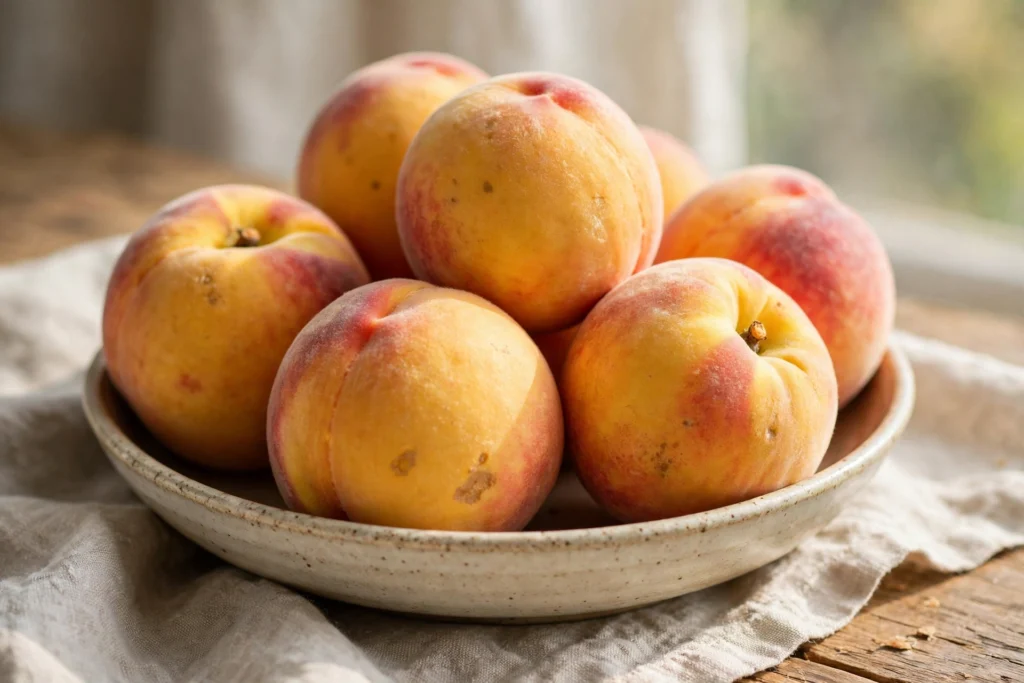

Peach benefits for health start with the obvious: a ripe peach is one of summer’s simplest pleasures. Soft, sweet, and fragrant, it is also about 89 percent water, which makes it one of the most hydrating fruits you can eat, and a good source of vitamin C, vitamin A, potassium, and fibre.
A medium peach, about 150 grams, gives you around 60 calories, 2 grams of fibre, and about 10 mg of vitamin C, plus a useful amount of vitamin A in the form of beta-carotene. Peaches are low in fat, low in sodium, and naturally sweet, which is a combination that works well for almost every diet.
In this guide, we will look at the main peach benefits for health in plain language, with honest numbers and no miracle claims. You will learn what peaches can do for your skin, digestion, heart, and eyes, how to eat them well, and who should take a little care.
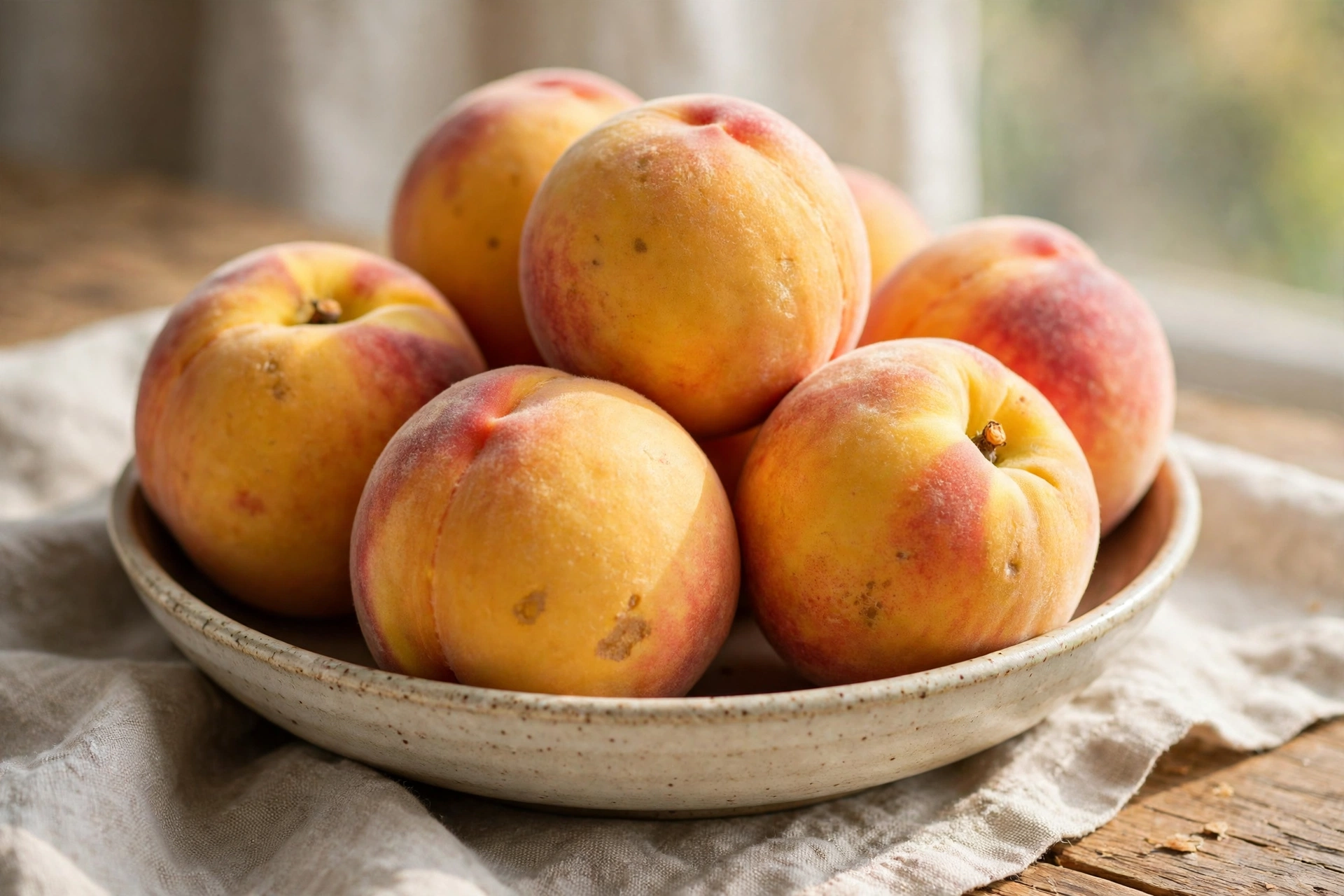
1. Skin Health and Glow
Peaches are a natural fit for skin health. They give you vitamin C, which your body needs to make collagen, the protein that keeps skin firm and smooth, and vitamin A, which supports skin cell renewal. A shortage of vitamin A can leave skin dry and rough, so getting it from food matters.
The beta-carotene in peaches gives them their golden colour, and it works as an antioxidant that helps protect skin cells from damage caused by sunlight and pollution. Eating peaches will not replace sunscreen, but a diet rich in carotenoids is linked to healthier-looking skin in observational studies.
Peaches are also about 89 percent water, so they help with hydration, and hydrated skin looks plumper and healthier. Many people notice their skin looks fresher when they eat more water-rich fruit and drink enough water through the day, and peaches are one of the most enjoyable ways to do that.
Peach extract appears in many skin care products, and the idea behind it is sound: the fruit is full of the same nutrients skin needs from the inside. Eating the peach does far more than putting it on your face, though, because the nutrients reach your skin through your blood, where they support collagen and repair all over your body.
2. Digestion and Gut Comfort
A medium peach gives you about 2 grams of fibre, which adds bulk and helps keep digestion regular. The fibre in peaches is a mix of soluble and insoluble types, and it feeds the friendly bacteria in your gut while keeping things moving smoothly. People who eat fibre-rich fruit regularly tend to report fewer bouts of constipation.
Peaches are gentle on the stomach for most people. They are low in acid compared with citrus fruit, and their soft flesh is easy to digest, which is why peaches are often suggested for people recovering from illness or with sensitive stomachs. A ripe peach is one of the kindest fruits you can eat.
Some research suggests that the polyphenols in peaches may support a healthy gut microbiome, though the work is still early. The practical takeaway is that peaches fit well into a gut-friendly diet, especially when eaten ripe and with the skin on, where much of the fibre lives.
One thing to watch is that dried peaches are a different food from fresh ones. Dried peaches have more fibre per gram, but they also have far more sugar and calories, so they are easy to overeat. Fresh peaches are the better everyday choice for digestion.
Peaches also contain a small amount of sorbitol, a natural sugar alcohol that draws water into the gut and helps keep things moving. This gives peaches a mild, gentle effect on regularity, similar to pears and plums, though weaker than prunes. A ripe peach after a heavy meal can feel soothing, and many people find that eating peaches regularly helps them stay comfortable.
3. Hydration
At about 89 percent water, peaches are one of the most hydrating fruits you can eat. Eating water-rich fruit counts toward your daily fluid intake, and on a hot day, a cold peach is refreshing in a way that plain water sometimes is not. Good hydration shows in your skin, your energy, and your digestion.
Peaches also provide potassium, which helps the body manage fluid balance. A medium peach gives you about 290 mg of potassium, which supports normal blood pressure and helps the body hold the right amount of water in the right places. This is especially useful in summer, when you lose more fluid through sweat.
For children, older adults, and anyone who struggles to drink enough water, peaches are a smart choice. They are sweet, easy to eat, and full of water, so they help with hydration without feeling like a chore. A few slices in a lunchbox or on a bedside table is an easy win.
Peaches also work well in infused water. Add a few slices to a jug of cold water with mint, and you get a lightly flavoured drink that encourages you to drink more, without any added sugar or artificial flavouring.
4. Heart Health
Peaches support heart health through their potassium, fibre, and polyphenols. Potassium helps the body balance sodium and is linked to healthier blood pressure in population studies, while the soluble fibre in peaches can help lower LDL cholesterol by reducing how much cholesterol the gut absorbs.
The polyphenols in peaches, including chlorogenic acid and anthocyanins in red-skinned varieties, have been studied for their effects on blood vessels. Early research suggests they may help protect blood vessels from damage, though human evidence is still limited and mostly comes from small trials.
Peaches are also low in sodium and free of saturated fat, which makes them a heart-friendly food by nature. Swapping a salty or fatty snack for a peach is one of the easiest upgrades you can make, and it costs nothing in taste.
As with other fruits, peaches are not a treatment for heart disease. They work as part of an overall pattern that includes vegetables, whole grains, healthy fats, movement, and not smoking. But as part of that pattern, a daily peach in summer is a delicious choice.
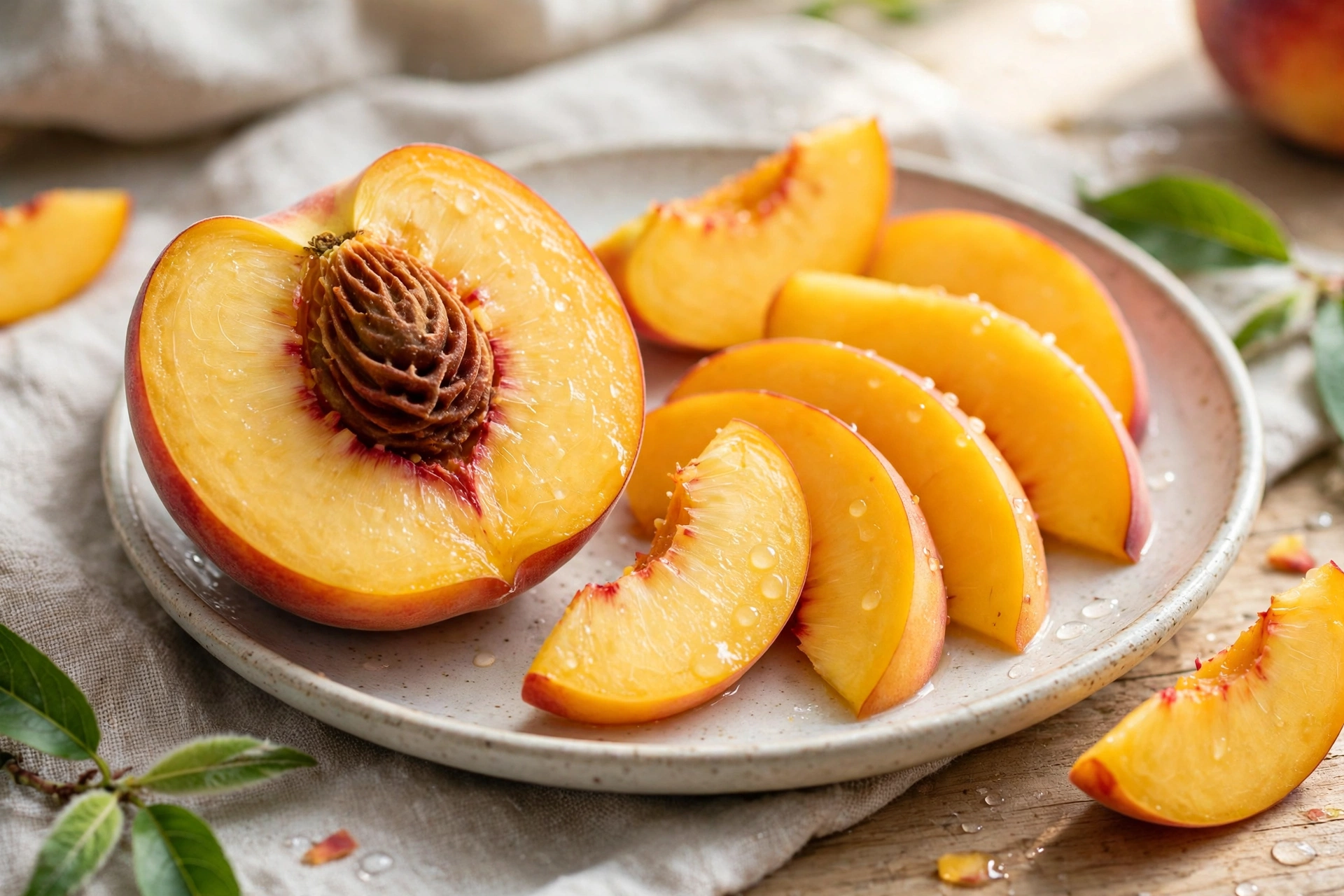
5. Eye Health
Peaches contain beta-carotene, a plant pigment your body converts into vitamin A, which supports normal vision. Vitamin A is essential for the retina, and a shortage can cause night blindness. A medium peach gives you about 6 percent of your daily vitamin A, and it adds to a day that includes other colourful foods.
Peaches also contain lutein and zeaxanthin, two antioxidants that gather in the retina and help protect the eye from light damage. These are the same compounds found in leafy greens and eggs, and diets rich in them are linked to a lower risk of age-related macular degeneration.
Vitamin C in peaches supports the tiny blood vessels in the eye and helps maintain the clear fluid that fills the eyeball. A shortage of vitamin C is linked to a higher risk of cataracts in some large studies, and eating fruit regularly is one of the simplest ways to keep vitamin C levels steady.
As with most foods, the eye benefits of peaches are a long game. Nobody eats a peach and sees better the next morning. The value comes from years of eating colourful fruit alongside other healthy foods, and peaches are an easy, pleasant way to keep that habit going.
6. Immunity and Vitamin C
Peaches give you about 10 mg of vitamin C per fruit, which is around 11 percent of your daily need. It is a modest amount, but it adds up alongside other fruit in your diet, and vitamin C is one of the most important nutrients for a normal immune response, helping white blood cells work properly.
Peaches also contain zinc in small amounts, a mineral that supports immune cell growth and repair. A shortage of zinc is linked to weaker immunity, so getting it from food matters, and peaches add a small but useful contribution to a varied diet.
The polyphenols in peaches act as antioxidants, helping to neutralise the free radicals that can damage immune cells over time. This is a quiet, long-term kind of support, not a quick fix, but it is part of why diets rich in fruit are linked to better immune health.
Peaches will not prevent colds on their own, and no food can promise that, but as part of a diet rich in varied fruit and vegetables, they help keep your immune system well supplied. A peach a day in summer is a sweet, simple contribution to a healthy immune system.
Vitamin A in peaches deserves a second mention here, because it does more than support skin and eyes. Vitamin A also helps maintain the mucous membranes that line your nose, mouth, and gut, which are the first line of defence against germs. When those barriers are healthy, germs have a harder time getting in, so the vitamin A in peaches quietly supports immunity in a way most people never think about.
7. Weight Management
At about 60 calories per fruit, peaches are one of the most satisfying low-calorie snacks you can eat. The fibre and water inside them take up space in your stomach, so you feel full for longer than you would after the same number of calories from crackers or chips. That fullness is a genuine help when you are trying to manage your weight.
Peaches have a low glycaemic index, around 28, which means their natural sugars enter your blood slowly when you eat the whole fruit. Slow, steady energy beats the spike-and-crash cycle of sugary snacks, and it helps you avoid the afternoon slump that sends so many people to the vending machine.
For people watching their weight, swapping a processed snack for a peach is one of the easiest upgrades there is. You lose nothing in taste, you gain fibre, vitamin C, and water, and you cut a few hundred calories a week without feeling deprived. Small swaps like this are the ones that actually last.
Peaches also satisfy a sweet craving in a way that few other low-calorie foods can. A ripe peach tastes like dessert, but it comes with fibre, water, and vitamins instead of added sugar and fat. That is why dietitians often suggest fruit first when someone wants something sweet after dinner.
How to Eat It
The best way to eat a peach is fresh, washed, and eaten whole, ideally with the skin on, since much of the fibre lives there. Choose peaches that give slightly when you press them gently and smell sweet near the stem. Hard peaches will ripen on the counter in two to three days, and you can speed it up by placing them in a paper bag with a banana.
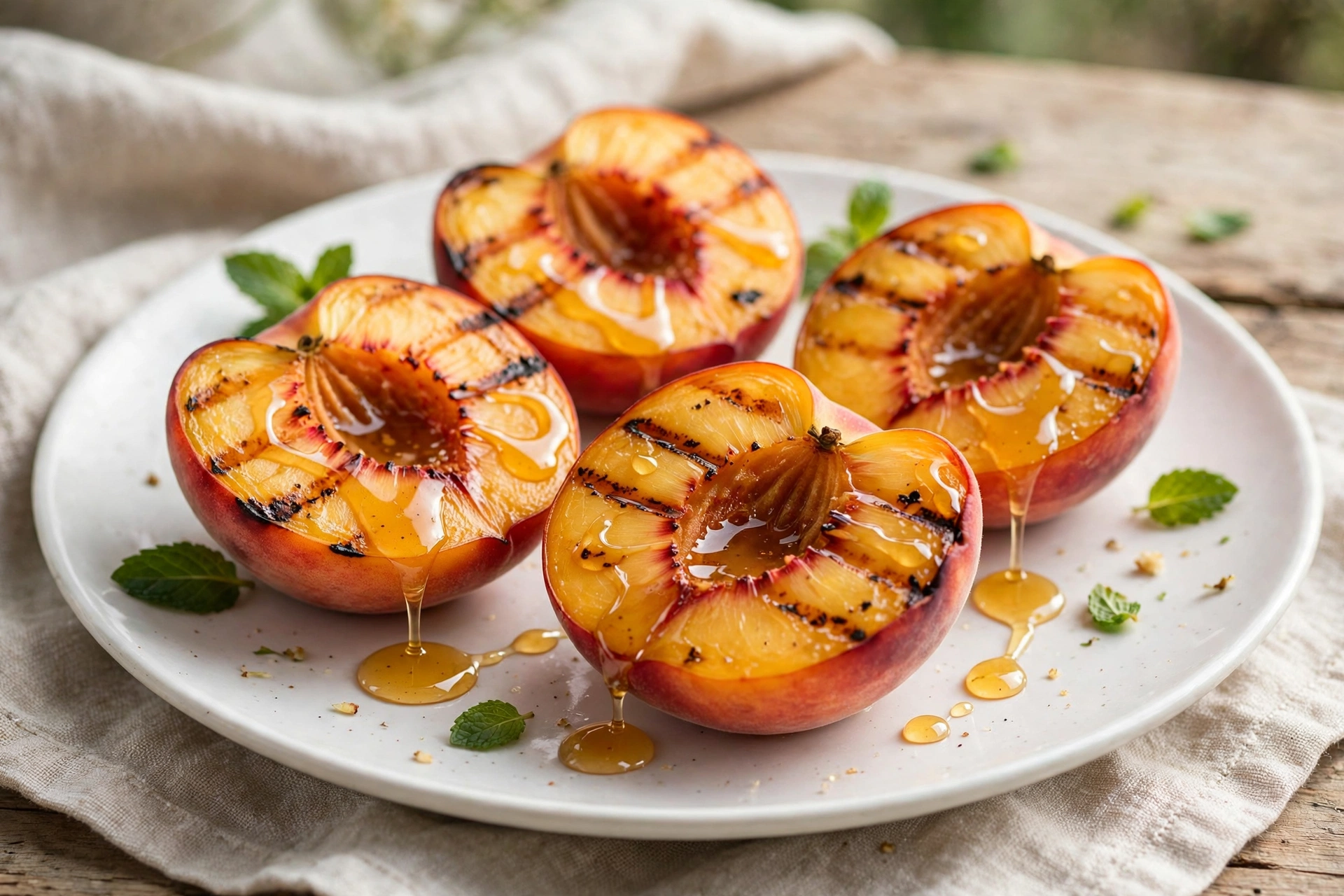
Peaches are wonderful in smoothies, salads, and desserts. Try them grilled with a little cinnamon for a simple dessert, sliced over Oats Benefits for Health (Cholesterol, Weight, and Steady Energy) in the morning, or blended with Yogurt Benefits for Health (Gut Health, Protein, and Strong Bones) for a quick breakfast. They also pair beautifully with a drizzle of Honey Benefits for Health (Uses, Nutrition, and Cautions) when you want a light, sweet ending to a meal.
Store ripe peaches in the fridge for three to five days, and keep unripe ones at room temperature until they soften. If you have too many, freeze slices on a tray first, then bag them, and they will keep for months for smoothies and baking. Avoid canned peaches in syrup, which lose fibre and add a lot of sugar.
Cautions
Peaches are safe for most people, but allergies are not rare. Peach allergy can cause itching, swelling, or stomach upset, and it is often linked to birch pollen allergy. If your lips or mouth itch after eating peaches, especially raw ones, talk to your doctor. Cooking peaches often reduces this reaction, but check with a professional first.
The pit of a peach contains a compound that can release cyanide if crushed and eaten, so never chew peach pits, and keep them away from small children. Swallowing a whole pit by accident is usually harmless, since it passes through undigested, but chewing one is a different matter.
Some people find peaches cause stomach upset when eaten in large amounts, mainly because of the fibre and natural sugars. One or two peaches a day is fine for most people, but a whole bag in one sitting can be too much. And people with diabetes should stick to fresh peaches, not the canned or dried kinds with added sugar, and check their blood sugar as usual.
FAQ
How many peaches can I eat in a day?
One to two peaches a day is a great amount for most adults. That gives you fibre, vitamin C, and vitamin A for only 60 to 120 calories. Eating more is fine on some days, but variety across different fruits is healthier than eating only one kind.
Are peaches good for weight loss?
Yes, peaches are one of the better fruits for weight loss. A medium peach has only 60 calories, with fibre and water that keep you full, and a low glycaemic index that keeps energy steady. They satisfy a sweet craving without the calories of cake or biscuits.
Can people with diabetes eat peaches?
Yes, fresh peaches have a low glycaemic index of around 28, so they are a good choice for blood sugar. A whole peach is a sensible serving, and pairing it with nuts or yogurt helps further. People with diabetes should check their blood sugar and follow their doctor’s advice.
Should I eat the peach skin?
Yes, if you can. Much of the fibre and many of the polyphenols in a peach live in or just under the skin. Wash the peach well under running water before eating, and you get the full nutritional benefit of the fruit.
Are canned peaches as healthy as fresh ones?
Not quite. Canned peaches in syrup have a lot of added sugar and less fibre, so they are a weaker choice. Canned peaches in juice or water are better, but fresh peaches are the best option for nutrition and taste.
Conclusion
Peaches are summer in a fruit: sweet, juicy, and deeply hydrating, with vitamin C, vitamin A, potassium, and fibre that support your skin, digestion, heart, eyes, and weight. A peach or two a day in season is a small habit with a long list of quiet benefits.
Eat them fresh with the skin on, enjoy them grilled or in smoothies, and let them replace a processed snack. That is all it takes to turn a favourite summer fruit into a daily health habit that actually sticks.
And when peach season ends, frozen peaches are a fine backup. They keep most of their vitamins and fibre, they work beautifully in smoothies and baking, and they let you enjoy the taste of summer all year round without the sugar of canned peaches in syrup.
Sources
Peach — Wikipedia
Peaches — Harvard T.H. Chan School of Public Health